
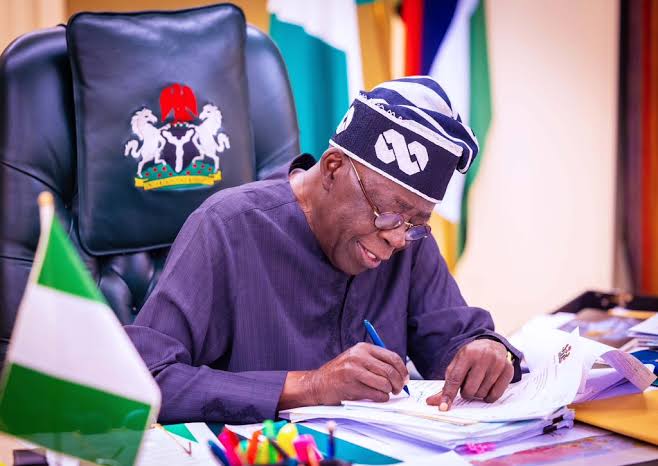
President Bola Tinubu has put forward six nominees for executive director positions at the Nigerian Midstream and Downstream Petroleum Regulatory Authority (NMDPRA). The list comprises three returning officials and three new appointees, and their assumption of office remains subject to approval by the Senate.
The nominations were conveyed to the Senate in a letter requesting expedited consideration to ensure institutional continuity and strengthen the regulatory authority’s oversight capacity.
The three nominees being reappointed are Abiodun Adeniji as Executive Director, Finance and Accounts; Ogbugo Kalu Ukoha as Executive Director, Distribution Systems, Storage and Retailing Infrastructure; and Mustapha Lamorde as Executive Director, Health, Safety, Environment and Community.
The three new nominees are Mobolaji Tajudeen Musa as Executive Director, Hydrocarbon Processing Plants, Installations and Transportation Infrastructure; Ogechukwu Modie as Executive Director, Economic Regulations and Strategic Planning; and Said Abutalib as Executive Director, Corporate Services and Administration.
According to a statement issued on Friday by the President’s Special Adviser on Information and Strategy, Bayo Onanuga, all six nominees will serve five-year terms if confirmed by the Senate.
President Tinubu has also approved the appointment of Jumoke Gafar as Secretary to the Board/Authority and Legal Adviser, subject to the completion of statutory procedures under Section 46 of the Petroleum Industry Act (PIA).
The latest appointments follow the President’s appointment of Rabiu Abdullahi Umar as Chief Executive of the NMDPRA in April 2026.
The nominations are part of efforts to strengthen the leadership and institutional capacity of the authority responsible for regulating Nigeria’s midstream and downstream petroleum sectors.
What You Should Know
President Bola Tinubu has forwarded six names to the Senate for confirmation as executive directors of the Nigerian Midstream and Downstream Petroleum Regulatory Authority (NMDPRA), aiming to maintain steady leadership in the country’s oil and gas sector.
- Positive Impact: These appointments help ensure stable regulatory oversight, continuity in policy implementation, and better management of midstream and downstream petroleum operations in Nigeria.
- Potential Concerns: Delays in Senate confirmation could temporarily stall administrative decisions and slow down regulatory reforms within the petroleum sector.