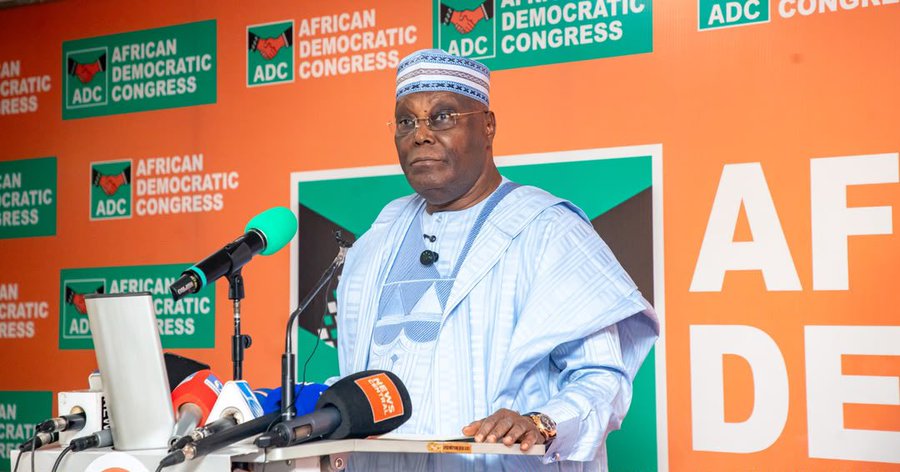
African Democratic Congress presidential hopeful Atiku Abubakar has emphasized the urgent need to tackle soaring living expenses, bolster security measures, and enforce greater government transparency, while encouraging citizens to critically evaluate the initiatives and commitments of President Bola Tinubu’s administration.
In his Independence Day State of the Nation address on Thursday, Atiku criticised the government’s handling of the economy, insecurity and public spending, while presenting proposals he said would make life more affordable. His remarks followed President Tinubu’s Independence Day address, in which the President said Nigeria had moved from economic emergency treatment to a new phase of shared prosperity.
Atiku said millions of Nigerians were struggling with food costs, transport expenses, healthcare and insecurity, arguing that economic reforms should ultimately be measured by their impact on households.
“The past three years under Bola Tinubu have plunged Nigeria into the most severe cost of living crisis in our history,” he said.
He added: “Families are not merely tightening their belts, they are skipping meals, delaying treatment and borrowing to survive until payday or whenever.”
Atiku also questioned the benefits of the removal of the petrol subsidy, saying Nigerians had yet to see the savings promised by the government.
“Three years later, the pain has an address in every home. Bola Tinubu, where is the benefit?” he asked.
On Tinubu’s claim that Nigeria had entered an age of prosperity, Atiku said improvements in economic indicators must translate into better living conditions for citizens.
“A president may announce a new chapter in his speech. He cannot announce food on a family’s table or money into a worker’s pocket,” he said.
“Bola, where is the prosperity?”
Atiku also challenged the President’s argument that inflation had fallen, saying a slower increase in prices did not reverse the pressure already experienced by households.
“A slower rise in prices does not restore what families have lost,” he said, while acknowledging that Nigerian businesses deserved credit for their achievements.
He further criticised the government’s approach to reforms, saying citizens should be able to assess their impact through tangible improvements in their daily lives.
“A patient who cannot afford to live is not proof that the treatment is working. Absolutely not,” Atiku said.
He, however, said he would not ask Nigerians to surrender to despair, presenting his own proposals for reducing the cost of living.
“My fellow Nigerians, I will not ask you to accept another promise without asking how it will work,” he said.
“Working with my running mate and our partners in the African Democratic Congress, I will pursue a clear purpose: make life affordable again.”
Atiku proposed a capped and budgeted production subsidy tied to verified fuel refined in Nigeria, including fuel from modular refineries.
“We will introduce a capped, budgeted production subsidy tied to verified fuel refined in Nigeria, including fuel from modular refineries. Imported petrol will not qualify. The benefit must reach consumers through lower pump prices. We will publish the costs, independently audit the payments and cut government waste to help fund the programme,” he said. ([Naija News][2])
He also called for greater transparency in government spending, including the management of relief programmes, budgets, public contracts and borrowing.
On insecurity, Atiku said the government must do more to protect Nigerians, particularly farmers, schoolchildren and communities affected by attacks and kidnapping.
“A government that cannot make life affordable and cannot protect life has failed the two tests that matter most to its people,” he said.
Atiku also questioned the implementation of education and student-loan programmes, saying rising fees and household incomes should be considered when assessing their effectiveness.
“Please do not describe every new loan as an opportunity. A student loan does not make education affordable when fees are rising,” he said.
He also called for greater transparency over government budgets and public debt, asking the administration to account for projects funded with borrowed money.
“Nigerians deserve to know whose prosperity your government is building,” he said.
On governance and public accountability, Atiku said an elected government should make its spending and performance open to public scrutiny.
“This is a digital age. Everything should be open, should be transparent, should be seen on your laptops,” he said.
He also addressed issues concerning due process and the detention of some individuals, calling for the rule of law to be applied fairly.
“Our independence also demands political freedom. Nigerians must be free to question their leaders, organize peacefully and demand change,” Atiku said.
He called on Nigerians to participate actively in the 2027 electoral process and protect their votes, while urging all candidates, including himself, to present plans that could be examined and measured.
“Demand plans that can be examined and promises that can be measured and fulfilled. Protect your vote and refuse intimidation,” he said.
Atiku said the coming election should provide Nigerians with a peaceful avenue to choose their leaders and determine the direction of the country.
“The coming election offers us a peaceful way to choose our course,” he said.
He concluded by urging Nigerians to remain hopeful and exercise their civic rights, saying the country’s independence should translate into a better quality of life for its citizens.
“The message is clear,” Atiku said before leading a chant of “Tinubu must go” at the close of his address.
What You Should Know
In his Independence Day State of the Nation address, former Vice President Atiku Abubakar strongly criticized the current economic reforms under President Bola Tinubu, arguing that they have failed to ease the burdens of everyday Nigerians facing extreme inflation, high food prices, and widespread insecurity.
- Potential Negatives: Citizens continue to struggle with soaring transportation costs, expensive healthcare, and rising school fees, while the removal of fuel subsidies has yet to visibly translate into relief for average households.
- Proposed Solutions: Atiku outlined plans to introduce a capped, budgeted production subsidy tied strictly to locally refined petroleum products and called for absolute transparency in public borrowing and government spending.