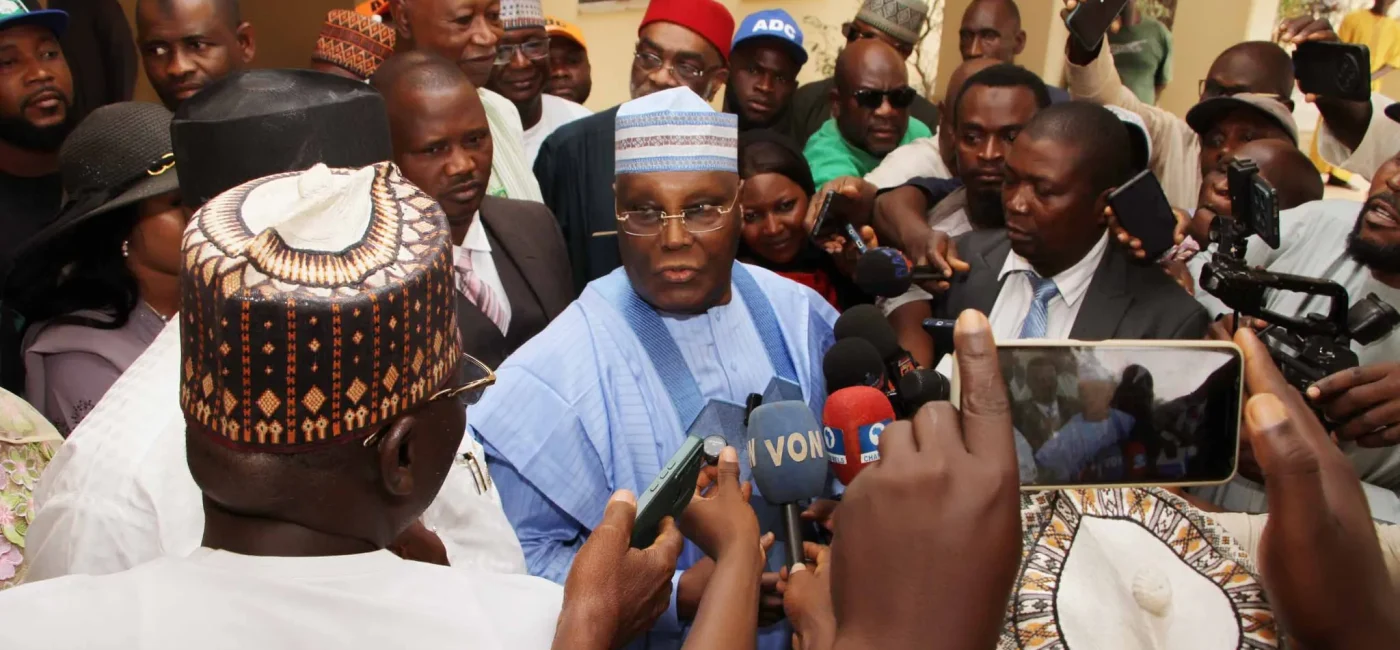
Former Vice President and prominent political figure Atiku Abubakar has strongly disputed President Bola Tinubu’s assertion that Nigeria has entered a new era of prosperity, highlighting that millions of citizens continue to face immense difficulties regarding food affordability, transportation, healthcare, education, and safety. Speaking in Abuja during his Independence Day broadcast, Atiku emphasized that the past three years under the current administration have subjected families to a crushing cost-of-living crisis, forcing many to skip meals, postpone medical visits, and borrow funds merely to make ends meet. He directly challenged the president’s optimistic narrative, questioning where this claimed prosperity can actually be found when households are struggling to put food on the table.
Atiku said the President’s claim that inflation had fallen did not adequately capture the impact of higher prices on Nigerian households. He argued that while a slower increase in prices could indicate lower inflation, it did not restore the purchasing power families had already lost. “Bola says inflation has fallen. A slower rise in prices does not restore what families have lost,” he said. He also acknowledged growth and rising exports but said such indicators should ultimately translate into improved living conditions. “Nigerian businesses deserve credit for what they have achieved. But growth must improve lives. It cannot be a certificate of success that government awards itself while citizens struggle to survive,” he said. Atiku used the prices of petrol and basic food items to illustrate the pressure on households since Tinubu assumed office. He said a ₦30,000 minimum wage in April 2023 could buy about 118 litres of petrol, while a ₦70,000 minimum wage now buys about 50 litres. “The salary has more than doubled on paper; the petrol it can buy has fallen by more than half,” he said. Atiku also said the average price of an egg rose from about ₦88 in April 2023 to ₦261 in May 2026. He said a sliced loaf that cost about ₦500 in April 2023 had risen to about ₦2,000 for a smaller loaf by May 2026. “These may look like small items in a government report. In a family home, they are breakfast. They are the money left for a child’s lunch,” he said. “If 2023 was the illness, why does your ‘cure’ buy less fuel, fewer eggs and a smaller loaf of bread?” Atiku also rejected the suggestion that Nigerians demanding relief from high petrol prices were simply calling for a return to fuel subsidy. “No mother struggling to feed her children is asking for ‘morphine’. No worker spending his wages on transport is addicted to subsidy,” he said. “They are asking what happened to the savings you promised and when your reforms will bring down the cost of living.” Atiku said his administration, if elected, would introduce a capped and budgeted production subsidy tied to verified fuel refined in Nigeria. He said the scheme would include fuel produced by modular refineries but would exclude imported petrol. “The benefit must reach consumers through lower pump prices,” he said. According to Atiku, the costs of the programme would be published, while payments would be independently audited. He also said government waste would be cut to help fund the scheme. “The principle is simple: produce here, refine here, create jobs here and pay less here,” he said. “If Bola disagrees, he should answer the proposal on its merits. Calling relief an addiction will not lower the price of petrol.” Atiku also criticised the government’s handling of jobs, education and transport. He said young Nigerians had the talent and ambition to contribute to the country but needed jobs that could provide a decent livelihood. “Ambition is abundant in Nigeria. What is scarce is the chance to turn it into a living,” he said. He questioned the reliance on student loans and consumer credit as responses to economic hardship. “A student loan does not make education affordable when fees are rising,” Atiku said.
What You Should Know
Former Vice President Atiku Abubakar has challenged the federal government’s narrative of economic recovery, pointing out that official statistical indicators do not match the harsh financial realities faced by everyday Nigerian households. He highlighted steep increases in the prices of basic commodities like petrol, eggs, and bread, arguing that inflation figures fail to account for the severe loss of purchasing power.
- Positive Impact: Atiku’s critique puts pressure on the federal government to re-evaluate its ongoing economic reforms and consider direct relief measures for citizens burdened by high living costs.
- Potential Concerns: The ongoing political debate underscores deep economic anxieties, highlighting persistent structural challenges in fuel pricing, job creation, and household purchasing power across the country.