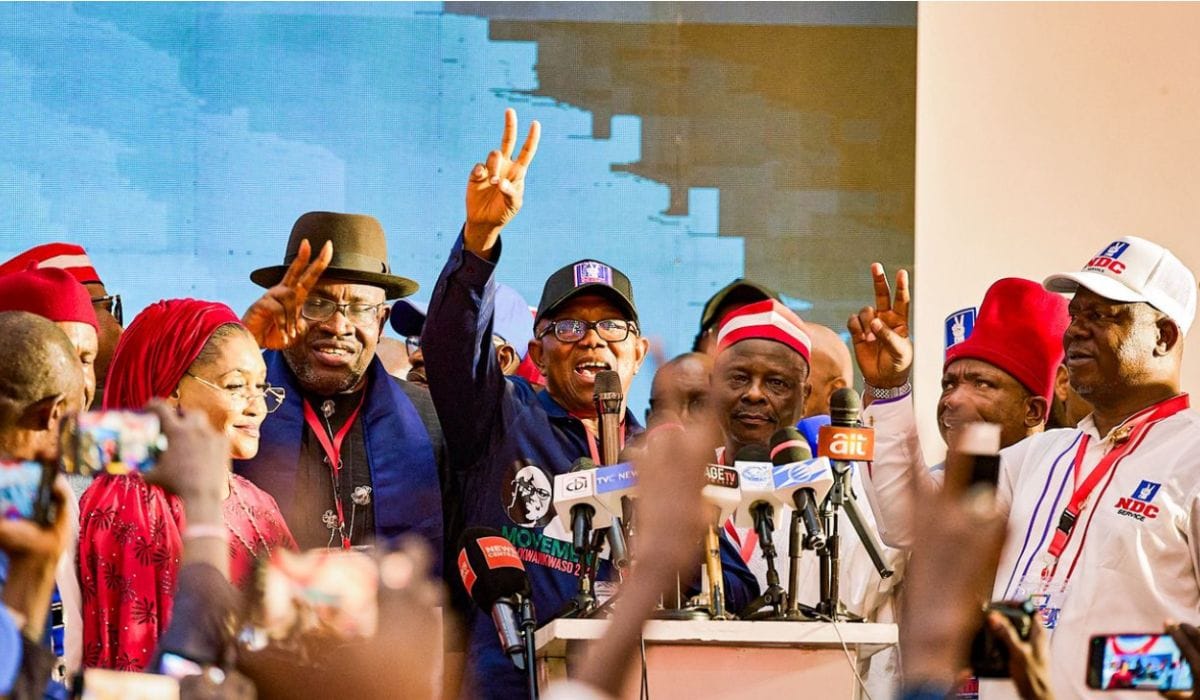
Peter Obi, the presidential candidate of the Nigeria Democratic Congress (NDC), has criticized President Bola Ahmed Tinubu, claiming he has borrowed close to $100 billion without providing a clear account of how the funds were utilized.
Speaking in Yenagoa, Bayelsa state, during the homecoming of the National leader of the party, Senator Seriake Dickson, and the commissioning of the party secretariat, on Friday, Obi urged Nigerians to change the All Progressives Congress (APC) government.
He said the president lacks requisite capacity to rule Nigeria, alleging that Tinubu is already tired of running the affairs of the country.
Obi said Nigeria deserves a president who has the energy and capacity to govern,
He said, “Today we have a country that produces the highest number of poor people in the world. Today we have a country where our people are hungry, Nigerians don’t know where the next meal will come from anymore.
“In Nigeria today, if you are sick, instead of going to hospital, you go to church because there is no hospital, so you can only pray for God to save you. We have a country where there are no schools. We have a country where youths are looking for jobs, but no jobs.
“What do we want to do? We are telling you that NDC is coming to build a new Nigeria that is possible. We want to move Nigeria from consumption to production.”
On borrowing, Obi said, “Our president has borrowed nearly $100 billion, nobody knows what he did with the money, we want the president to come and explain to Nigerians what he used the money he borrowed to do in the past three years.
“He said he’s busy, he has been busy for the past three years going overseas, now we went into a campaign, he said he is busy. APC government is incompetent, APC government doesn’t have the capacity. They don’t have compassion, they cannot be chosen.”
What You Should Know
Peter Obi made these remarks during a political event in Bayelsa State, where he criticized the current administration’s economic management and governance capacity. He argued that the country’s rising debt profile has not translated to tangible improvements in the daily lives of citizens, pointing to widespread poverty, lack of healthcare infrastructure, and high unemployment.
- Positive Impact: Highlights the need for fiscal transparency and encourages leaders to be accountable for public debts and utilization of national resources.
- Potential Concerns: High borrowing without clear infrastructural benefits increases the national debt burden, which can lead to economic instability and heavier taxation or inflation for everyday citizens.