As part of its golden jubilee celebrations, the Christian Association of Nigeria (CAN) has bestowed special honors upon First Lady Oluremi Tinubu, former Heads of State General Yakubu Gowon and Chief Olusegun Obasanjo, former President Goodluck Jonathan, and former Vice President Yemi Osinbajo.
The award ceremony and thanksgiving service, held on Saturday, October 17, 2026, recognised the recipients for their contributions to Christianity and national development.
Tinubu received the Christian Icon Award, while Gowon, Obasanjo, Jonathan and Osinbajo were presented with the Pillar of Faith Award.
Other award recipients included Secretary to the Government of the Federation, George Akume; Senate President Godswill Akpabio; Deputy Speaker of the House of Representatives, Benjamin Kalu; Delta State Governor Sheriff Oborevwori; Edo State Governor Monday Okpebholo; and Oyo State Governor Seyi Makinde.
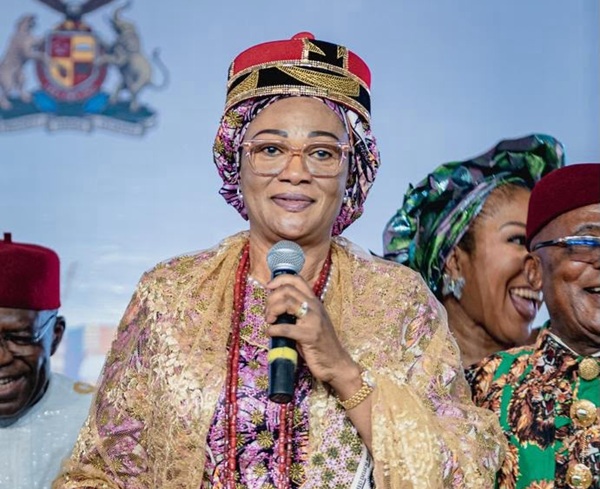
Speaking at the event, the First Lady described the award as a call to greater service to God and humanity, while urging Christians across different denominations to strengthen their unity.
According to The Nation, she thanked CAN President, Archbishop Daniel Okoh, for the recognition, describing the association’s golden jubilee as a significant milestone in the history of Christianity in Nigeria.
According to her, the anniversary theme, Walking Together in Faith, underscores the need for cooperation and a shared purpose among believers.
Citing John 17:21-22 and Ephesians 4:4-6, Tinubu urged the various Christian blocs within CAN to sustain their common goals and work together for the advancement of the church and the country.
“I want you to know that this award is a call to greater work in service to God and humanity,” she said.
She wished the association continued success in its mission and urged it to remain committed to preparing Christians for the second coming of Jesus Christ.
In his address, Okoh reflected on CAN’s 50-year history, tracing its establishment to August 1976, when Christian leaders formed a common platform to address issues affecting the church and the country.
He said the association’s journey reflected the commitment of successive Christian leaders to unity despite differences in doctrine, traditions and religious practices.
However, he acknowledged that CAN had experienced periods of suspicion, prejudice and marginalisation among some of its constituent groups.
Okoh said successive administrations had made efforts to address the divisions and ensure equal rights and privileges for the different Christian traditions represented in the association.
He listed the Christian Council of Nigeria (CCN), the Christian Pentecostal Fellowship of Nigeria/Pentecostal Fellowship of Nigeria (CPFN/PFN), the Organisation of African Instituted Churches (OAIC), TEKAN/ECWA and other groups among CAN’s constituent members.
The CAN president cautioned against actions that could undermine the progress made towards Christian unity, particularly divisive and inflammatory exchanges on social media.
He said the association belonged to all Christians and urged members to take greater responsibility for its growth rather than leave its affairs exclusively to elected and appointed leaders.
On CAN’s role in national development, Okoh said the association had, over the past five decades, spoken on religious freedom, justice, good governance, corruption, insecurity, humanitarian intervention and other national issues.
He challenged the church to strengthen its advocacy in the coming years by ensuring its positions were courageous, constructive and backed by credible evidence.
According to him, CAN must continue to defend human dignity, constitutionalism, democratic institutions, religious freedom and the welfare of vulnerable Nigerians.
He identified internally displaced persons, out-of-school children, unemployed youths, farmers unable to access their farmlands because of insecurity, women facing violence and victims of human trafficking as groups requiring greater attention.
“The church must speak!” he declared, urging Christians to translate their faith into practical compassion, public advocacy and service to humanity.
However, he warned that the church’s interventions must be guided by truth, credible evidence and responsible analysis rather than rumours or partisan interests.
On relations between government and religious institutions, Okoh advocated what he described as “critical collaboration”, saying the church should support policies that serve the common good while challenging injustice and demanding accountability from public officials.
“The appropriate model is critical collaboration, meaning collaborate where the common good requires it, challenge where justice requires it, commend where government does well and warn where government fails, while maintaining the church’s independence,” he said.
He also called for stronger investment in research, advocacy, humanitarian services and engagement with national development issues.
Okoh said CAN’s priorities for the next 50 years should extend to environmental protection, climate resilience, ethical technological development and the preservation of human dignity.
He maintained that Nigeria possessed the human resources and resilient communities needed to overcome its challenges but stressed that progress depended on responsible leadership, accountability and practical action.
The CAN president urged political leaders to protect citizens, uphold the Constitution, account for public resources and strengthen national institutions.
He also challenged Christians to complement prayers for the country and its leaders with active participation in nation-building.
“The message to the church must be equally clear: pray for Nigeria, pray for those in government, speak for Nigeria, serve Nigeria, build Nigeria and heal Nigeria,” he said.
Okoh expressed confidence in Nigeria’s future, describing the golden jubilee as an opportunity to renew commitments to unity, integrity and national development.
Meanwhile, Makinde urged Christians to become more actively involved in politics, warning that staying away from the political process could limit their ability to influence governance and national transformation.
Speaking to journalists at the event, the Oyo State governor challenged the perception that politics was inherently dirty, urging believers to participate in shaping policies and leadership decisions.
He said Christians could not remain on the sidelines and expect the country to change.
Drawing lessons from biblical accounts involving Samuel, Eli’s sons, David and King Saul, Makinde argued that the shortcomings of political leaders should not discourage believers from seeking positions where they could contribute to society.
He recalled that Samuel emerged despite the misconduct of Eli’s sons, while David served in Saul’s palace even though he had been anointed as Israel’s future king.
“I will use this opportunity to encourage our Christian brothers and sisters all across the country to brace up and participate in the agenda to transform Nigeria, to reset our country,” he said.
Makinde also identified poverty as Nigeria’s most pressing challenge, arguing that economic hardship, rather than religious differences, should take priority in national discourse.
“Our problem is not religious. Our problem in this country is poverty, grinding poverty,” he said.
The governor called on leaders and citizens to prioritise practical measures to reduce poverty and improve living conditions, stressing that meaningful national transformation would require sustained efforts to address the economic difficulties facing Nigerians.
What You Should Know
The Christian Association of Nigeria celebrated its 50th anniversary by honoring key political figures and leaders for their contributions to faith and national growth, while also charting a course for future unity, advocacy, and humanitarian service.
- Positive Impact: Fosters stronger unity among different Christian denominations and encourages political leaders to engage in collaborative nation-building.
- Potential Concerns: Highlights ongoing challenges like social media divisiveness and calls for the church to remain vigilant and non-partisan in its advocacy.