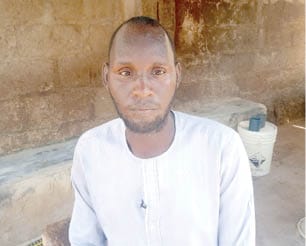
Abdullahi Abubakar spent nearly three decades living in total darkness. Originally from Kebbi State and raised in Kano’s Wudil area, he lost his vision when he was only three years old, forcing him to navigate life relying entirely on friends while facing the societal stigma of blindness. However, after undergoing specialized surgery for glaucoma and optic neuritis at Kano’s Makkah Specialists Eye Hospital seven weeks ago, he opened his eyes to light for the first time in almost thirty years.
How would you describe your experience with blindness before the surgery?
We went to many hospitals, but God did not make it successful. Eventually, I gave up and accepted my fate. Blindness comes with many challenges. Even at home, you feel the difference because people treat you as if you were of no use except to be fed and cared for.
But I refused to give up. I studied Islamic knowledge and tried many trades because I did not want to beg. I sold water fetched from the river in buckets; I sold animals, and later begged when there was no other option. I had friends who guided me wherever I went.
When exactly was the surgery done?
This is the seventh week. I was diagnosed with glaucoma and optic neuritis
How did you lose your sight?
I developed the condition around the age of three. Because I was very young, I cannot remember how it happened. I have lived with blindness for 27 years. I am now 30.
How was the surgery carried out?
In the past, I tried many medicines in different hospitals. They often told me that I would not recover unless I went abroad for surgery. From then I gave up on treatment. It has been nine years since the search for cure began.
Recently, a neighbour who is a policeman took me to a hospital in Kano. They ran tests and said my eyes could be restored but surgery on the eye nerves was needed, costing N180,000. I could not afford it, so I tried to raise money from relatives and friends but failed.
Later, Wudil Local Government announced that those with eye problems should come for assistance. I showed them my test results and they said my case was treatable. We went to the Makkah Specialists Eye Hospital in Kano, where they confirmed that surgery could succeed. On the appointed day, the surgery was done.
What was your first experience after the surgery?
The surgery started around 8:00am. They removed the eye completely, worked on the nerve, then replaced it. As soon as they finished, I began to see signs of light. They covered the eye with plaster.
The next day when they removed it, I saw a bright light I could hardly look at. They showed me one finger and asked how many. I said I only knew numbers, not sight. Later, I realised and counted one, two, three, four and so on. They told me my sight would gradually improve since I had been blind since childhood.
What was your biggest surprise after regaining sight?
The first surprise was seeing my daughter’s face because I had never seen her before. When we got home, I looked at her and then used my phone camera to see my own face. I realised we looked alike. My wife had always told me this, but now I saw it myself. Seeing my daughter amazed me most.
I was also surprised to see my wife’s face, but the joy of seeing my daughter was greater because of the resemblance.
What delighted you most after surgery?
Looking at my daughter’s face gives me joy every day.
What has fascinated you the most?
What fascinated me most was the Wudil River. I enjoy standing on the bridge to watch it. People dive from the bridge into the river, which amazes me. The flow of water and people using small boats to fetch sand also surprised me.
I also enjoyed seeing the hustle and bustle of the town, shops, stalls and people trading various goods.
Are you still moving with a guide?
Not really. My friends are always with me, and I ask them the names of things I see. For example, when I saw a horse or a dog running, I asked if that was how they really run.
What surprised you the most about things you imagined before but saw differently after surgery?
The stars in the sky. When I first saw them, I was amazed. My wife explained that the big white one was the moon and the small ones were stars. Watching them was delightful because they did not hurt the eyes like the sun.
Can you now walk alone without a guide?
Yes; very well. I even walk long distances alone, like to the University of Science and Technology in Wudil.
Have you ever gotten lost while walking alone?
No, because I only go to places I have already visited with someone. I memorise the routes carefully. Even my clothes feel new to me now because everything is unfamiliar.
It is said that the blind can recognise voices. Is that true?
Yes. We can recognise voices and even footsteps. For example, I could recognise my father’s footsteps. Once I hear a voice repeatedly, I can identify it anywhere. Everybody has his unique steps.
Before surgery, did you use a special phone for the blind?
Yes. I had a big phone with voice features that announced places I entered.
You said you studied Islamic Knowledge. Did you use Braille?
No. I used a normal Qur’an, not Braille. I memorised it by listening, though I could not see the letters. I would mark places to help me open the right page.
Who paid for your surgery?
The chairman of Wudil Local Government.
Now that you can see, have you started a business?
Before surgery I was already trying to find a trade. Recently, the chairman gave me N100,000 to start a business. I told him I wanted to return to animal trading, which requires capital. He gave me the money and my brother took me to the livestock market. If I get more support, that’s the business I want.
Do the blind also dream?
Yes, they do.
Since you have both experiences, are the dreams similar to those of people with sight?
Yes, because dreams are seen with the mind, not the eyes. For example, I dreamed of my mother’s death before it happened. I used to dream of driving cars even though I had never seen one. After surgery, my dreams now match what I see in reality.
Before now, I dreamed of cars differently than they actually looked. Now I dream of them as they are.
What gave you the most joy after regaining sight?
The greatest joy is that now I can do business with people who had previously refused because of my blindness. Remembering that I can now see and work fills me with immense happiness.
Would you learn to read and write?
Yes; I will start learning. I can see letters now but don’t know them yet.
Do you use your phone to watch things now?
Yes. But doctors warned me not to overuse the screen. I use the social media, especially Facebook and WhatsApp, and I enjoy them very much.
What You Should Know
This heartwarming story highlights a major medical breakthrough and the life-changing impact of accessible healthcare intervention for disadvantaged individuals in Nigeria.
- Positive Impact: The successful surgery restored Abdullahi’s sight, allowing him to experience everyday wonders like seeing his daughter and wife for the first time, walking independently, and starting a new life chapter with support from local government.
- Potential Concerns: The high cost of specialized eye treatments remains a barrier for many low-income citizens, underscoring the pressing need for broader healthcare subsidies and public medical support systems.