Festus Keyamo, the Minister of Aviation and Aerospace Development, has claimed that opposition groups orchestrated staged videos showing the destruction of All Progressives Congress (APC) campaign materials as part of an intentional propaganda campaign leading up to the 2027 general election.
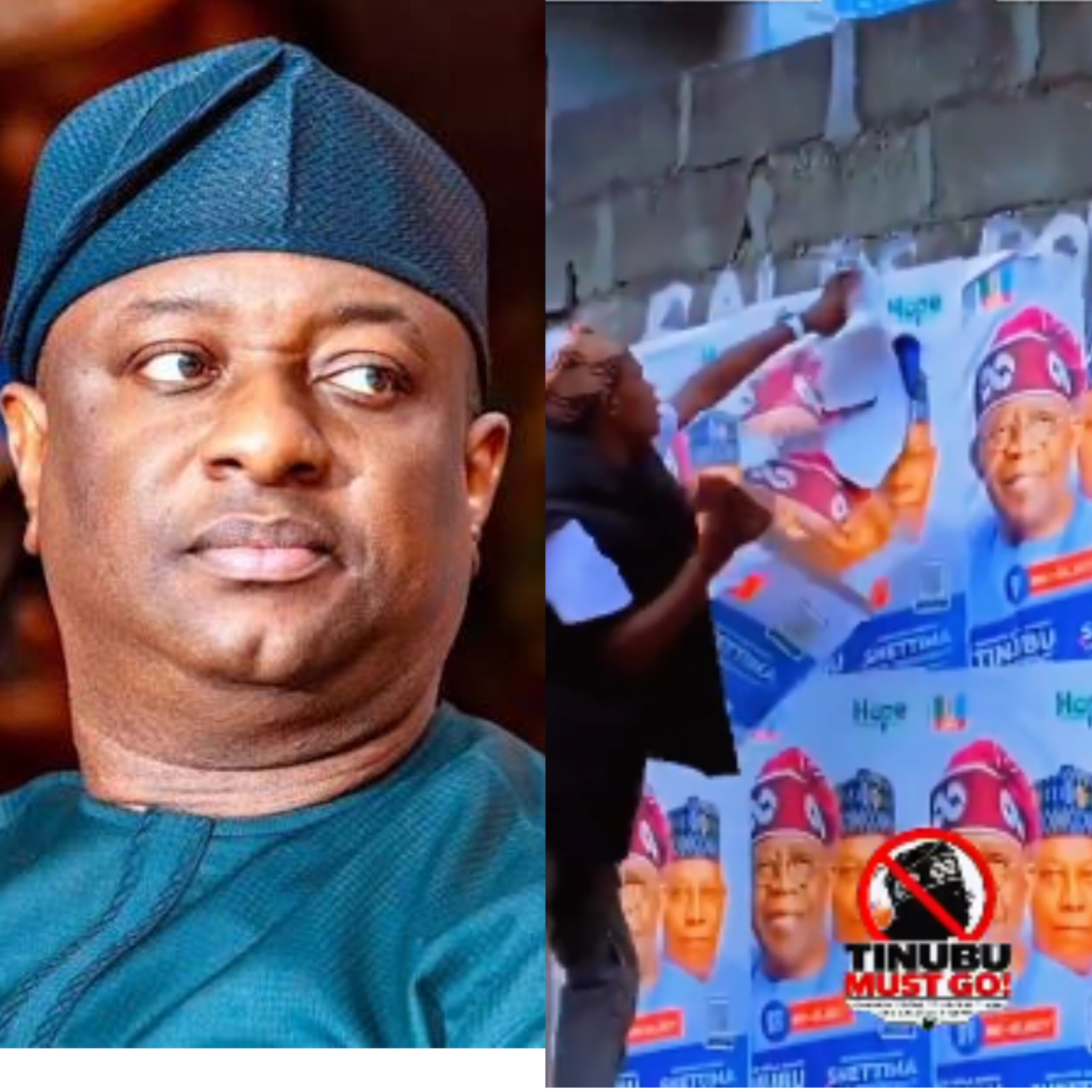
Keyamo made the allegation in a post on his X handle on Friday, October 2, while reacting to a video showing a young man allegedly destroying APC posters while brandishing a weapon.
The minister described the man as “a sponsored thug of the opposition” and alleged that the incident was deliberately recorded and circulated to create the impression that President Bola Tinubu had lost public support.
“Here is a sponsored thug of the opposition brandishing a weapon, destroying the posters of the ruling party somewhere in the country. It is planned as a propaganda stunt because someone deliberately set a camera to record and circulate it,” Keyamo said.
He alleged that similar incidents were being staged in other parts of the country and subsequently presented as evidence of growing opposition to the President.
“Similar, planned stunts are happening in some parts of the country. The interpretation and spin given to these incidents is that the President has been ‘rejected’ by ‘angry’ Nigerians,” he added.
Keyamo contrasted the incident with a separate occurrence in Lagos where two or three people were allegedly seen using Tinubu’s posters to cover those of an opposition party.
He said the Lagos incident was “not excusable too”, but alleged that some television programmes and blogs had described those involved as “thugs of the ruling party” and amplified the incident.
“Some prominent morning programs on TV and paid blogs went to town to brand the guys ‘thugs of the ruling party’ and amplified the videos to high heavens, shouting ‘intimidation’ and ‘democracy’ in danger,” he said.
The minister urged APC supporters not to retaliate over the destruction of the party’s posters, saying his comments were intended to draw attention to what he described as a double standard in the interpretation of similar incidents.
“This is not a call on the teeming APC supporters to retaliate in any form, but this should prick the conscience of all men of goodwill,” Keyamo said.
He further alleged that opposition parties were attempting to portray the APC and the Tinubu administration negatively ahead of the 2027 presidential election.
“The script and propaganda tactics of the opposition is clear: make the ruling party look so bad and unelectable as a basis of rejecting their apparent defeat come January, 16, 2027,” he said.
Keyamo also referred to the number of registered voters in Nigeria, saying the individual captured in the video represented only one voter among millions of registered voters.
“This is just one voter amongst 93,469,008 registered voters in Nigeria,” he said.
The 93,469,008 figure was the size of Nigeria’s voter register for the 2023 general election, according to the Independent National Electoral Commission (INEC).
Keyamo also claimed that opposition parties had suffered defeats in recent bye-elections and asserted that a similar outcome would await them in the January 16, 2027 presidential election.
He said, “Despite these shenanigans, they all lost woefully in bye-elections held in 5 regions of the country about a forthnight ago. That same defeat awaits them on January 16, 2027.”
What You Should Know
This news highlights the growing political tensions and narrative battles in Nigeria as parties position themselves ahead of the 2027 general elections. Minister Festus Keyamo’s comments shed light on how digital media and viral videos can be utilized—or allegedly manipulated—to influence public perception regarding a political party’s popularity.
- Positive Impact: Encourages voters to think more critically and look beyond viral social media content or unverified political stunts before forming opinions on public figures.
- Potential Concerns: Amplifies distrust in digital media and deepens political polarization, as citizens may struggle to distinguish between genuine public discontent and staged political propaganda.