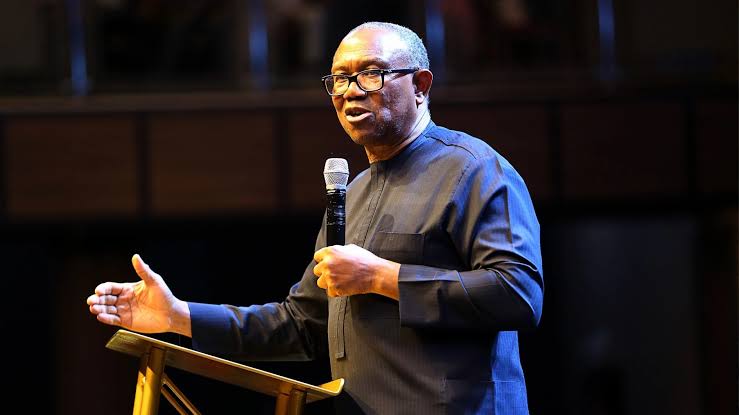
Commemorating Nigeria’s 66th Independence Anniversary, former Anambra State Governor and prominent political figure Peter Obi has appealed for deep national introspection, stressing that the country must immediately confront its mounting challenges of poverty, insecurity, unemployment, and stagnant human development.
Obi said Independence Day should go beyond celebration and provide an opportunity for Nigerians to assess the country’s progress and determine whether it is moving towards the vision of its founding fathers.
In an Independence Day address, he said every serious nation must continually ask three questions: “Where are we today? Where do we want to be? How do we get to where we want to be?”
He said the questions were particularly important given what he described as the challenges confronting Nigeria despite the promises made by the APC-led administration in 2023.
According to Obi, more than 140 million Nigerians are living in poverty and hardship, while more than 18 million children are out of school.
He also cited insecurity, including banditry and kidnapping, as major challenges, while referring to the recent deaths of 37 young Nigerians.
Obi further raised concerns over food insecurity, youth unemployment, infant mortality, drug abuse and life expectancy.
He claimed that more than 35 million young Nigerians are unemployed and that Nigeria’s drug prevalence rate stood at 14 per cent, compared with a global average of six per cent.
He also put Nigeria’s life expectancy at 54 years, against a global average of 74 years.
The former presidential candidate said the scale of the challenges required “serious, sober and honest reflection”, arguing that Nigeria’s problems could not be attributed to a lack of resources.
“Are we cursed? Or are we the curse?” Obi asked.
He answered that Nigerians were not cursed but described the country as “immensely endowed and blessed”.
“Our greatest problem is not lack of resources. It is failure to convert the innermost resources into human development, productivity, security, and shared prosperity,” he said.
Obi said his position was reinforced by a recent two-day visit to Sokoto State, where he held consultations with residents on insecurity, out-of-school children, poverty, youth unemployment and drug abuse.
He said the visit also took him to an internally displaced persons’ camp in Ramin Kura within the Sokoto metropolis, where he said he witnessed the challenges facing displaced Nigerians.
The former governor urged Nigerians to use the Independence anniversary to reflect honestly on the country’s condition and the steps required to build a more secure and prosperous nation.
What You Should Know
On the occasion of Nigeria’s independence celebration, political figure Peter Obi highlighted the severe economic and security hurdles currently facing the country, including widespread poverty, high youth unemployment, and out-of-school children. He stressed that the nation’s true potential is hindered by a failure to channel its massive resources into effective human development rather than a lack of natural wealth.
- Positive Impact: Encourages accountable leadership and prompts national conversations focused on tangible solutions for youth development and economic empowerment.
- Potential Concerns: Highlights critical systemic vulnerabilities such as widespread food insecurity, extreme poverty, and safety risks that continue to affect the livelihoods of everyday Nigerians.