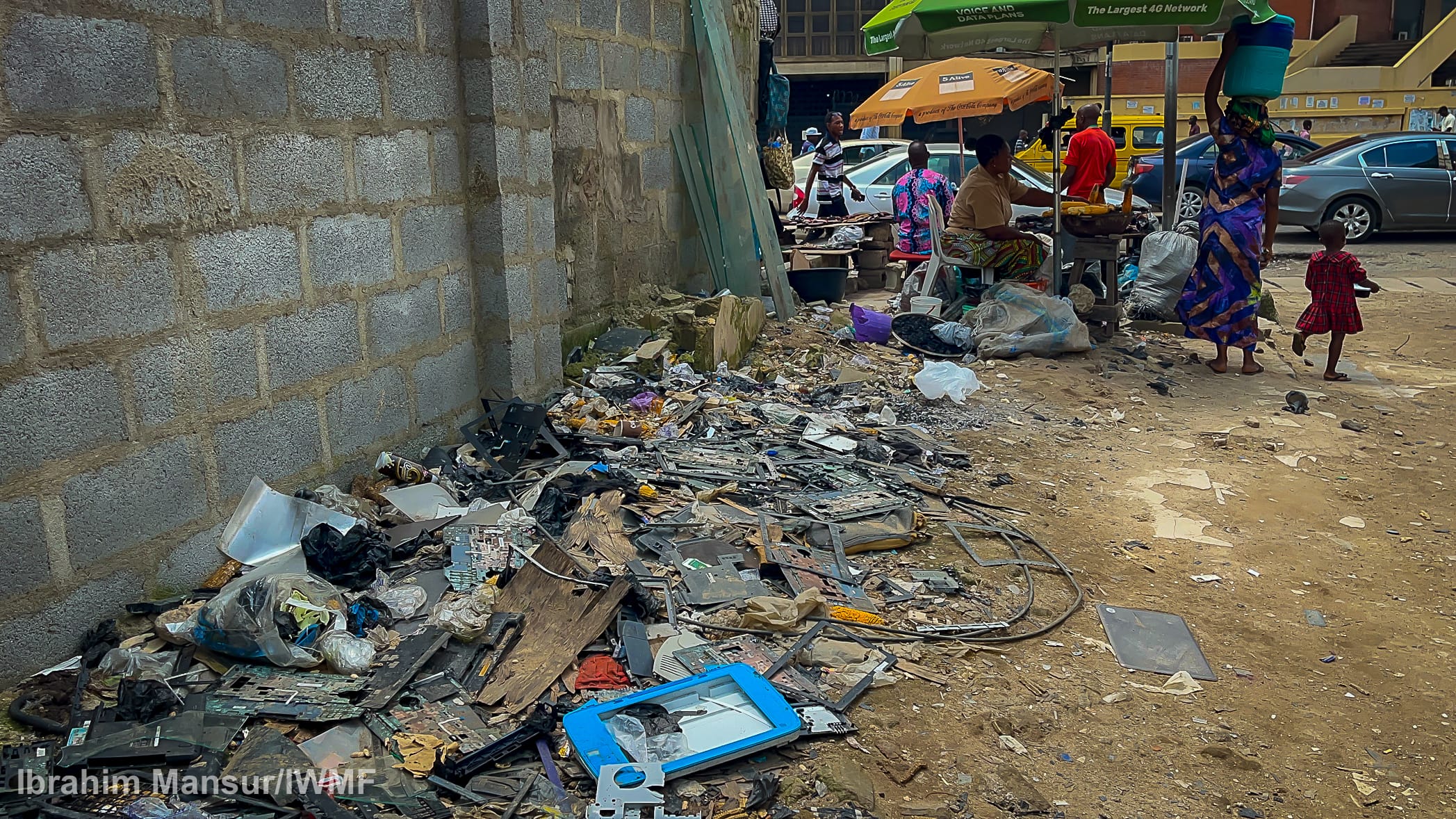
Governor Babajide Sanwo-Olu of Lagos State on Wednesday declared a state of emergency on waste crisis in the state in a bid to get out of what he called “unpleasant situation.”
Daily Trust reports that, in recent months, Lagos has faced an escalating waste management crisis, driven by increased refuse generation and persistent operational challenges.
The Deputy Governor of the state, Obafemi Hamzat, in a recent interview with Nigerian Info 99.3FM, explained the reason behind the crisis.
“We thought that we were generating 13,000 tonnes on a daily basis. It turns out we are generating about 17,000,” he said.
Sanwo-Olu on Wednesday inspected the Olusosun dumpsite in Ojota alongside Hamzat, and the Commissioner for Environment and Water Resources, Tokunbo Wahab.
During the visit, the governor declared what he described as a “small state of emergency” in waste management, and announced month-long measures to tackle the challenge.
“We’re here for ourselves to see what is the problem, what is happening, and for us to clearly be able to declare what we will call a small state of emergency, just so that we can get out of this very unpleasant situation,” Sanwo-Olu said.
The governor said the state was working to increase the capacity of Olusosun to receive between 350 and 450 trucks daily, compared with its current capacity of about 250 to 350 trucks.
He explained that the increase would be achieved by expanding the number of tipping points at the landfill from the existing two or three to four or five, thereby improving the turnaround time for waste trucks.
According to him, the objective is to ensure that trucks do not spend several hours, or an entire day, waiting to discharge waste at landfill sites.
Sanwo-Olu said the state was also working to reactivate additional waste disposal locations, including Solu 3 in Alimosho, Iwulepe in Ikorodu, Oke Osho in Epe and Erikitte in Badagry.
He said work on the road serving Solu 3 would commence with road stabilisation and grading, with completion expected within two to three weeks.
The governor added that stabilisation work would also be undertaken at Iwulepe and Oke Osho, expressing optimism that four active dump sites would be operational within about six weeks, alongside the Badagry facility.
“This will enhance and improve the turnaround of the trucks on the various roads so that they don’t need to come to the dump site and spend one day, spend 12 hours for them to be able to pick,” he said.
On the shortage of functional waste collection equipment, Sanwo-Olu disclosed that the state government had ordered 160 new compactor trucks.
He said the shipment of the trucks was expected to begin soon, adding that the equipment would increase the capacity of the state to evacuate waste from homes and roads to disposal sites.
The governor said additional compactor trucks would also be procured by Zoomlion, while the state would acquire landfill compactors to improve operations at disposal sites.
Beyond the immediate measures, Sanwo-Olu said the state was implementing a long-term waste management infrastructure programme in partnership with Zoomlion.
He said a 2,400-metric-tonne transfer loading station was being developed at Olusosun, with another of the same capacity planned for Solu 3.
According to him, the stations will receive compacted waste before transferring it to material recovery facilities for further sorting and processing.
He said two material recovery sites were being developed at Oke Osho in Epe and Erikitte in Badagry.
Sanwo-Olu said the projects represented investments worth tens of millions of dollars and were expected to provide a long-term solution to waste generation, disposal and conversion in Lagos.
He said physical development on the projects should be visible by the end of the year, while the facilities were expected to become operational between the end of the first quarter and the beginning of the second quarter of next year.
The governor also disclosed that the state government and operators under the Private Sector Participation (PSP) scheme were reviewing the structure and capacity of waste collection operators.
He said the PSP operators had agreed to “purge themselves” by identifying operators with the capacity, knowledge and financial strength to continue operating in Lagos.
Sanwo-Olu said the exercise would be conducted alongside an independent review by the state government to determine the actual number of effective PSP operators.
“We just don’t want to have 800 PSPs when it is actually only 400 that is effective, or have a number that we’re just carrying the number, and 20 or 30 or 40 of that are not effective,” he said.
He added that PSP operators had also committed to procuring more compactor trucks, while the state government would explore financing arrangements to de-risk their investments and prevent operators from becoming financially distressed.
The governor, however, appealed to residents and property owners to pay for waste collection services, stressing that effective waste management required shared responsibility between government, operators and residents.
Credit to our Media Partner DailyTrust .