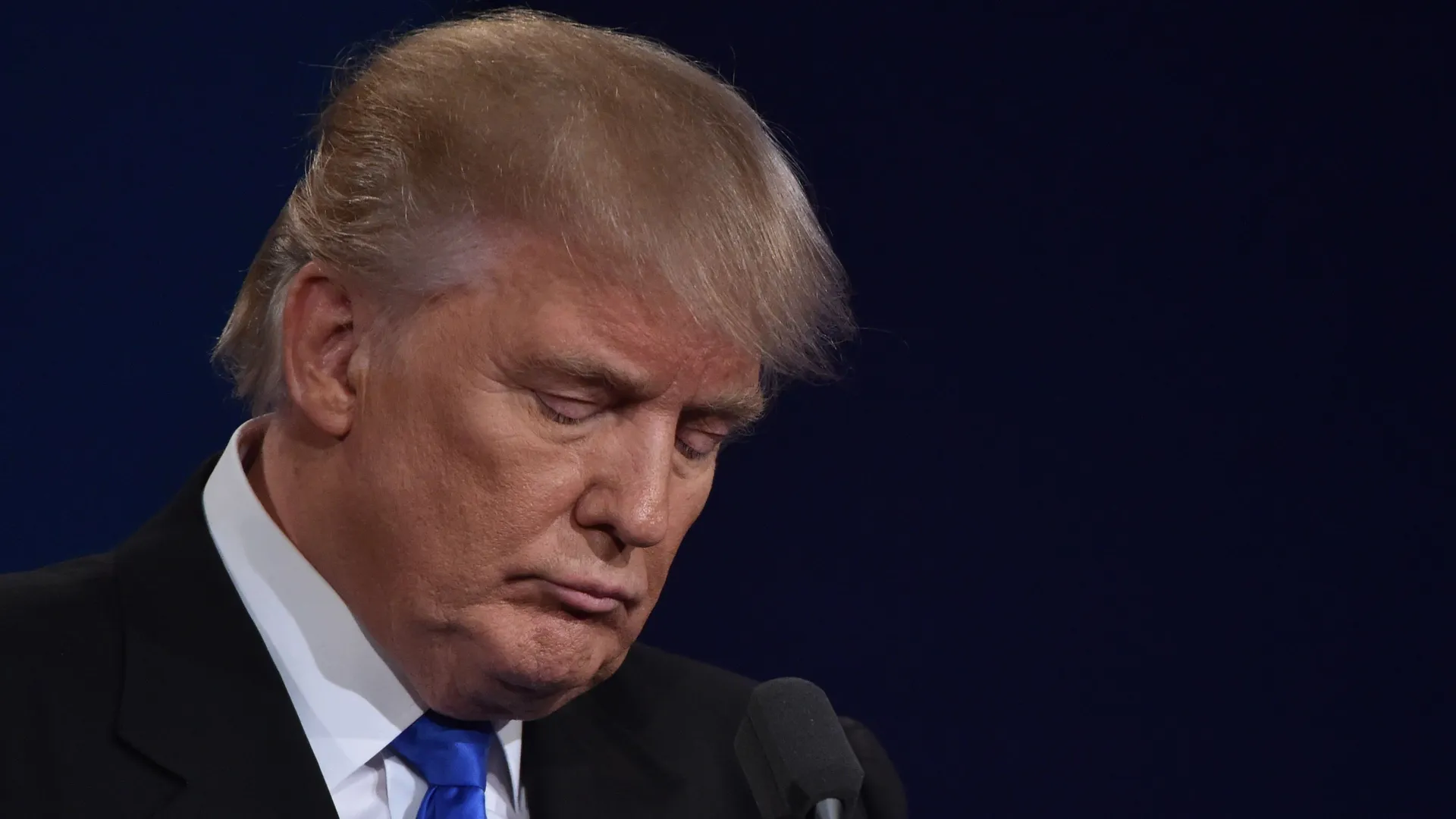
US President Donald Trump has attributed the electoral defeats suffered by his Republican Party to the negative economic ripple effects stemming from the American military conflict with Iran.
Daily Trust reports that while the President campaigned heavily for his party and even made some controversial promises, including monetary compensation to those who vote for his party in the elections, Democratic Party recorded major victory, breaking into Trump’s strongholds.
Reacting to his party’s losses in the midterm elections, Trump said while voters support his posture on Iran, they probably were not willing to accept higher gasoline prices driven by the war.
“Well, I say this: congratulations to the Democrats. They did a good job. They’ve been looking for this one for 11 years, and they finally got it. But I don’t view it as a hit on me,” Trump said in a telephone interview with FOX News Democracy 26.
Trump also reiterated that, unlike his 2020 presidential election loss, he accepted the vote results and was ready to work with Democrats now that they will control Congress.
“I can work with them on many things,” Trump said.
With polls showing the Iran war and resulting rise in oil prices was vastly unpopular with voters, Trump also acknowledged that the stalled conflict had contributed to the result.
“I think a part of it was Iran, but at the same time, people agree with what I’m doing on Iran, but they really probably weren’t willing to do the short-term consequence of paying more for gasoline,” Trump told Fox News.
Daily Trust reports that amid the war, Iran laid siege to the Strait of Hormuz, making the shipment of crude and other essential commodities difficult.
The development sparked a rise in global crude prices.
Trump later went on social media to state how he intends to deal with Democratic attempts to pass laws, posting a picture of a red baseball cap emblazoned: “VETO.”
“They can send over, you know, 50 different great bills that they’re all excited about, and I send them back with a nice stamp — ‘veto.’”
The Democrats’ decisive Senate breakthroughs came in Kansas and Iowa, the fifth and sixth Republican-held seats to fall in the extraordinary “blue wave” election night.
In Kansas, Methodist minister Adam Hamilton defeated Republican incumbent Roger Marshall, becoming the first Democrat elected to the Senate from the reliably conservative state since 1932.
Iowa had not elected a Democratic senator since 2008, again illustrating the scale of party’s inroads into Republican strongholds.
The upsets followed victories in Texas, South Carolina, North Carolina and Ohio, where voters rejected Republican candidates despite Trump’s intensive efforts to rally his supporters.
Democrat James Talarico ousted a Trump-backed Senate candidate, while Gina Hinojosa unseated Republican governor Greg Abbott, ending decades of Republican control of the state’s top office.
Democrats also protected key Senate seats of their own, including Jon Ossoff’s in Georgia and an open seat in New Hampshire.
Republicans had held a 53-47 Senate majority.
The six-seat Democratic gain proved sufficient for networks to project a takeover despite some races remaining unresolved.
Democrats also captured the House after flipping Republican-held districts in states stretching from Pennsylvania and New Jersey to Kentucky, Arizona and North Carolina.
Some victories came in territory Trump had carried comfortably in 2024, despite Republican attempts to shore up House seats by redrawing electoral boundaries.
One bellwether was Indiana, where Democrat J.D. Ford defeated Republican congresswoman Victoria Spartz in a district Trump won by 17 points. Analysts had identified an upset there as a warning of a much wider Democratic advance.
In Georgia, former Atlanta mayor Keisha Lance Bottoms became the first Black woman elected governor in US history, while other Democratic gains extended to statehouses across the country.
Republicans had some bright spots in Florida, where Trump-backed Byron Donalds won the governorship, becoming the state’s first Black governor, and Ashley Moody kept a Senate seat.
George Washington University professor, Todd Belt, called the Democratic advance “a big wipeout and a strong repudiation of Donald Trump and his policies,” citing voters’ concerns about the economy, corruption and the Iran conflict.
What You Should Know
President Donald Trump’s Republican Party suffered major losses in the midterm elections, losing control of both the Senate and the House of Representatives to the Democrats in an extraordinary political wave. Trump openly acknowledged that voter frustration over soaring gasoline prices and economic fallout from the ongoing US war with Iran played a significant role in the defeat, though he emphasized his readiness to work with the incoming congressional leadership.
- Potential Concerns: The political shift and ongoing geopolitical tensions with Iran continue to drive up energy costs and create economic uncertainties for everyday citizens.
- Political Impact: With Democrats now controlling Congress, President Trump faces increased legislative gridlock, prompting warnings that he is prepared to use his veto power against opposing bills.