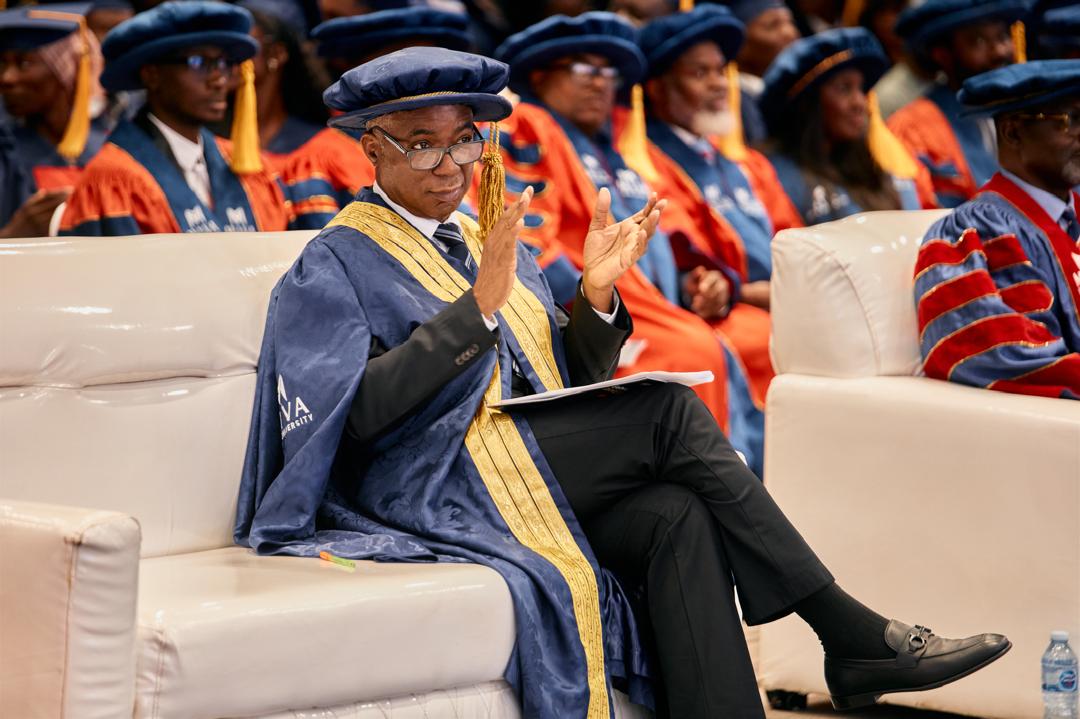
Miva Open University Pro-Chancellor Dr. Tunji Olowolafe has emphasized that digital education removes traditional barriers to tertiary learning by allowing Nigerians to secure degrees without sacrificing their professional commitments, business ventures, or domestic duties.
Olowolafe stated this on Saturday at the university’s 2026 matriculation ceremony held at the Transcorp Centre, Maitama, Abuja, where he urged newly admitted students to embrace lifelong learning and remain committed to completing their programmes.
He said the traditional university system had forced many Nigerians to choose between pursuing higher education and meeting their professional and family obligations, thereby denying the country access to the talents of many capable individuals.
“For generations, higher education in Nigeria demanded a heavy sacrifice: you had to put your life on hold,” he said, noting that Miva’s flexible learning model allows students to combine academic pursuits with work, business and other responsibilities.
According to him, the model reflects the changing demands of a world where continuous learning has become essential for professional growth and career advancement.
“The old pattern of studying for a few years and relying on that single degree for the rest of your career is over. The world moves too fast and continuous learning is now a lifelong requirement,” he said.
Olowolafe encouraged the matriculants to leverage their professional and personal experiences in their studies, explaining that practical knowledge acquired from workplaces, businesses and communities could enrich classroom discussions and help them solve real-life problems.
He, however, warned that the flexibility of online education required discipline and determination, urging students to approach their studies with the same professionalism as their jobs.
He identified consistency, active participation and commitment to completing their programmes as essential factors for success.
“The hard part of online learning is not starting – it is staying the course when life gets busy,” he said.
The Pro-Chancellor also cautioned students to prepare for internet connectivity challenges, joking that their first major examination might come from their internet service providers rather than their professors.
Olowolafe further highlighted efforts to expand access to higher education through the Gbemisola Olowolafe Miva Scholarship, established by the Tunji Olowolafe Foundation in partnership with the university.
He said the initiative was designed to ensure that financial constraints would not prevent academically qualified students from accessing university education.
“It is for this reason that the Tunji Olowolafe Foundation and Miva came together to establish the Gbemisola Olowolafe Miva Scholarship so that academic ability – not financial circumstance – determines who gets to learn,” he said.
Reflecting on the institution’s progress, Olowolafe said he witnessed the graduation of Miva’s pioneer cohort in Lagos in June, describing the graduates as evidence of the university’s mission to make higher education more accessible.
He expressed optimism that the newly matriculated students would successfully complete their programmes and return for their convocation.
Olowolafe, the first Pro-Chancellor in the university’s history, commended the institution’s leadership and management for developing a model of higher education that accommodates the needs of working Nigerians.
The ceremony featured a keynote address by Dr. Chikwe Ihekweazu, Assistant Director-General of the World Health Organization, and was attended by the university’s Founder and Chancellor, Sim Shagaya; Vice-Chancellor, Professor Tayo Arulogun; principal officers, members of the university council, staff, parents and guardians.
What You Should Know
Online university education provides a flexible alternative for working professionals and individuals with family duties who previously had to pause their personal development to attend traditional brick-and-mortar schools.
- Positive Impact: Students can balance jobs and academics simultaneously, while scholarships like the Gbemisola Olowolafe Miva Scholarship help remove financial hurdles for deserving candidates.
- Potential Concerns: The flexibility of remote learning demands high personal discipline, consistency, and resilience against frequent local internet connectivity issues.