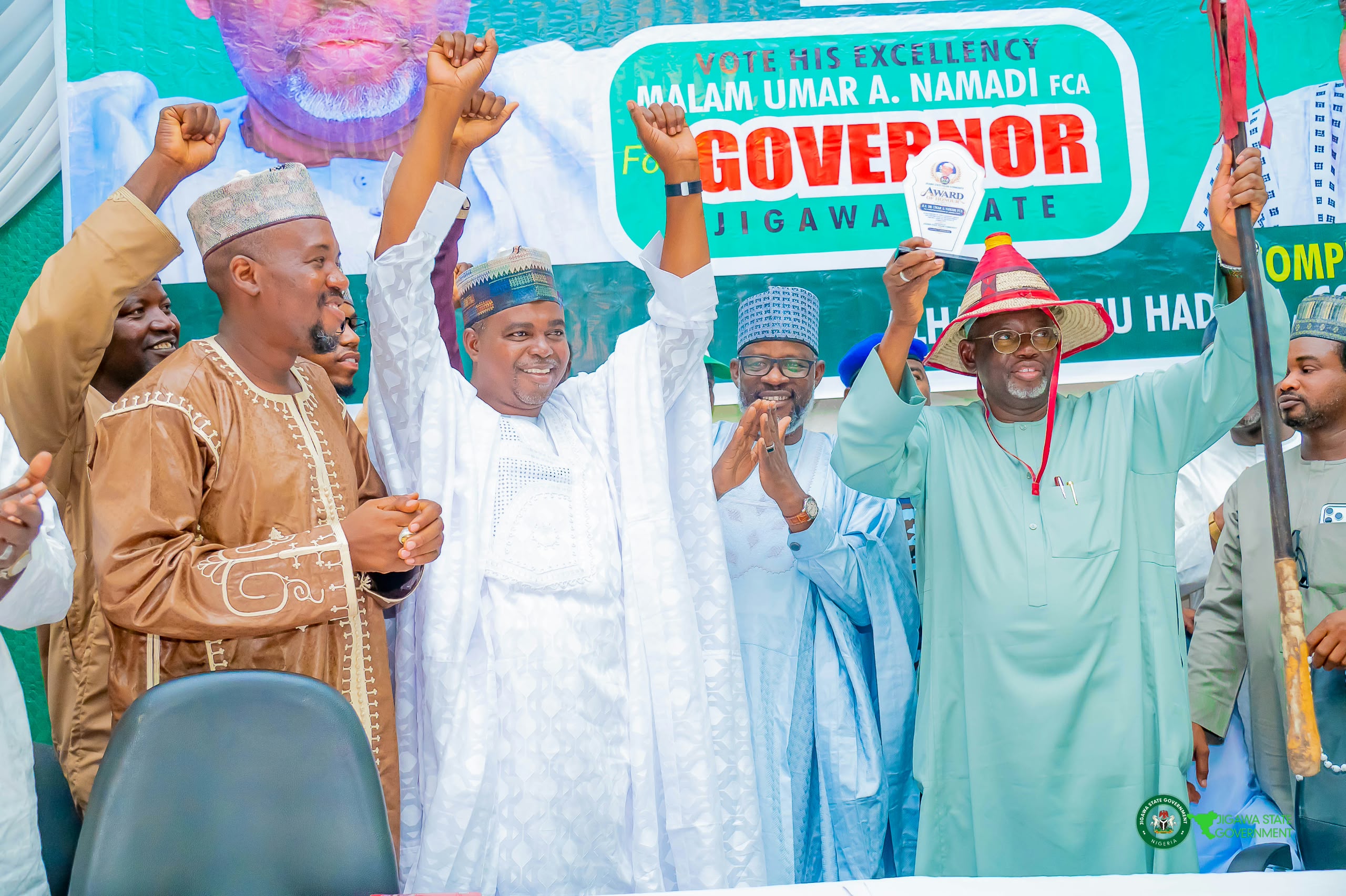
Ahead of the upcoming 2027 general elections, members of the Fulani population in Jigawa State have formally thrown their weight behind President Bola Tinubu, Governor Umar Namadi, and every candidate running under the platform of the All Progressives Congress (APC).
In a press release signed by the Chief Press Secretary to the Governor, Hamisu Mohammed Gumel, on October 17, 2026, the community announced its endorsement during a gathering at the Manpower Development Institute in Dutse, where it commended the state government for its livestock development initiatives and efforts to promote peaceful coexistence between farmers and herders.
The gathering was organised under the leadership of Alhaji Shehu Hadejia to appreciate the government’s interventions in the livestock sector, including the establishment of the Ministry of Livestock Development, the gazetting of grazing reserves and animal vaccination programmes.
Speaking at the event, Governor Namadi described the gathering as an opportunity for the community to express its support for the president, the governor and APC candidates in the state.
“Today is also another important day for us. Today, the entire Fulani community in Jigawa State is here,” he said.
He added, “You can see the number of people who came from all over the state. And they were here to endorse Mr. President, the Governor, and all the APC candidates in Jigawa State.”
The governor also highlighted his administration’s efforts to address the challenges facing livestock owners through the provision of grazing areas, watering stations and animal feed.
“We have provided watering stations in every location. We are also working to grow alfalfa so that there will be sufficient food for the animals,” he said.
“We are ready to provide feeds. We are ready to provide water, hospitals, schools, and everything else for them.”
Namadi further disclosed that the state had invested about ₦3.1 billion in artificial insemination over the past two to three years to improve cattle breeds and increase milk production.
He said the government had also continued regular animal vaccination programmes to protect livestock health.
The governor stressed that peaceful coexistence between farmers and herders remained crucial to maintaining stability in the state, urging communities to work with the government and security agencies to identify and report individuals whose activities could threaten public peace.
Earlier, community leader Shehu Hadejia said the gathering was organised to recognise the government’s efforts to sustain peaceful relations between farmers and herders, as well as its interventions in livestock development.
He commended initiatives introduced through the Ministry of Livestock Development, particularly the gazetting of grazing reserves, animal vaccination programmes and other measures aimed at improving livestock production and addressing the needs of herders.
Also speaking, the Commissioner for Livestock Development, Professor Salim Mohammed, outlined programmes implemented by the ministry since its establishment.
He listed the demarcation of additional grazing reserves, animal vaccination and sensitisation campaigns promoting peaceful coexistence between farmers and herders among the ministry’s key interventions.
What You Should Know
Herder communities in Jigawa State have publicly pledged their political backing to the current administration, driven by state-level policies aimed at improving livestock production and easing tensions between farmers and herders.
- Positive Impact: Enhanced government focus on livestock infrastructure, such as grazing reserves, water stations, animal health programs, and artificial insemination investments, helps boost milk and cattle production while fostering rural stability.
- Potential Concerns: While the collaboration aims to improve livelihoods, effective execution of promised provisions like animal feed and water access remains crucial for long-term peaceful coexistence in the region.