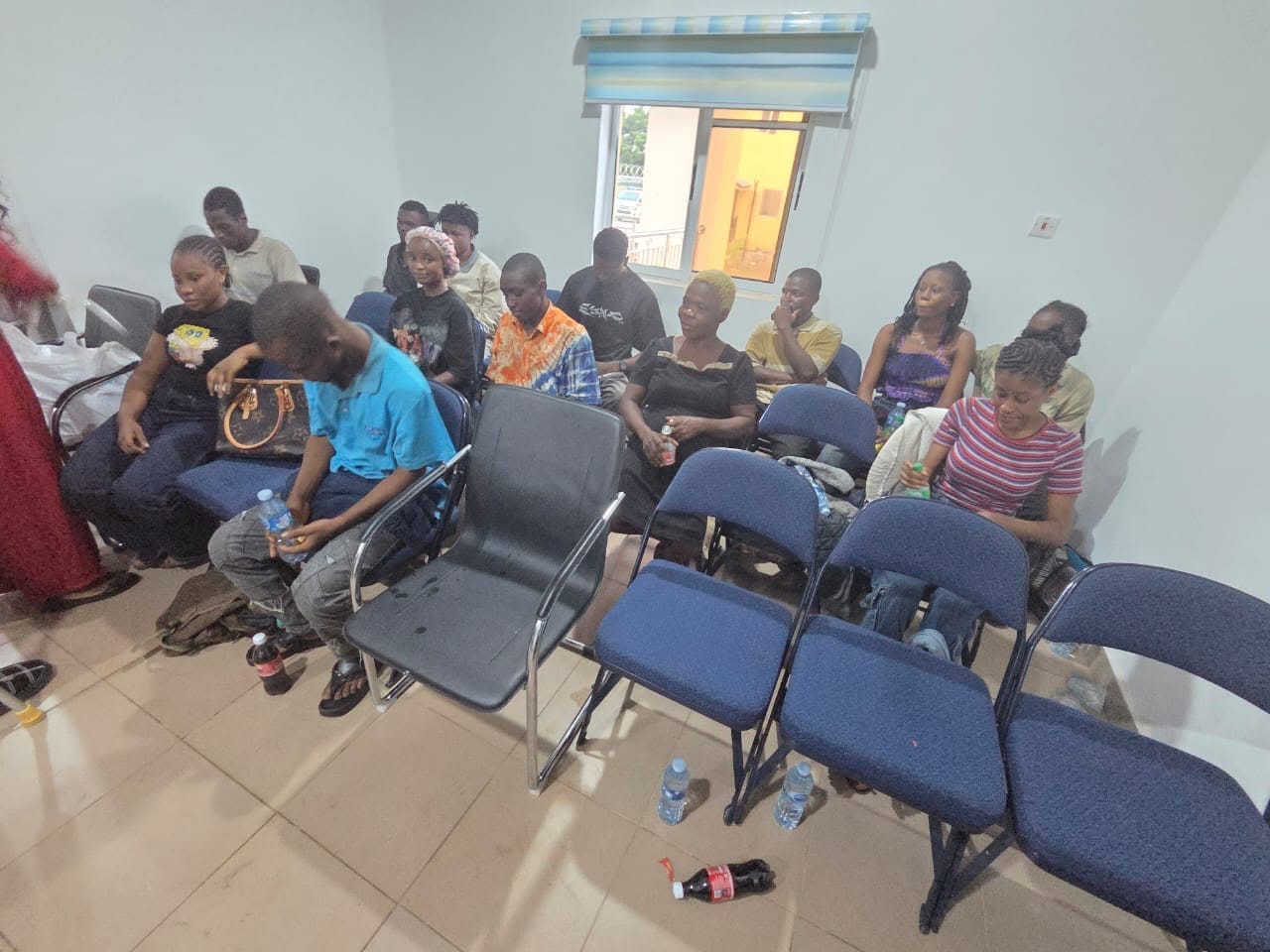
The mother of one of the 20 prospective National Youth Service Corps members recently kidnapped in Imo State has disclosed that her family was forced to pay N6 million to secure her son’s freedom.
This is despite earlier demands running into tens of millions of naira.
Alirat Wahab said the abductors initially demanded N50 million for each victim but later reduced the amount after negotiations with the families, who were desperate to secure the safe return of their children.
Speaking in an interview with News Central Television, Wahab said the family struggled to raise the money after the kidnappers eventually settled for N6 million for her son.
“Initially, they asked us to pay N50 million per head. We asked whether the amount was for all of them, but they insisted that no, it was for each person,” she said.
She said the family initially pleaded with the abductors to accept N500,000 but they refused.
She added that a subsequent demand of N15 million was eventually negotiated down to N6 million.
According to Wahab, representatives of the affected families were instructed to travel to Ibadan to arrange the ransom payment, with her husband and elder son among those who went on behalf of the family.
She said the family was later informed that the ransom had been delivered and that her son had been released, allowing them to speak with him.
Wahab said the ordeal had taken a heavy toll on her.
She described the relief she felt after learning that her son was free.
“Since he was kidnapped, I have been stooling. I couldn’t sleep either. But I was relieved when I heard they had been released. It was as though the chains all over me were loosened,” she said.
The disclosure comes a day after security agencies announced the recovery of all 20 prospective corps members.
The development brought to an end a week-long ordeal that had triggered anxiety among their families and renewed concerns over the safety of young Nigerians travelling to commence national service.
The victims were among passengers travelling from Ibadan to orientation camps in Abia and Akwa Ibom when the buses came under attack in Imo State.
The incident quickly became a major security concern because of the number of young graduates involved and the location of the attack along a major inter-state route linking the South-East with other parts of the country.
Aside the initial rescue of some passengers, security agencies faced the more difficult task of locating those taken deeper into the bush without exposing the captives to further danger.
That challenge became clearer when Imo State Commissioner of Police, Audu Bosso, disclosed that security operatives had used drone surveillance to locate the kidnappers’ camp.
Bosso, however, said operatives could not immediately move into the location because intelligence indicated that the area had been planted with improvised explosive devices.
He said security agencies were deploying additional operational equipment, including bulldozers and armoured personnel carriers, as part of efforts to gain access to the area while protecting both the victims and the operatives. corps members making their way to their respective orientation camps.
It also exposed the security risks faced by young graduates travelling long distances before reporting for the mandatory national service programme.
The police had initially said 10 victims were rescued shortly after the attack, while the remaining captives were pursued through sustained intelligence-led operations.
On Wednesday, the Nigeria Police Force announced that the remaining 20 prospective corps members had been rescued at Amakohia Ubi Village in Imo State through a joint operation involving the police, military and the Department of State Services.
The victims were subsequently taken for medical assessment and necessary care.
Although the immediate priority shifted to their recovery, the police said investigations were continuing to identify and arrest those behind the abduction.
What You Should Know
This news highlights the ongoing security challenges facing interstate travelers in Nigeria, particularly young graduates traveling for their mandatory national service. Despite official reports of rescue operations, families often face severe emotional and financial trauma through ransom demands from criminal syndicates.
- Potential Concerns: The incident underscores the continued vulnerability of major highways to banditry and kidnapping, raising fresh safety concerns for students and young professionals crossing regional borders. It also exposes how desperate families bypass official security channels by paying exorbitant ransoms, which can further incentivize criminal networks.
- Positive Impact: The successful eventual rescue of the prospective corps members by a joint security operation provides relief and demonstrates the capacity of combined security forces, such as the police, military, and DSS, to handle high-stakes kidnapping cases.