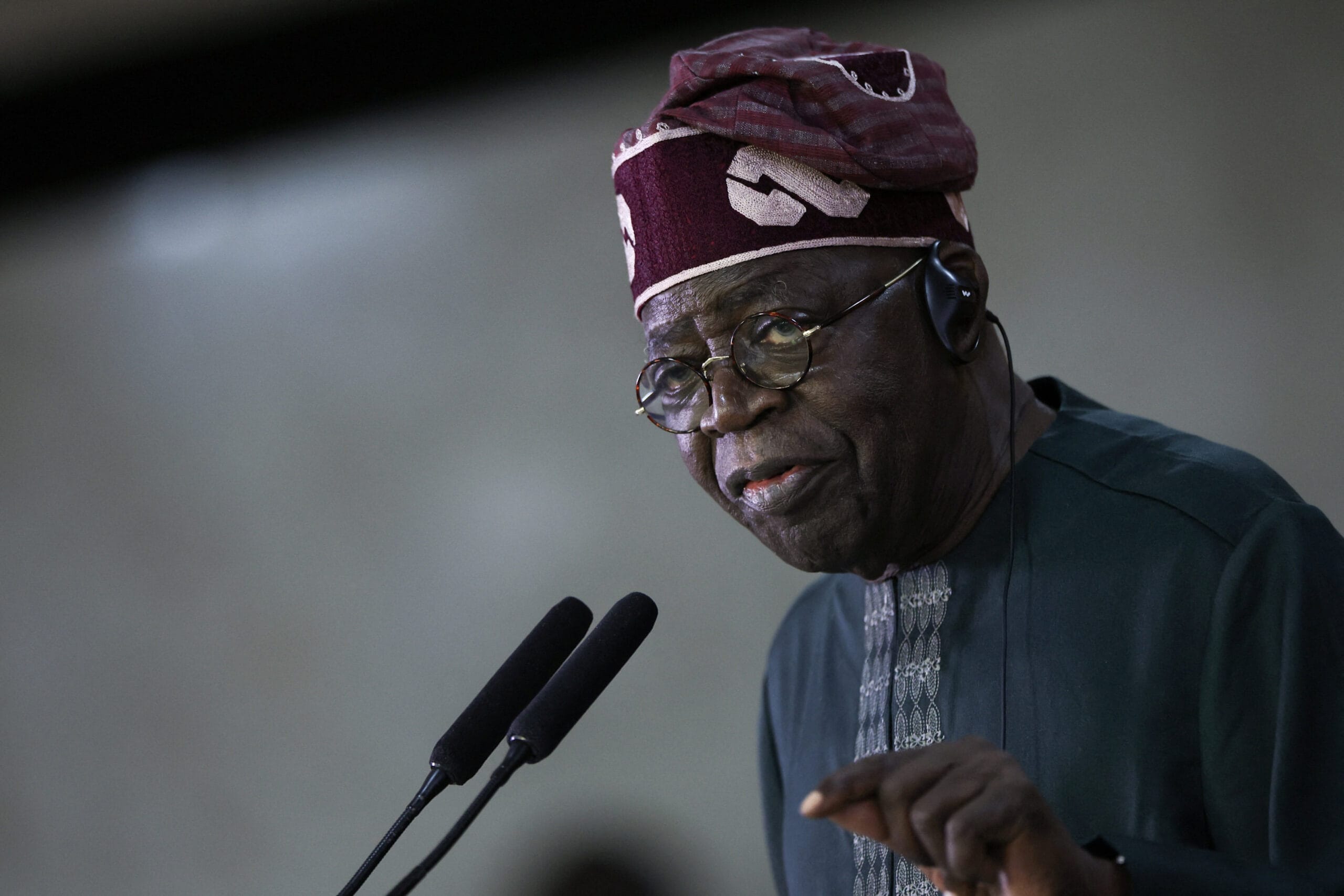
President Bola Ahmed Tinubu has formally asked the National Assembly for permission to obtain a new external loan of $7.7 billion, which equals about ₦10.79 trillion, to help finance the Federal Government’s ₦31.4 trillion budget deficit for the 2026 fiscal year.
The request, contained in a letter dated October 26, 2026, and addressed to the Senate President, was read on the floor of the upper legislative chamber during Wednesday’s plenary.
Following its presentation, the Senate referred the executive communication to its Committee on Local and Foreign Debts for further legislative consideration and reporting.
According to the President’s letter, the proposed borrowing is calculated at the budget benchmark exchange rate of ₦1,400 to the United States dollar.
The request complies with Sections 21(1) and 27(1) of the Debt Management Office (Establishment, etc.) Act, 2003, which mandates legislative approval for all external debt transactions.
Under the 2026 Appropriation Act, total new borrowings stand at ₦29.2 trillion to bridge the projected budget gap.
This comprises domestic borrowing amounting to ₦18.4 trillion and external borrowing, amounting ₦10.79 trillion ($7.7 billion)
“The 2026 Appropriation Act approved the sum of ₦29.2 trillion as new borrowings to part-finance the 2026 budget deficit of about ₦31.4 trillion,” President Tinubu stated in the communication, clarifying that the $7.7 billion request represents the full external borrowing component of the act.
Outlining the financing strategy, President Tinubu revealed that while the government will explore multiple international windows simultaneously, primary emphasis will be placed on Eurobond issuance due to speed and capital capacity.
“Emphasis will be on the issuance of Eurobonds, which is typically faster to conclude. Additionally, a larger amount can be raised through Eurobonds at a relatively lower cost in respect to the terms and conditions,” the letter read.
The President assured lawmakers that the Federal Ministry of Finance and the Debt Management Office (DMO) will negotiate the most favorable interest rates and repayment tenors based on prevailing market conditions at the time of pricing.
Highlighting the intended deployment of the funds, the President explained that the loan proceeds would support vital infrastructure and developmental programmes critical to national economic stability. Priority areas slated for funding include Defence and Security, transportation, agriculture, power, education and healthcare Furthermore, President Tinubu noted that the incoming foreign currency would be received by the Central Bank of Nigeria (CBN) on behalf of the Federal Government, thereby boosting Nigeria’s foreign reserves, stabilizing the naira, and reinforcing macroeconomic reforms.
Reacting to the letter, the Senate President, Godswill Akpabio, said the letter effectively cancels the earlier request that was sent for about $20 billion recently as the new request is much more explicit and takes cognizance of the fact that the borrowing is not going to be taken at once.
“We have to go out there and search for the best terms, and achieve what they call a win-win seller, win-win buyer approach,” the Senate President remarked before committing the proposal to the Debt Committee.
Minister of Finance and Coordinating Minister of the Economy, alongside the DMO, are expected to execute the debt issuance once final approval is granted by the National Assembly.
The committee’s report is expected back on the Senate floor as soon as practicable as public debate continues over Nigeria’s debt sustainability and fiscal management.
What You Should Know
President Tinubu’s request to borrow $7.7 billion is meant to bridge the huge budget gap for 2026, relying heavily on international bonds like Eurobonds because they are faster and cheaper to secure.
- Positive Impact: The borrowed foreign currency will be handled by the Central Bank of Nigeria to boost foreign reserves, help stabilize the naira, and provide funding for critical infrastructure like defense, power, and healthcare.
- Potential Concerns: Taking on more external debt adds to Nigeria’s overall debt burden, raising long-term questions regarding debt sustainability and repayment obligations.