Lagos State Governor Babajide Sanwo-Olu has revealed initiatives aimed at boosting the state’s electricity supply to above 3,000 megawatts by March 2027, scaling up from the current capacity of less than 1,000MW to help drive a thriving 24-hour economy and resolve persistent power deficits.
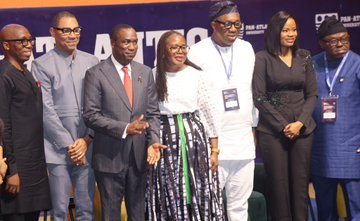
Sanwo-Olu disclosed this on Saturday through his deputy, Dr Kadri Obafemi Hamzat, at the Fourth Lagos Business School Africa Energy Conference (AEC 2026), held at the Honeywell Auditorium, Lagos Business School, along the Lekki-Epe Expressway.
The conference had the theme, “Securing Nigeria’s Energy Future: Policy Reform, Capital Mobilisation, and Pathways to a Sustainable Power and Energy Market.”
According to a post by the Lagos State Government on X, the governor said the state was working to mobilise an additional 2,000MW through national grid resources, independent power projects, energy hubs, power barges, energy traders and embedded generation.
He said achieving the target would require coordinated improvements across the electricity value chain, including power generation, transmission, distribution, gas supply and metering.
To drive the plan, Sanwo-Olu outlined a seven-point action plan focused on making the Lagos Electricity Market fully functional, increasing generation, strengthening distribution capacity, reinforcing transmission infrastructure, improving electricity networks and metering, strengthening gas-to-power arrangements, and enhancing information technology and market visibility.
The governor said the state was working to strengthen its transmission network, improve substations and distribution feeders, and expand metering coverage to reduce estimated billing and improve service delivery.
He added that the government was also working to establish clear contractual obligations, improve coordination among electricity market operators and regulators, and create a commercially viable environment capable of attracting private investment.
Sanwo-Olu stressed the importance of reliable gas supply to power plants and the use of digital systems to improve monitoring and accountability.
These systems include Supervisory Control and Data Acquisition (SCADA), Advanced Metering Infrastructure (AMI) and the Lagos Electricity Intelligence Platform, which the state intends to use to improve transparency and visibility across the electricity market.
On renewable energy, the governor said Lagos had completed the solarisation of about 42,000 of the approximately 50,000 streetlights earmarked for the initiative.
He also disclosed that solarisation projects had been completed in 175 public schools, while work was ongoing in another 100 schools.
Sanwo-Olu called on investors, financial institutions, energy operators and development partners to collaborate with the state government in delivering the electricity plan.
He said reliable power supply was essential to industrial growth, job creation, business competitiveness and improved living standards.
The governor added that the state’s focus was now on disciplined implementation and measurable results to support the development of a sustainable electricity market and strengthen Lagos’s economic growth.
What You Should Know
Lagos State government is rolling out an ambitious blueprint to triple its electricity generation and fix infrastructural bottlenecks across the power value chain, ranging from transmission and distribution to gas supply and metering.
- Positive Impact: Residents and business owners can expect improved power supply, lower operating costs for small businesses, reduced reliance on expensive diesel generators, and boosted economic productivity across the state.
- Potential Concerns: Successfully executing this massive power project requires heavy multi-sectoral coordination and private investment, meaning progress could face initial logistical and infrastructure delays.