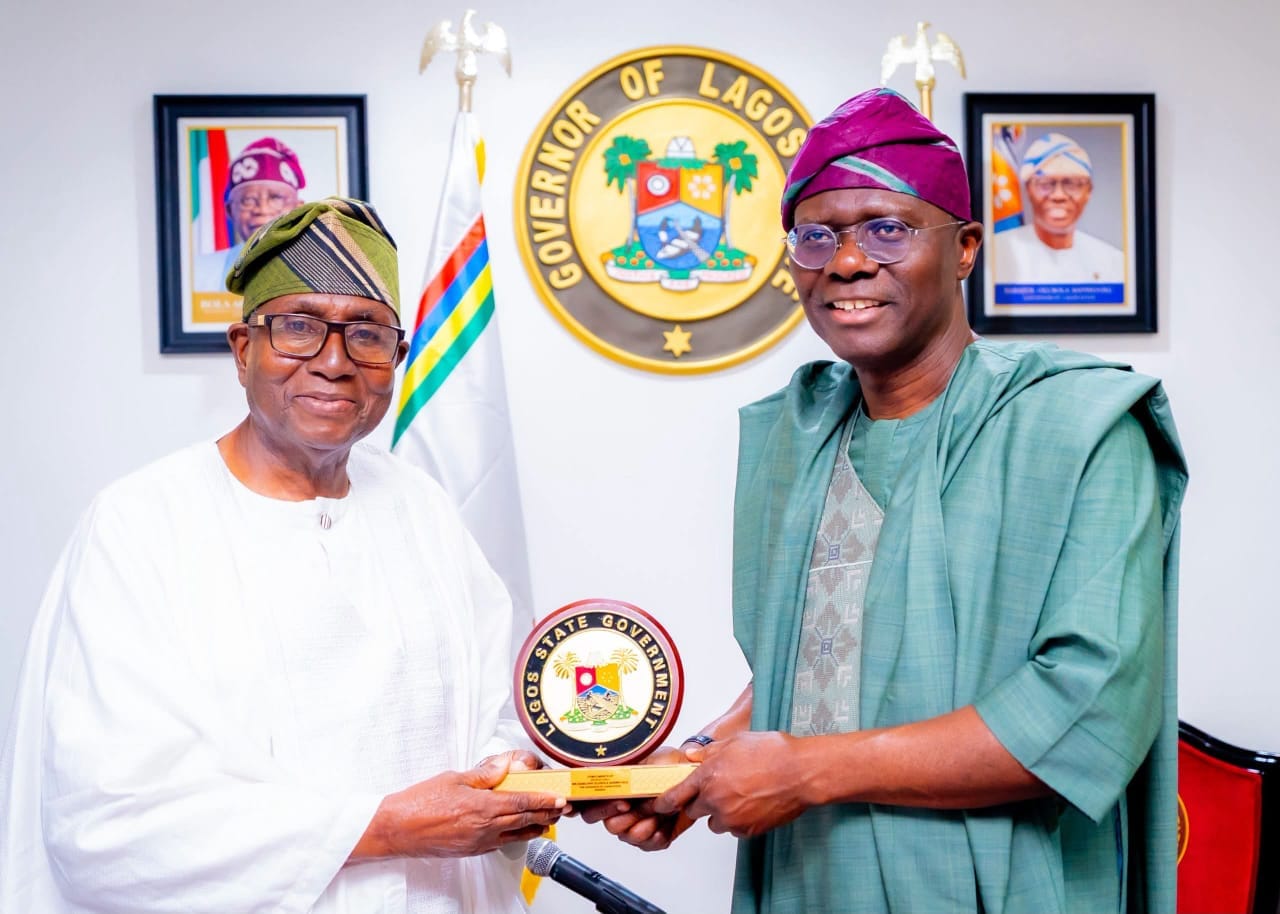
Lagos State Governor Babajide Sanwo-Olu and the Chairman of the state’s Governor’s Advisory Council (GAC), Prince Tajudeen Olusi, have praised the Muslim Ummah of South West Nigeria (MUSWEN) for driving interfaith harmony, religious tolerance, and peaceful coexistence across the South-West region.
The two leaders also pledged their support for MUSWEN’s forthcoming 11th General Assembly, scheduled for Sunday, November 15, 2026, at the University of Ibadan Central Mosque Hall, Oyo State.
This came during separate courtesy visits by a MUSWEN delegation led by its President, Alhaji Rasaki Oladejo, FCS, as part of efforts to mobilise support and build momentum for the forthcoming assembly.
Sanwo-Olu received the delegation at Lagos House, Marina, where discussions focused on the role of religious institutions in promoting peace, unity and mutual understanding among communities, as well as MUSWEN’s activities and preparations for the General Assembly.
The governor acknowledged the contributions of religious leaders to nation-building and commended their partnership with the government in sustaining an inclusive and harmonious society.
He assured the delegation that the Lagos State Government would be represented by a high-powered team at the General Assembly.
He also pledged support for MUSWEN’s proposed endowment fund, which is expected to provide sustainable financial backing for the organisation’s programmes and projects.
On the request for the reactivation of the Lagos State chapter of the Nigerian Inter-Religious Council (NIREC), Sanwo-Olu explained that the joint Muslim-Christian platform was already functioning in the state and enjoying the active support of his administration.
The governor also solicited MUSWEN’s support for President Bola Tinubu’s second-term ambition and other All Progressives Congress (APC) candidates in the 2027 general elections.
Earlier, the delegation had visited Prince Olusi at his office in Ebute Metta, Lagos, where the GAC chairman urged Muslims to deepen research into Islamic knowledge, teachings and practices, particularly the Qur’an and Hadith.
He advised Islamic scholars to take the lead in promoting a deeper understanding of the religion and ensuring that its teachings were properly applied to all aspects of human endeavour.
Olusi observed that Prophet Muhammad (peace be upon him) was not only a spiritual leader but also a political leader, stressing that Muslims should therefore demonstrate greater interest in politics and take an active role in Nigeria’s democratic process.
He cautioned against political apathy, urging Muslims to support the present administration in its efforts to deliver good governance.
The GAC chairman also charged MUSWEN to organise special prayers for peaceful, credible and successful elections in the country, while expressing appreciation to the delegation for the visit.
In his remarks during the two visits, Oladejo reaffirmed MUSWEN’s commitment to peaceful coexistence, religious tolerance, mutual respect and nation-building.He sought the support and participation of both leaders in the forthcoming General Assembly, including their attendance or representation, as well as moral, logistical and material assistance towards the successful hosting of the event.
Members of the delegation included MUSWEN Deputy President I, Alhaji Rafiu Adisa Ebiti; Deputy President II, Alhaji Thabit ‘Wale Sonaike; Executive Secretary, Professor Wole Abass; Baba Adinni of Lagos, Alhaji Sikiru Alabi-Macfoy; and Chairman of the Media and Publicity Committee of MUSWEN, Alhaji Mikail Mumuni, among others.
What You Should Know
Governor Babajide Sanwo-Olu and Prince Tajudeen Olusi have thrown their weight behind the Muslim Ummah of South West Nigeria (MUSWEN) as the organization prepares for its 11th General Assembly in Ibadan. Beyond preparations for the event, leadership discussions also touched on boosting regional security, supporting ongoing good governance, and exploring deeper civic participation among religious communities.
- Positive Impact: Strengthens interfaith harmony, enhances religious tolerance, and builds stronger community partnerships between religious groups and the government in the South-West region.
- Potential Concerns: Intersection of religious leadership and partisan political appeals, such as rallying support for specific electoral candidates, could raise concerns regarding the neutrality of religious platforms.