Federal Capital Territory Minister Nyesom Wike has called on citizens to turn away from political opportunists who manipulate public sympathy and the struggles of disadvantaged communities to secure government positions.
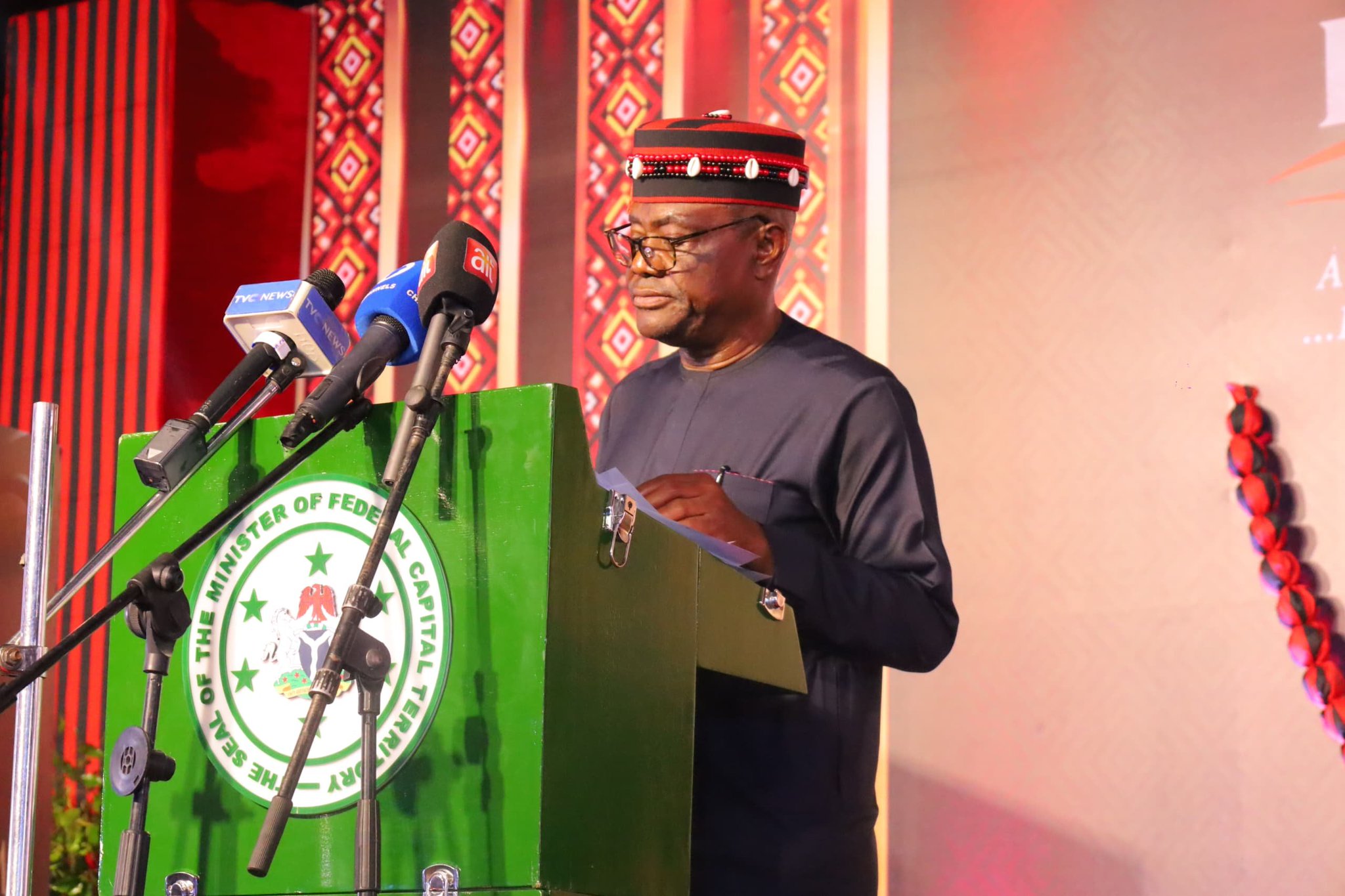
Wike made the call on Thursday, October 15, 2026, at the inaugural Idoma Hall of Fame induction ceremony held as part of the Idoma Centenary Plus celebration.
He questioned the sincerity of politicians who, according to him, ignored the downtrodden while in office but now visit internally displaced persons (IDP) camps to celebrate their birthdays because they want to become president.
The minister urged Nigerians to look beyond ethnic sentiments, political calculations and the struggle for power when choosing their leaders, insisting that competence, fairness, accountability and service delivery should take priority.
Delivering a keynote address titled ‘People, Politics and Power Play in Nigeria: The Agitation for Equity and Fairness’, Wike warned against politicians who exploit grievances over marginalisation to advance personal interests.
He urged citizens to scrutinise the intentions and records of political leaders rather than allow ethnic loyalty or entitlement to determine their choices.
According to him, demands for equity and fairness must not become opportunities for political opportunism or the redistribution of privileges among competing groups.
“One of the enduring difficulties of our political life is the tendency to convert public power into private possession,” Wike said.
He argued that when political office became a means of personal accumulation, public resources were diverted towards private enrichment, while sectional domination alienated citizens who felt excluded from governance.
The FCT minister warned that Nigeria’s quest for fairness would remain unresolved if political actors focused only on which ethnic group or region controlled power without addressing how it was exercised.
“If one group replaces another at the table while the benefits remain fundamentally exclusionary, the occupants have changed, but the injustice has not,” he said.
Wike also challenged Nigerians to examine their commitment to fairness, warning against demanding justice only when their own communities were disadvantaged.
“If we complain about marginalisation only when our own people are excluded, but become silent when others are marginalised after our people gain power, we are not opposing injustice; we are seeking access to its privileges,” he said.
He maintained that genuine fairness required defending justice even when it did not favour one’s ethnic group or political interests.
The minister called for a political culture in which public office was treated as a trust rather than an entitlement, stressing that Nigeria’s diversity should strengthen national unity instead of becoming a basis for exclusion.
He cited the federal character principle enshrined in the 1999 Constitution, as amended, as a mechanism for promoting national unity and preventing the domination of public institutions by a few states or sectional groups.
However, he cautioned that equitable representation must not come at the expense of competence.
“A Nigerian should not be excluded from public office because of where he or she comes from; neither should competence become irrelevant once a candidate’s identity satisfies a representational expectation,” he said.
Wike added that political leaders should be judged by the tangible benefits their decisions delivered to citizens rather than the identities of those occupying positions of authority.
What You Should Know
FCT Minister Nyesom Wike has warned the public against politicians who only show concern for the masses during election seasons while ignoring them while in office. Speaking at an Idoma event, he stressed that voters must look past ethnic loyalties and empty promises, focusing instead on true competence, accountability, and real service delivery ahead of the 2027 elections.
- Positive Impact: Encourages voters to demand genuine accountability and service from leaders rather than falling for election-time gimmicks.
- Potential Concerns: Highlights ongoing political manipulation, where public resources and ethnic sentiments are often exploited for personal ambition at the expense of national development.