
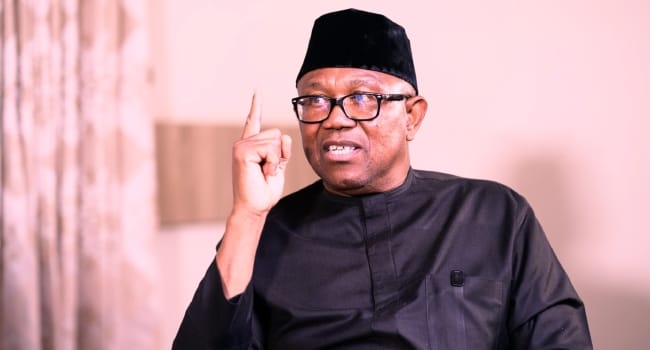
During his Independence Day address marking Nigeria’s 66th anniversary on Thursday, Peter Obi, the presidential candidate of the Nigeria Democratic Congress (NDC), asserted that the nation faces severe hardship with more than 140 million citizens living in poverty. Obi further highlighted several alarming metrics, pointing to over 18 million out-of-school children, a projection of more than 40 million people facing extreme hunger by the end of 2026, and youth unemployment and underemployment affecting over 35 million individuals. He also drew attention to rising drug abuse and low life expectancy as critical national concerns.
Recent monetary-poverty estimates from the World Bank and PwC put the number of Nigerians living below a poverty line at around or above 140 million, depending on the year, methodology and projection used. Other parts of Obi’s assessment are also supported to varying degrees. UNICEF’s figures put the number of primary and junior-secondary-age children out of school at about 18.3 million, while UN humanitarian projections show nearly 35 million Nigerians facing acute food insecurity during the 2026 lean season. However, these figures measure different forms of deprivation and cannot simply be added together or treated as proof that the same 140 million people are living in “poverty and severe hardship.” Most importantly, the latest official NBS multidimensional poverty survey found 133 million people to be multidimensionally poor, based on data collected in 2021/2022. No newer official national multidimensional poverty survey has established that the number has risen above 140 million. The available evidence therefore supports the broader picture of widespread poverty and hardship but does not conclusively establish Obi’s specific figure of over 140 million Nigerians living in poverty and severe hardship.
What You Should Know
This fact-check report examines the accuracy of various socio-economic figures cited by political figures in Nigeria, focusing on poverty rates, food insecurity, education gaps, youth unemployment, and public health concerns. Understanding these metrics helps citizens separate political rhetoric from verified data released by national and international statistical agencies.
- Positive Impact: Increased public debate and fact-checking bring greater transparency and accountability to national discussions, pushing leaders and institutions to rely on empirical data for policy formulation.
- Potential Concerns: Discrepancies in data and conflicting projections from different international and local bodies can create public confusion, amplify anxiety regarding the economic outlook, and complicate targeted government interventions.