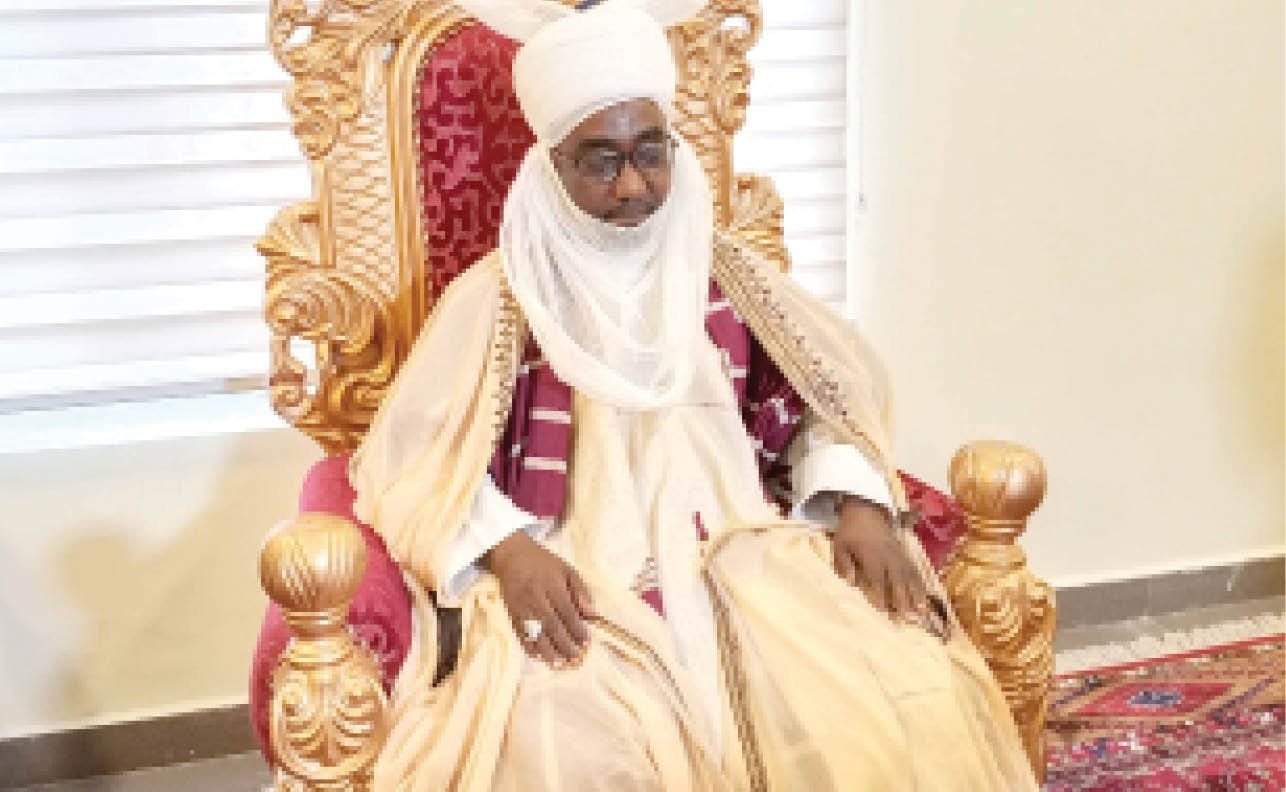
His Royal Highness, Alhaji Ahmed Nuhu Bamalli, the 19th Emir of Zazzau, will mark six years on the throne in October, 2026. A lawyer, banker and diplomat, Bamalli previously served as Nigeria’s ambassador to Thailand with concurrent accreditation to Myanmar. Before his diplomatic posting, he worked in the banking sector and served as the executive director and acting managing director of the Nigerian Security Printing and Minting Corporation. He was also a permanent commissioner in the Kaduna State Independent Electoral Commission. He held the traditional title of Magajin Garin Zazzau before his emergence as emir. Born in Zaria in 1966, Bamalli read Law at the Ahmadu Bello University, Zaria, and later obtained a master’s degree in International Relations and Diplomacy. He also undertook leadership and conflict resolution programmes at the Oxford University and the University of York, among others. He is the first emir from the Mallawa ruling house to ascend the Zazzau throne in 100 years following the death of his grandfather, Emir Alu Dan Sidi in 1920. In this interview with Weekend Trust conducted ahead of his sixth anniversary, the emir spoke about his royal lineage, how he emerged as emir among other issues.
It is now about six years on the throne. Every prince wants to be an emir. Were you prepared for it when God bestowed the throne on you?
Well, Alhamdulillah; and thank you very much for finding time to be in Zaria at this time, which is about a month before my sixth anniversary, Insha Allah.
On your question – if I was prepared for this position – as you know very well, anybody coming from this system certainly would want to be blessed to join the line of ancestors and to one day be enthroned as a successor of his ancestors. That is by occupying this position.
I can say that left, right and centre, I am connected to the system from my paternal, maternal and even relationship with other ruling dynasties through marriage and extended family relationships. I think the only ruling house I am probably not directly connected with is the Suleiman Dynasty.
You are talking about the four ruling houses?
Can you explain more on the relationships?
Okay, my own ruling house is Mallawa. It is the pioneer ruling house. My great-grandfather, Mallam Musa, was one of the lieutenants of Usman Dan Fodio. He actually participated in the establishment of the caliphate at the Battle of Tabkin Kwatto, around 1804, in the wake of the jihad.
Thereafter, he was posted to Zaria around 1808. Professor Murray Last told me four or five years ago that my great-grandfather moved into this house (emir’s palace in Zaria) on December 31, 1808.
He even gave me the actual date of his coming here as the leader of the jihad here in Zaria. He was given the flag of authority as a representative of Shehu (Usman Dan Fodio) to come to Zaria. So that’s my main family.
And my mother is a direct descendant of Sultan Muhammad Bello, Sultan Aliyu Babba, son of Bello. That is my maternal lineage, direct to Usman Dan Fodio.
And my mother’s grandmother, father of her own father, came from the second ruling house here, the Barebari Dynasty in Zaria. She is the granddaughter of Makama Jafaru.
Makama Jafaru is one of the sons of Sarki Abdullahi from the Barebari Dynasty. That is the grandfather of Emir of Zazzau Mallam Jafaru. That’s the lineage.
So, my mother and the children of Emir Jafaru and other cousins within the family are all first and second cousins from her father’s maternal side also.
And the third ruling house, by marriage, my wife is the daughter of my predecessor (Alhaji Shehu Idris).
So those who are saying you came from the blues probably don’t have this information. It is one century – from 1920 to 2020 – exactly 100 years after we had the last emir from the Mallawa Dynasty. How did it happen?
Well, it is because people don’t read. And the length of time between Sarkin Zazzau Sambo and Sarkin Zazzau Aminu was 74 years. They disappeared from the scheme of things in Zazzau. Seventy-four years are a lifetime.
So after them, even the Borno Barebari Dynasty has been out of this house today, 67 years. Jafaru died in August 1959. It is already 67 years.
It is not only the Mallawa that disappeared from the scene or did not make it to the throne for a century. The last ruling house, the Suleiman Dynasty, only ruled for four years; which was an aberration. So, in the last 150 years, they were not in this place. This is how Zaria is structured.
And the four ruling dynasties are not related to one another. Probably, I am the only emir related directly to other ruling houses by blood.
All the dynasties are independent?
We are all independent.
When you took us round this spacious palace, something struck me. It’s like you are documenting each of the dynasties. What is the motivation?
As far as I am concerned, Alhamdulillah, by his grace, Allah decided to choose me and put me in this exalted position to be a leader of the entire Emirate of Zazzau, not by design, any influence or anything, from a position of weakness to position of greatness. Allah can elevate people from positions of weakness to positions of greatness, and vice versa.
In that regard, you can see that we were out of this palace for a century. I was appointed emir on October 7, 2020. My coronation was November 9, 2020. Coincidentally, November 9, 2020 was the exact date my grandfather, Aliyu Dan Sidi left the emirship; and the 100th anniversary was my coronation day.
Was it by accident or design?
An act of God.
You were out of the country when your in-law, Emir Shehu Idris, passed on. How did it happen?
I was serving as Nigerian Ambassador to the Kingdom of Thailand, with concurrent accreditation to the Union of the Republic of Myanmar.
Then, on September 20, I was actually saying my Asr prayers when someone called me. After I finished, which was morning hours at that time here in Nigeria, I called him back. He realised that I didn’t know what happened back at home here. So he said he was trying to find out if I heard anything from Zaria. I said, no, what happened? He said, no, nothing.
He was just asking me; he didn’t know whether I was in touch. I said yes. I spoke to home few hours ago. He said okay. So we continued talking. He said maybe I should call the palace because he saw some movements there. It didn’t occur to me. Then I placed a call and heard that the Emir had passed on. My wife was in the other living area. I went and sat next to her. She was looking at me and wondering why I had to come and sit shoulder to shoulder. Then I broke the news to her.
It was a devastating moment in the house. And we were trapped. We could not move an inch.
Was it because of COVID?
Because of COVID. We were only two hours away from Wuhan (the capital city of Hubei Province in China). We spent over two months and didn’t even step out of the door.
It was very intense and severe, so I tried to control her and the children. I started making calls up to the time they brought him (the late emir) home. Everybody was calling me from all over the world when the news broke out. That was when I became disoriented. How could we get out of Thailand? It was impossible. Subsequently, I remembered that I had a friend who happened to be my classmate at Harvard Business School. He’s from Addis Ababa and he happened to be an executive of the Ethiopian Airlines.
I spoke to him. We greeted and I said I needed to go home because I lost my father-in-law and emir. He said, “Okay, Ahmed can you give me 10 minutes?’ He called me in less than five minutes to request if I could get them a landing permit in Bangkok airport.
I called the state chief of protocol and gave him my request. He too said I should give him like 10 minutes. He called me back to say, “Okay, the permission is granted,” but I should get them the details of the aircraft, which was the first condition.
And on the second condition – that no human being should be dropped in their soil (Bangkok) – if it was a plane that would come and take me and my family, permission was given.
So I quickly informed this guy (the Ethiopian Airlines executive) and he said, “Okay, go and do your COVID-19 test.” We were five in number: me, my wife and my three daughters.
One of the girls had just entered part three in the university, so I said, “We will leave you behind to complete your education here, but the remaining younger ones, let us go and do the COVID-19 test.”
We all did the COVID-19 test, including the one that was not travelling with us; which was good. We had to fast track to return her to boarding house that day. We did all the arrangements for her to move out of the residence.
Then we communicated to him and forwarded the details of our results via WhatsApp. He said, “Okay, Ahmed, Your Excellency, 10pm the flight will arrive. Then we will take you home.”
I asked how much that would be because back home here, most of my friends that were pilots were consulting each other that I was out of the country.
Everybody was concerned that the stool was vacant. All my contemporaries and personal friends wanted me to be here and I was in faraway Asia. All other princes that wanted to be appointed had already submitted their applications, even from the very day the emir passed on.
You mean before he was buried?
Yes. How to get out of Thailand was not just to be part of the race but at least to be back at home.
Your concern was not to be the Emir, just to come home?
My wife was the only child of the late emir that was absent. And it was already five days at that time. So you can understand the anxiety. And everybody was at home. I was the only one among all the princes that was out of town also. So, I and my wife were not on ground.
Finally, we got to the airport. The airline said I was even entitled to a 30 per cent discount as a diplomat.
Was it the Ethiopian Airlines?
But we heard the story that former Governor Nasir el-Rufai chartered an aircraft to bring you back; is that correct?
That’s what I heard when I came to Nigeria. But I paid; the receipts are there. Or you can check the Nigerian Embassy in Bangkok. They paid for me and my family to return home. We paid $9,000 and got back home. At the airport was when the issue of succession came up. My cousin, the late Alhaji Abdulkadir Iya Pate, placed a call to me, saying they had not heard from me. I said I just got a flight coming home and “Insha Allah, by tomorrow I will be arriving Nigeria because you know the whole world was shut down because of COVID.”
He said they were not talking about COVID but the throne. I asked what about it and he said, “We have not seen your application. And some people had already applied since the very day the emir passed on.”
I asked, “So for someone to become an emir you have to put an application?|” He said that was the procedure and I said, ‘Okay, so count me out.’
You said they should count you out if you must apply to become an emir?
Yes, I said count me out because I would never write an application to be appointed an emir. If the kingmakers and the government felt that was suitable for the position, they could go ahead and give me and I would be happy if I was appointed, at least to succeed my ancestors. But for me to apply, I would not write.
We started arguing, and he said: “Okay, hold on for a second.” Then he placed me on speaker and said, “All the members of our family are here – titled members – and we have all agreed that you should be our candidate. We are nominating you as our candidate on behalf of the Mallawa Dynasty. Since you are insisting that you are not going to write, tell us in one word that today you are sacrificing the house of Mallam Musa, our ancestor.”
That was when I went dead quiet on the phone. He said, “Magaji, are you still on the phone? I said, yes, Talba, and he said, “Okay, we are listening.”
I heard the voices of Marafan Dawaki, Zailani and some others who were all seated there. I then agreed to write because what they said truly touched me – to sacrifice the entire dynasty because I would not write an application? I used my phone to write the application and forward to my younger brother, now the chief of staff. He was the manager of Legacy Pension in Kaduna.
I sent him what I drafted and said he should print it. Then I forwarded my curriculum vitae to attach to it and take to Dokajen Zazzau, the private secretary to the late emir here. He did that.
I told him to call and tell me what happened by the time we arrived in Addis. When we arrived, he called and told me that he did everything I directed.
Dokajen Zazzau said he should go and give it to the former Wazirin Zazzau, Alhaji Ibrahim Muhammad Aminu, who was seated with other members of the Council of Kingmakers.
So he went to him (the then Waziri), greeted him, gave him the letter and said it was from Magajin Garin Zazzau. He opened the letter in the presence of my brother and other people who were coming for condolence. After reading it, he threw it on the floor.
You mean he threw away the letter?
Yes, the application.
You mean the then Waziri?
Yes, the leader of the kingmakers, the former Waziri that we sacked. Since that time, you could tell clearly that he had someone in mind. He had a mindset and that was the reason for that uncomplimentary behaviour. This is someone that was supposed to be an umpire, chairman of the Council of Kingmakers. Even if you don’t like me, of course I don’t deserve to be disrespected.
This boy came back and narrated what transpired. I told him to just forget about it as I didn’t even want to apply. They forced me to apply. I told him to disregard it.
When we arrived in Abuja, most of my schoolmates and personal friends came to condole the people of Zaria. Public servants and all workers converged on Abuja airport the day we were arriving.
I met over 60 people – men and women. They left their offices after hearing that we were coming back, just to commiserate with us because they knew that certainly, we would proceed to Zaria.
When I arrived at the airport and came to the immigration area, we gave them our passports. Then I brought out my phone, and as soon as I switched it on, it rang.
Then I saw Peter, the personal assistant to Governor Nasir el-Rufai. I asked how he knew that I was in Nigeria because I just arrived. I didn’t know that I was separated from him by the glass there. He saw me; and that was why he tried my number.
Peter came to pick a guest to the government who was coming from Australia. The man slept over at the airport. We took off without him from Addis to Abuja. When he saw me, Peter placed a call to the governor that the man just called to say that he missed his flight. And he saw me coming out there. He said, “Okay, since they are also coming home, why not pick them and come since the man you went to pick is not there. That’s exactly what happened. When we came out, we greeted and he said, “I just spoke to oga (Governor El-Rufai and he said we should carry you in our vehicles since you are also going home.”
I said no because I had already spoken to Yakubu Shehu, my friend and relative, a director at the NDIC, saying that when we arrived we were going to go to his house to eat, change our dresses and take the train to Kaduna, then proceed to Zaria. That arrangement was in place and Yakubu was at the airport also.
Arguments ensued there. They said they could take me home to change and even keep my boxes before heading to Zaria.
They convinced us because we didn’t have to wait until 6pm to take the last train. And my wife was desperate. She needed to go home because it was six days after the passing of her father.
We went to my house. My late cousin’s wife, the late Magajin Sokoto, Alhaji Hassan Ahmed Danbaba and his wife, Habiba Yakubu and her sister, Aisha, wife of Bashir Dalhatu, were all at the airport; and so many others. They followed us to our house in Garki. When we changed, they said we should not leave our boxes because they were doing some renovation work in the house. We came back impromptu.
They took all our boxes to the house of the late Magajin Garin Sokoto. The wife took them there and said if we needed anything she could always send a driver to bring it to Zaria. So, we took a box each and left for Zaria.
We arrived at this house (palace) at 9.15pm and it was raining that evening. So, I dropped my wife. She went in, then I and my two daughters went to my house. The next morning, I said it was the seventh day, let me go round and greet all the council members at least, then other people. I expected that they would come to commiserate with me also because in the ranking order, I was the most senior prince at that time in the emirate.
Are you referring to the four dynasties?
At that time we didn’t have Madaki; he was the only one whose title was ahead of Magaji Gari in our system here. I initially placed a call to the then Waziri, Salamu Alaikum His response was absurd. That was the second leg of the hostility.
You probably called to commiserate with him?
Yeah. I wanted to tell him that I was going to come and greet them in their respective homes because it was already seven days. So I was shocked. And this is someone I had an excellent relationship with all the years before that time. I never had any misunderstanding with him. I was the most senior, yet I was the only one that removed my alkyabba (a cloak or royal overcoat) when I had to greet the Waziri despite my pedigree, standing and position in the system.
Was that a mark of respect to him?
It was a mark of respect. I only did that for the emir, but I did it for the Waziri. I removed it and went down to greet him. He treated me like a common criminal. That’s true. I really felt slighted by that attitude. Even if you didn’t like me and you had a preferred candidate, I didn’t deserve that.
Who was his preferred candidate?
I wouldn’t know. His attitude was a corroboration of the information I received before arriving on the way he treated my brother.
Are you making reference to when your brother submitted your letter of intent to become the emir?
Yes. I didn’t believe that it was true. I waited until 10am. I was even pinching myself asking if this could be Waziri because this is someone I had a very good relationship with; and I was not even in the country to offend him or to do anything. So it was very strange to me.
At 10am I called him again. He said ina da lambar ka fa (Look, I have your number), which means he knew what he was doing. Then I said I was not going to greet anyone of them. If they thought I wanted to go and lobby for the position, they should forget about me. That was what was in my mind. But I decided to go to the palace and greet the people there, at least to commiserate with members of the family.
I saw three of his children; one is late now, Sarkin Dawaki. We went to the graveside of the late emir and I prayed for him. Then I asked if it was convenient and possible for me to greet my mother-in-law and the three other wives in the house.
I had never entered their apartment prior to that time; and I was married to his daughter for 30 years.
Not even once?
Not even once.
Then where did you meet your mother-in-law?
Well, I met her for the first time when I went to Saudi with my wife in 1993 after our marriage. And then in the Haram (sacred area) we were walking, going into the Masjid al-Haram in Mecca. Then I saw a batch of women seated there and then, instantly, she pulled back. And then I saw them trying to cover their faces: the wives. Then I sensed, and my wife said her parents were here.
And that year, coincidentally, Sultan Dasuki, my late uncle, also happened to be the leader of the federal government delegation. Then the late Emir of Zazzau was the Amirul Hajj. So she greeted them and I greeted them.
What prevented you from seeing your mother-in-law for that long?
You cannot enter into the women’s section.
But you are part of the family…
Yes, well, that does not mean that you have access. From what I heard, even the children of previous emirs, once you are above seven years, you cannot go in and see your mother. If you have to see your mother, they will bring you to a certain place and the mother will come to that location and see you. This was the tradition, unlike other places that you see people going in and out of the women’s section. It’s not done here.
We have come a long way in understanding what happened before you became the emir. What were the challenges you faced after you were appointed?
You see, it was not a new thing at that time because I directly served as Magajin Gari, which is the second most senior royal title in the emirate for 19 years.
Prior to that time, for 20 years, I was like always representing my father when he was still alive. When he passed on in 2001, I became his successor as Magajin Gari.
So, technically, if you look at it, out of the 45 years of the late emir on the throne, for 39 years I was directly in that position as Magajin Gari. So 99 per cent of the people you see today as district heads in Zaria met me. So there is nothing new to me in the system. Only that previously, I was a follower, although occupying a very senior position, but now, I am the main driver.
Anybody who came here seven years back would probably need a guide to get to certain places. What is the motivation behind the modernisation of the palace?
Alhamdulillah, I have travelled to places. I have seen places that used to be empires, kingdoms; and I have seen those that were able to survive, and some that disappeared into thin air.
What was the reason for the disappearance of those empires and kingdoms and palaces all over the world? It is because people refused to embrace modernity. So, without destroying the history of every system, you can actually improve, modernise, upgrade or restore an institution or even the infrastructure within the palaces. That’s what I embarked on.
One role model that did this to my satisfaction was my uncle, the late Sultan Ibrahim Dasuki. I recall what used to be the Sultan’s palace in Sokoto before his time. And when he came back, they were building that palace 24/7 shifts. Julius Berger constructed that house. And then my twin brother, the Emir of Kano came on board again.
You know you look alike?
No, he is struggling to look like me (laughs). So, he too, did very well even though the late Emir Ado Bayero of blessed memory did a lot also in Kano. But when Emir Sanusi came, he contributed significantly in remodelling and reconstructing certain parts of the palace. That’s what I tried to do.
My predecessor, the late Emir Shehu Idris also did some work which was suitable for the period he reigned. And I believe that even those before him did things to the best of their abilities.
We had been out of this place for a century. You cannot trace anything to our family, so God in his grace decided to bring me back, 100 years after my grandfather. When I will leave is in the hands of God, but time doesn’t wait for anyone, so if you have anything in mind, do it, provided your mind is clear and you have a vision. My vision was to transform this palace to look like a palace and decent place for a human being to live.
It is already one because we have seen the big courtroom, the archives and even the residential area for the courtiers, among others…
Yes. For the museum and documentation centre, something prompted me to do that. You have seen the guy that is scanning documents for years, which will be saved as an electronic archiving system. We are putting it in place so that at least we don’t lose those documents.
We have thousands of files now that they are scanning and storing in the system so that at least we would save the original copies. And some have started going bad, being destroyed by termites. And of course we are now going to keep them in safe and secure places.
You were a banker; you Law, but then, you know a lot of history, which is evident in the way you explained things to us without any paper while taking us round the palace. What is the secret?
Well, I love history. In my secondary school I was the best student in history. I had a distinction in Government College. So, even if I don’t read the book, yes, maybe my brain is meant for history, not law or any other thing. And I was lucky to have a father that was old enough to be my grandfather. So I learned so much from home about the history of the emirate and the history of the world. I think I derive pleasure when I read history books.
We were also shocked that you personally took us round the palace. Ordinarily, somebody should take us round, but you took us round for over two hours, how was it so?
The reason I had to take you personally is to showcase what we do. And I believe that through your medium, other parts of the world or the emirates of northern Nigeria will learn from us here, just the way we learn from others.
This is the first time we are documenting this. It is a huge project. We don’t have any budget for that. We try as much as we can; if we have sponsorship, we do it. When we don’t, with our little resources, we try as much as we can. We invest in it. And we are not asking for any refund.
Where are you getting the money for the modernisation of the palace?
Well, you don’t have to be a rich man to be able to attract sponsorship. I keep telling people, and God is my witness, that I have never given out monetary zakat in my life because I have never saved money for the period to be able to pay zakat.
You have never given out zakat?
I have never saved enough money. Yes, that’s how I live my life. This is me. I have never done that. And I live in peace.
I have seen so many things in the transformation of Zaria, but there is one thing the emirate is doing that I won’t say others have not done: the interventions you are making in the communities; but anything that has to do with Zaria and Zazzau, you see the Emir everywhere.
As far as I am concerned, you have to live with your people. You have to know what they are up to, how they live, how they survive.
I swore by the Quran that I would be fair and just; I would look after them. And, you know, from time to time I sometimes I feel like breaking down.
By my bedside, there’s a book I always read. And I always saw that book by the bedside of my late father. It was written by Abdullahi Fodio. Sometimes I feel as if I’m not going to see the gates of heaven if I don’t do the right thing. So that book is always putting me closer to God and what I am expected to do as a leader. And leadership is not about accumulation, it is not about vanity or flamboyance or anything, it is about service to the people, service to humanity.
I have only one house in Zaria. In Abuja, I have only one house. And I know how I was able to get the house.
This sounds very strange. You worked in the bank; in fact, you were the managing director of the Nigerian Minting and Printing Company, an ambassador, among other endeavours. You have seen it all and here we are…
I didn’t see any reason why I should accumulate wealth because my father left nothing. He left only N11,000 and five pieces of cloths behind.
The late Magaji Zazzau?
Yes. You can ask any of my siblings.
We thought you saved a lot in order to become the emir…
He (my father) had no car. The only car he had at that time belonged to Leventis Group. He was the chairman of the group. And when he passed on, they dashed it to the family.
Are you saying you didn’t save to campaign to become the emir?
I didn’t have anything. The only money in my account was the Foreign Service allowances we were given like salaries every month; that’s all.
You mean the money you got as an ambassador?
Yes. Money cannot fetch you this position.
What is your relationship with El-Rufai? Many believe that although you were eminently qualified, he was instrumental to your ascending the throne…
I am his uncle. I am his father’s cousin. Myself and the Speaker of the House of Representatives, Abbas Tajudeen, are his uncles. That is the relationship.
Your Highness, we have had an elaborate interview with you; what would you like to be remembered for?
My prayer is to be remembered as a just leader; that’s all.
Credit to our Media Partner DailyTrust .