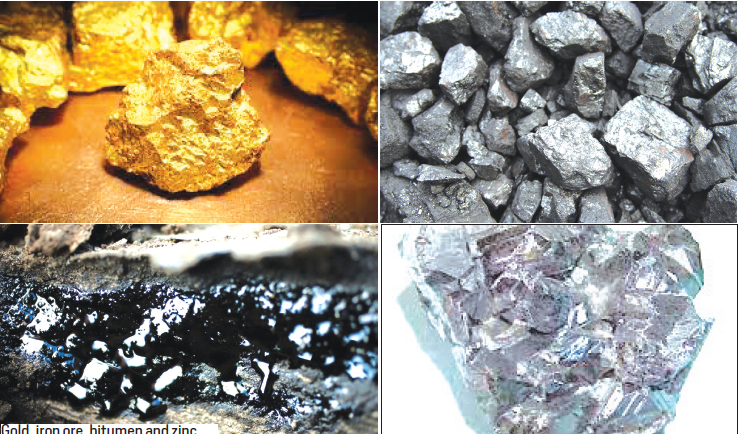
In Part I of this column, we examined Kogi State’s enormous mineral wealth, the problem of value addition, illegal mining, weak enforcement and the importance of leadership.
But there is another question:
What should Kogi actually do with its resources?
One of the most important answers may lie in Ajaokuta.
Ajaokuta Economic City: From Promise to Reality
For years, the idea of an Ajaokuta Economic City has represented an opportunity to connect Kogi’s mineral resources with manufacturing, trade, logistics and investment.
The project is now officially designated as the Ajaokuta Economic City Free Trade Zone.
This is an important development.
In February 2026, the Nigeria Export Processing Zones Authority (NEPZA) issued the official licence/certificate of declaration for the zone. The project covers approximately 4,000 hectares, following federal approval for its establishment.
The licence is significant.
But it is not the destination.
A Free Trade Zone certificate does not automatically produce factories.
It does not build roads.
It does not generate electricity.
It does not bring investors.
It does not create jobs.
Those things require implementation.
That is why the next stage of Ajaokuta Economic City should be measured not by ceremonies or announcements but by physical and economic milestones.
Where are the serviced industrial plots?
Where is reliable power?
Where are the factories?
Where are the anchor investors?
Where is the logistics infrastructure?
Where are the mineral-processing companies?
Where are the manufacturing jobs?
These are the questions that Kogi’s people will ultimately ask.
Ajaokuta Must Not Become Another Unfulfilled Industrial Promise
Kogi has experienced enough industrial promises to understand the danger.
The Ajaokuta Steel Complex itself is perhaps Nigeria’s most famous example of an industrial dream that has remained incomplete for decades.
The Economic City therefore presents both an opportunity and a test.
If properly implemented, it could connect:
Itakpe iron ore → Ajaokuta steel → engineering industries → manufacturing → national and regional markets.
It could also connect Kogi’s limestone, agricultural resources and other minerals to processing and manufacturing enterprises.
This is the kind of ecosystem Kogi needs.
Ajaokuta should not simply be another industrial estate.
It should become the industrial heart of Kogi’s mineral economy.
What Kogi Can Learn From Morocco
Morocco provides one of Africa’s strongest examples of mineral value addition.
The country possesses enormous phosphate reserves.
But instead of relying primarily on exporting raw phosphate rock, Morocco developed the OCP industrial ecosystem around processing and fertiliser production.
The lesson for Kogi is straightforward:
Do not stop at the mine.
If Kogi has iron ore, develop steel and downstream engineering.
If it has limestone, develop cement and construction-material industries.
If it has kaolin and feldspar, develop ceramics and related industries.
If it has gold, develop formal refining and jewellery value chains.
The objective should be to capture progressively more value at every stage.
Botswana: Institutions Matter
Botswana’s diamond experience provides another important lesson.
The country used its diamond resources to build public institutions, infrastructure and human capital, while maintaining a long-term relationship with the private sector.
But Botswana’s current economic challenges also provide a warning.
An economy can become too dependent on one mineral.
Kogi should therefore avoid replacing dependence on oil with dependence on mining.
Minerals should become a platform for diversification, not another economic dependency.
Mining revenue should help build agriculture, technology, education, infrastructure, tourism and manufacturing.
Ghana: Make Local Businesses Part of Mining
Ghana offers Kogi another useful lesson.
Its mining sector has developed local-content policies aimed at increasing participation by Ghanaian businesses in the mining supply chain.
The idea is simple:
If a mining company spends billions, why should most of that money leave the country?
Local companies should supply equipment, transport, engineering, maintenance, catering, technology, laboratory services, construction and other inputs wherever they can competitively do so.
Kogi should develop a similar philosophy.
A mining company operating in Kogi should not exist as an isolated enclave.
It should create opportunities for Kogi-based businesses and Nigerian professionals.
This is how mining can create a multiplier effect.
Zambia: The Electricity Lesson
Zambia provides perhaps the clearest warning for Kogi’s steel ambitions.
Copper processing and downstream manufacturing require enormous amounts of reliable electricity.
Kogi cannot build a serious steel and mineral-processing economy with unstable and expensive power.
Ajaokuta Economic City therefore needs to be designed around industrial-grade electricity, not simply residential electricity.
If factories are expected to operate 24 hours a day, the power infrastructure must be capable of supporting 24-hour industrial production.
This is why power must be treated as part of the industrial project—not as a separate government responsibility to be addressed later.
Kogi Needs a Mineral Industrialisation Authority
One possible solution is the creation of a professionally managed Kogi Mineral Resources and Industrial Development Authority.
Its purpose should not be to duplicate the Federal Ministry of Solid Minerals Development or the Mining Cadastre Office.
Instead, it could serve as Kogi’s investment and industrial coordination institution.
It could coordinate:
- geological information;
- investors;
- local governments;
- host communities;
- industrial clusters;
- infrastructure providers;
- technical institutions;
- environmental compliance;
- local-content programmes;
- and downstream manufacturing.
The institution should be professionally governed and protected from political interference.
Its performance should be measurable.
Kogi Needs a Public Mineral Database
A modern mining economy needs information.
Kogi should develop an open digital mineral-resource database showing available geological information, licensed mining areas, mineral types, production activities, infrastructure and investment opportunities.
This would help investors make informed decisions.
It would also make illegal activity easier to detect.
Modern technology can help.
Satellite imagery, geographic information systems, digital licences, GPS tracking and mineral traceability systems can make it significantly harder for illegal operators to operate invisibly.
For a state increasingly interested in technology and investment, this is an area where Kogi can leapfrog traditional approaches.
Communities Must Become Stakeholders
There is also a social dimension.
A mineral-rich community should not watch trucks carry away its resources while its roads, schools, water systems and economic opportunities remain poor.
Host communities must see tangible benefits.
Mining agreements should therefore incorporate:
- community development;
- environmental restoration;
- local employment;
- skills development;
- social infrastructure;
- grievance mechanisms;
- and transparent benefit-sharing.
If communities believe that mining only benefits government officials and investors, conflict becomes more likely.
If communities see mining as an economic opportunity they participate in, they become partners in protecting the industry.
The Seven Things Kogi Must Do
Kogi’s mineral transformation strategy should ultimately rest on seven principles.
1. Govern the resources transparently.
Publish mining licences, operators, production and revenue information.
2. Eliminate illegal mining and investigate corruption.
Enforcement must reach both illegal operators and anyone facilitating them.
3. Formalise artisanal mining.
Turn informal miners into safer, better-equipped and legally recognised participants in the mineral economy.
4. Build Ajaokuta Economic City deliberately.
Publish implementation milestones and report publicly on progress.
5. Guarantee industrial infrastructure.
Power, roads, rail, water, telecommunications and logistics must precede or accompany industrial investment.
6. Demand value addition.
Mining investments should increasingly connect extraction with processing, manufacturing, skills and technology transfer.
7. Build a diversified economy.
Mineral wealth should finance the development of agriculture, technology, education, manufacturing and entrepreneurship.
The Choice Before Kogi
Kogi is at an interesting point in its history.
The state has the mineral resources.
It has strategic geographical advantages.
It has major industrial assets.
It has Ajaokuta.
It has Itakpe.
It has Obajana.
And, as of February 2026, it has an officially licensed Ajaokuta Economic City Free Trade Zone.
The ingredients are there.
But ingredients do not make a meal.
Resources do not make an economy.
Policies do not create factories by themselves.
Licences do not create industrial cities.
And speeches do not create jobs.
Execution does.
Kogi’s next generation of leadership must therefore be judged by measurable economic outcomes.
How many mineral-processing plants were established?
How many manufacturing companies came?
How many young people got skilled jobs?
How many Kogi businesses entered mining supply chains?
How much mineral value was retained within Nigeria?
How much revenue reached government?
How many communities benefited?
How much illegal mining was eliminated?
How much investment entered Ajaokuta Economic City?
Those are the metrics that matter.
From Kogi’s Soil to Kogi’s Factories
The ultimate goal should be simple.
Iron ore should become steel.
Steel should become machinery.
Machinery should support agriculture and manufacturing.
Limestone should become construction materials.
Gold should become refined products and legitimate businesses.
Kaolin and feldspar should support ceramics and industrial manufacturing.
And all of these industries should create employment, technology, businesses and tax revenue.
That is the meaning of value addition.
Kogi should not be satisfied with being a state that possesses resources.
It should aspire to become a state that creates industries from its resources.
The opportunity is enormous.
But opportunities have expiry dates.
The global transition toward renewable energy, electric vehicles, advanced manufacturing and critical minerals is increasing competition for mineral resources. Countries that build processing and manufacturing capacity now may capture a much larger share of the emerging value chains.
Kogi therefore has a choice.
It can continue to export raw potential.
Or it can build an economy around that potential.
It can remain resource-rich but industrially poor.
Or it can use its resources as the foundation for sustainable industrialisation.
The difference will ultimately come down to leadership, governance and execution.
Kogi does not need another promise about what its minerals can do.
Kogi needs to demonstrate what it can actually build with them.