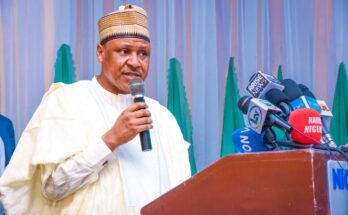

The Yobe State Government, through the Adolescent Girls Initiative for Learning and Empowerment (AGILE), plans to construct 50 new secondary schools and rehabilitate 225 existing ones to improve girls’ access to education. The Project Coordinator of AGILE in the state, Abdullahi Dahiru Bulah, disclosed this at the onboarding of local government facilitators and mobilisers for community awareness and behavioural change across the 17 local government areas. Bulah said the project was designed to help more girls complete secondary education and acquire skills that would improve their livelihoods and economic independence. He said AGILE had three major components: providing safe and quality education, creating an enabling environment for girls to remain in school, and strengthening the education system. According to him, 104 schools were being rehabilitated through small and medium grants, while preparations were underway for another 121 schools under the large-grant component. He said 875 desktop computers had also been procured for 35 secondary schools, with each receiving 25 computers, alongside solar power, internet facilities and teacher training. Another 15 schools would soon benefit from the digital skills programme. Bulah said AGILE had established 20 non-formal learning centres and was establishing another 100 to provide literacy, numeracy and livelihood skills to girls who missed formal education. He added that conditional cash transfers were being provided to girls transitioning from primary to junior secondary and from junior to senior secondary schools. The payments, he said, would help beneficiaries meet educational needs such as uniforms and school bags, with subsequent payments linked to at least 70 per cent school attendance. The CEO of Spotlight for Transparency and Accountability Initiative (STAI), Mu’azu Alhaji Modu, said his organisation was engaged to lead social and behavioural change communication across the state. He said the initiative would target social norms and cultural practices that hinder girls from accessing 12 years of education. Modu said seven facilitators and seven mobilisers had been deployed in seven LGAs for the pilot phase, with expansion to all 17 LGAs planned for the fourth quarter of 2026.
Credit to our Media Partner DailyTrust .