The Federal Government is driving a massive industrial shift in Akwa Ibom, ranging from a $465 million plan to restart the Aluminium Smelter Company of Nigeria (ALSCON) to major investments in gas, electricity, and shipping ports.
the Tinubu administration is advancing a series of initiatives that could transform Akwa Ibom’s industrial landscape.
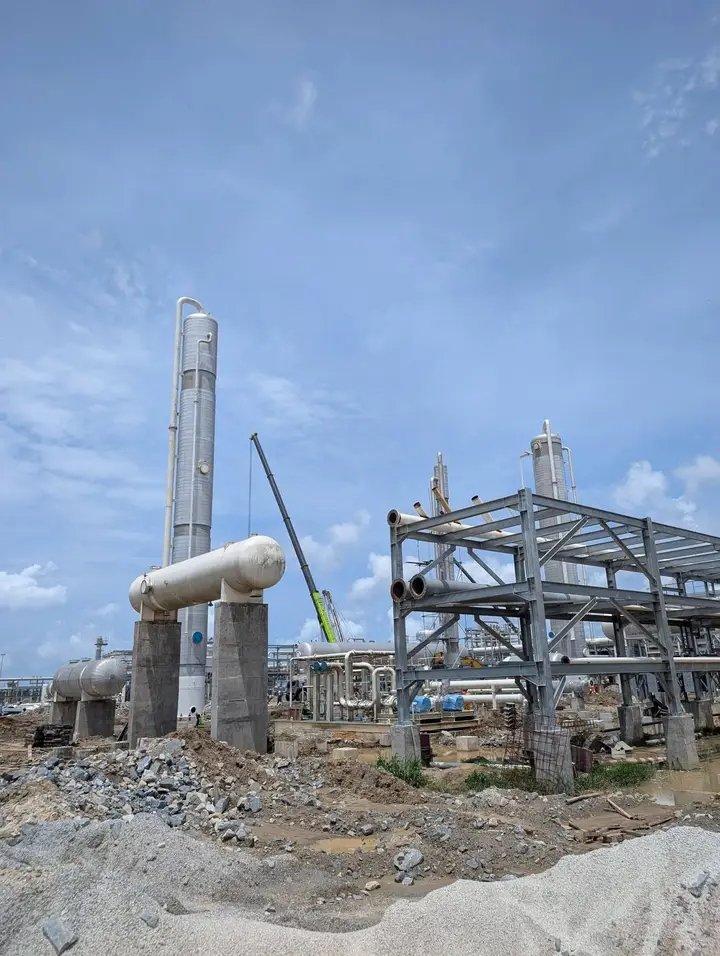
The Liberty Oil and Gas Free Zone, whose industrial development is centred around Ikot Abasi and other communities in Akwa Ibom State, is attracting renewed attention as the Federal Government pursues its industrialisation, energy diversification and investment drive under President Bola Ahmed Tinubu.
Established through a presidential declaration in July 2020 under the administration of former President Muhammadu Buhari, the free zone was conceived as a major industrial and energy investment destination.
The project brings together the Akwa Ibom State Government, the Nigerian National Petroleum Company (NNPC) and private-sector investors, including Sterling Petroleum and Fertilizer Limited and Black Rhino Group.
According to the Oil and Gas Free Zones Authority (OGFZA), the zone covers approximately 50,215 hectares across six local government areas, making it one of the largest oil and gas free zones in West Africa.
Here are some of the key areas where the administration’s policies and interventions are contributing to the zone’s development.
1. ALSCON revival: $465 million investment proposal One of the most significant developments is the renewed push to revive the Aluminium Smelter Company of Nigeria (ALSCON), a major industrial asset located in Ikot Abasi.
In July 2024, President Tinubu received the management of ALSCON at the Presidential Villa, where its chairman, Alexey Arnautov, disclosed plans to invest $500 million in turning around the company’s fortunes.
The President subsequently directed the Ministers of Steel Development and relevant officials in the energy sector to review the company’s position and provide recommendations for its revival.
In August 2025, Tinubu announced that a $465 million investment proposal had been submitted by ALSCON’s management to restore the facility to full production capacity.
The proposed six-year rehabilitation programme is expected to address longstanding operational and legal challenges that have kept the smelter from operating at its intended capacity.
If successfully implemented, the revival could reduce Nigeria’s dependence on imported aluminium, support domestic manufacturing and create opportunities across the construction, automotive and packaging industries.
2. $120 million gas flare commercialisation project
The administration’s gas commercialisation agenda is another important component of the industrial development strategy.
Through the Nigerian Upstream Petroleum Regulatory Commission (NUPRC) and OGFZA, the Federal Government is pursuing the commercial utilisation of gas resources that would otherwise be wasted through routine flaring.
A $120 million flare-gas elimination project associated with the Qua Iboe Export Hub Limited has been identified as one of the major investments planned for the Liberty Oil and Gas Free Zone.
The project is designed to capture approximately 15 million standard cubic feet of gas and convert it into commercially useful energy resources.
The broader Nigerian Gas Flare Commercialisation Programme provides a framework for attracting private-sector investment into gas capture, processing and utilisation.
The potential benefits include improved energy availability for industrial operations, reduced gas wastage, environmental gains and additional economic value from Nigeria’s natural resources.
However, the project’s investment profile and regulatory framework should not be confused with confirmation that the entire facility is already operational.
Reliable electricity remains critical to the success of heavy industries, particularly aluminium smelting, petrochemicals and manufacturing.
In August 2024, OGFZA granted approval for the establishment of a power plant within the Liberty Oil and Gas Free Zone by 3W Alliance Limited in partnership with China Power.
The proposed facility has a generation capacity of 567 megawatts and is expected to utilise Akwa Ibom’s abundant natural gas resources.
Beyond supplying electricity to industrial operators within the zone, the project is expected to strengthen the area’s power infrastructure and potentially contribute surplus electricity to the national grid, subject to the necessary arrangements.
The development is particularly significant because uninterrupted electricity is essential to attracting large-scale manufacturers and reducing the cost of industrial production.
The approval represents an important investment milestone, although the plant’s construction and commercial operation remain separate stages.
The facility is expected to improve access to international shipping routes, reduce logistics constraints and support the movement of industrial equipment, petroleum products and other cargo.
Its proposed capacity to handle large container vessels could also strengthen the zone’s position as a transshipment and cargo distribution centre serving eastern Nigeria and other parts of the Niger Delta.
An important geographical distinction, however, is necessary: the seaport and free zone have been the subject of a dispute over their location, with Eastern Obolo community leaders insisting that the port is situated within Eastern Obolo Local Government Area rather than Ikot Abasi.
The maritime development should therefore be understood as part of the wider Liberty Free Zone corridor, rather than attributed exclusively to Ikot Abasi.
The disclosure was made by the Authority’s Chief Executive Officer, Bamanga Jada, in December 2024.
He attributed the investment inflow to the Federal Government’s alternative energy policies, particularly the promotion of Compressed Natural Gas (CNG), alongside efforts to develop the country’s gas resources.
Companies and projects operating within the zone’s investment ecosystem, including Sterling Petrochemicals, are expected to contribute to the development of gas-based industries, petrochemicals and other manufacturing activities.
The investment figure is significant, although it represents the Authority’s reported attraction of foreign investment and should not automatically be interpreted as cash already disbursed across completed projects.
Nevertheless, it offers an indication of the potential economic opportunities emerging from the government’s industrial and energy policies.
6. Transmission infrastructure to address electricity challenges
Despite the proposed investments in power generation, the availability of reliable transmission infrastructure remains a major requirement for the zone’s industrial ambitions.
The proposed 58-kilometre, 330kV transmission line linking Qua Iboe Terminal (QIT) to Ikot Abasi is expected to strengthen electricity transmission and support industrial power requirements.
The project has faced right-of-way challenges, including reported financial issues involving compensation and wayleave obligations.
The Niger Delta Power Holding Company and other relevant agencies are expected to address the outstanding issues to facilitate the completion of the infrastructure.
Resolving the bottleneck would improve the prospects of delivering electricity from the power generation facilities to industrial consumers and strengthening the wider electricity network.
Another major proposal associated with the industrial corridor is the development of a private passenger and cargo airport.
If fully approved, financed and constructed, the airport could improve access for investors, industrial operators, technical personnel and business travellers.
Its cargo-handling capacity could also complement the seaport by providing another channel for transporting time-sensitive industrial goods and other commercial consignments.
However, the specific Federal Government approval, project financing and implementation timeline require further documentary confirmation before the airport can be presented as an assured development.
8. Employment and regional economic transformation
The combined impact of these investments could extend beyond the boundaries of the free zone.
The proposed revival of ALSCON, gas processing facilities, petrochemical industries, power generation projects and maritime infrastructure could stimulate demand for engineers, technicians, logistics operators, construction workers and other skilled professionals.
Small and medium-sized businesses could also benefit from increased demand for accommodation, transportation, food services, equipment supplies and other support services.
The projected restoration of ALSCON and the development of supporting industries could eventually help position Nigeria as a major aluminium and steel manufacturing destination in West Africa.
The potential for hundreds of thousands of direct and indirect jobs has been associated with the broader industrial development ambition, although such figures remain projections rather than verified employment outcomes.
Beyond political promises: The test of implementation
The development of the Liberty Oil and Gas Free Zone illustrates how industrial projects initiated under one administration can receive renewed attention and policy support under another.
While the Buhari administration provided the presidential declaration that established the free zone in 2020, the Tinubu administration’s contribution is reflected in its renewed engagement with investors, support for energy commercialisation, industrial policy initiatives and efforts to unlock investment opportunities.
The real test, however, will be the conversion of approvals, investment commitments and infrastructure proposals into functioning industrial facilities.
For Akwa Ibom, the stakes are considerable.
A fully operational industrial and maritime corridor could create a new economic centre in the Niger Delta, strengthen Nigeria’s manufacturing capacity, improve non-oil exports and generate employment opportunities for communities across the region.
The opportunity is not simply about building another free trade zone.
It is about connecting energy resources, manufacturing, electricity generation and maritime transportation into an integrated industrial economy.
If the projects achieve their intended objectives, Ikot Abasi and the wider Liberty Free Zone corridor could become important contributors to Nigeria’s ambition of building a more diversified, productive and competitive economy.
What You Should Know
The Tinubu administration is pushing to make the Liberty Oil and Gas Free Zone in Akwa Ibom a major center for business. This includes a $465 million proposal to bring the ALSCON aluminum plant back to life and a $120 million project to stop gas wasting and turn it into energy.
- Economic Growth: Reviving ALSCON could stop Nigeria from spending money on imported aluminum and create thousands of jobs in construction and manufacturing.
- Energy and Ports: A new 567MW power plant is planned to provide steady light, while a new seaport will make it easier to ship goods across the Niger Delta.
- Local Disputes: There is a disagreement between the Ikot Abasi and Eastern Obolo communities over where the new port is actually located, which officials will need to manage.