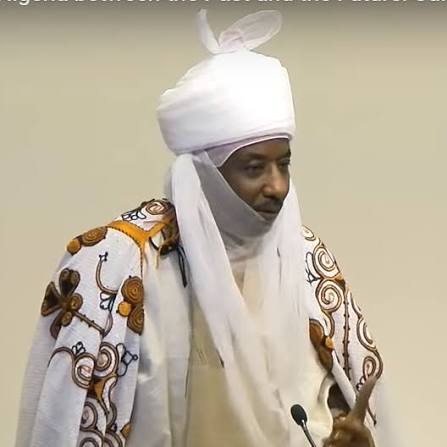
The Emir of Kano, Muhammadu Sanusi II, has called on the Federal Government to guarantee that positive shifts in Nigeria’s economic indicators translate into improved living standards for everyday citizens, while cautioning that hunger, poverty, and inequality continue to pose serious hurdles.
Sanusi acknowledged improvements in the country’s macroeconomic outlook but cautioned that economic stabilisation alone would not address the hardships confronting millions of Nigerians.
He spoke on Tuesday at the Oxford Global Think Tank Conference, convened by former World Bank Vice-President, Arunma Oteh.
The former Central Bank of Nigeria (CBN) governor highlighted improvements in economic growth, inflation, foreign reserves and exports, describing them as signs of gradual recovery following years of economic difficulties.
He cited economic growth of 4.5 per cent in the second quarter of 2026, compared with an average growth rate of 0.9 per cent during the Muhammadu Buhari administration.
He also pointed to the decline in inflation from above 30 per cent to 14.6 per cent, with projections indicating a further reduction to 12.5 per cent.
On foreign reserves, Sanusi put the figure at about $55 billion, although he cautioned that a significant proportion was supported by volatile foreign portfolio investments.
He attributed the continued inflows partly to high oil prices and attractive investment returns, noting that such capital could leave the country when market conditions change.
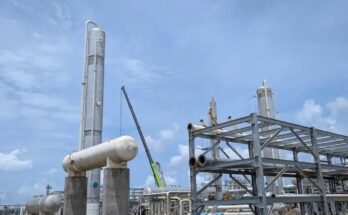
Sanusi also highlighted the growing contribution of the Dangote Refinery to export diversification, saying about 20 per cent of Nigeria’s exports now originated from the facility.
He said the refinery exported about half of its diesel production and 85 per cent of its aviation fuel, contributing approximately $4 billion to Nigerian exports in the second quarter of 2026.
However, the Emir warned that the improving economic indicators should not obscure the difficulties facing households, particularly poor and vulnerable Nigerians.
He identified rising poverty, inequality, hunger, malnutrition and declining access to essential services as major concerns that economic reforms must address.
According to him, the government has yet to establish adequate social protection measures to cushion the impact of its policies on people at the bottom of the economic pyramid.
He argued that economic growth should be assessed by its impact on household incomes, employment opportunities and access to quality education and healthcare, rather than headline GDP figures alone.
Sanusi also raised concerns about Nigeria’s debt burden and government spending priorities, warning that the pressure of debt servicing could undermine the sustainability of the economic recovery.
He called for greater fiscal discipline and a reassessment of government expenditure, particularly in electricity, agriculture, roads and technology.
Sanusi argued that investment decisions should reflect the need to balance infrastructure development with other critical sectors of the economy.
“Every $10 billion spent on roads is $10 billion taken away from electricity and agriculture,” he said.
The Emir also urged the Federal Government to become more receptive to constructive criticism, noting that public concerns and suggestions should be treated as opportunities to improve policies rather than attacks on the administration.
He maintained that removing fuel subsidies and liberalising the foreign exchange market were only initial steps towards economic recovery, stressing the need for deeper structural reforms.
Sanusi urged the government to prioritise electricity supply, agricultural productivity, healthcare, education and employment as part of efforts to make economic growth more inclusive.
He said the ultimate test of Nigeria’s economic reforms should be whether ordinary citizens could afford food, healthcare, education and decent living conditions.
What You Should Know
Emir Sanusi pointed out that while Nigeria is recording macroeconomic growth, lower inflation rates, and stronger foreign reserves, millions of households are still struggling to afford basic needs.
- Positive Impact: Increased exports from facilities like the Dangote Refinery and rising foreign reserves signal a recovering national economy with potential for long-term stability.
- Potential Concerns: Without targeted social intervention and lower living costs, ordinary citizens may continue to suffer from inflation, high debt servicing, and severe economic hardship.