
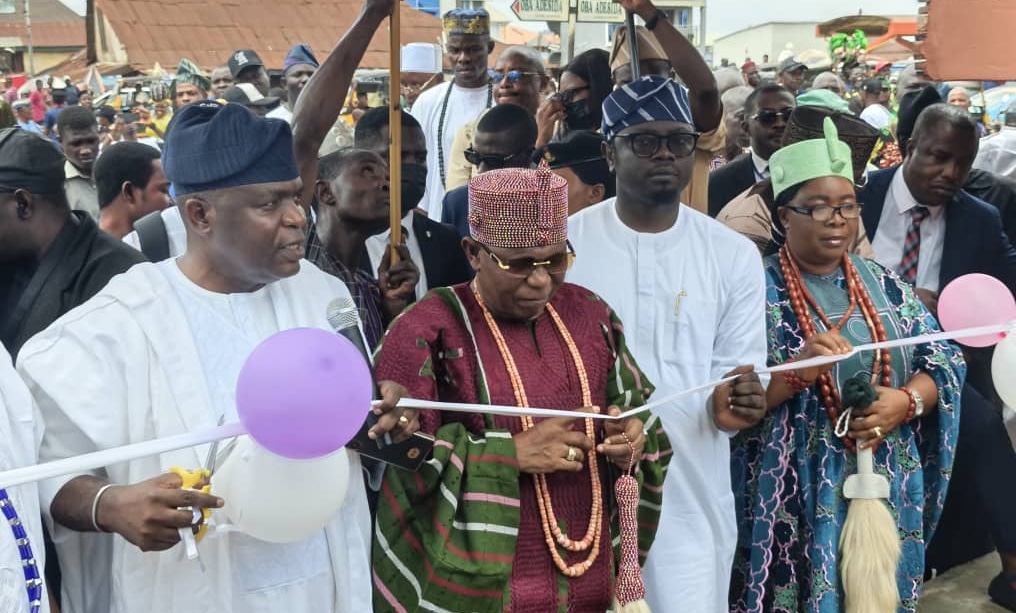
Youth Minister Ayodele Olawande says protecting indigenous culture is vital to preserving Nigeria’s identity, unity and peaceful coexistence.
The Minister of Youth Development, Ayodele Olawande, has reaffirmed the Federal Government’s commitment to preserving Nigeria’s cultural heritage and empowering young Nigerians, describing culture as a veritable instrument for promoting unity, identity and peaceful coexistence.
Olawande spoke at the weekend during the grand finale of the Ulefunta Cultural Festival in Akure, where he urged communities across the country to safeguard their indigenous traditions and ensure that the values and history embedded in them are transmitted to younger generations.
The minister said cultural heritage remained a priceless national asset, lamenting that aspects of Nigeria’s heritage had been taken away or neglected over the years. He therefore called for renewed efforts to promote indigenous cultures, particularly among the Yoruba and the people of Akure.
“Like it is known everywhere, our heritage is our priority. A lot of Western people came to us and took our heritage from us. If there is any good thing that we should promote as Yoruba people, as Akure people, it is to promote our heritage and culture,” Olawande said.
He described the promotion of culture as one of his major priorities, stressing that traditional institutions, community values, women and young people had important roles to play in strengthening social cohesion and preserving the identity of communities.
“And that’s why you see that in any organisation like this, in any aspect like this, I’m one of the number one promoters. It is one of those things that I’ve made sure is going to be my priority, beyond anything,” he said.
On youth development, Olawande said the Federal Government was determined to create platforms through which young Nigerians could participate meaningfully in national development, particularly through the forthcoming National Youth Conference.
“We are listening to them. We want to support the young people. We want to protect them. And we also want to employ them productively,” the minister said, adding that the conference would enable youths to engage government on issues affecting their future and contribute to policies designed to improve their welfare and opportunities.
The minister also appealed to the people of Akure to sustain unity and peaceful coexistence, assuring them that collective efforts and shared commitment to the development of the community would produce lasting progress.
“We are together. We are in this together, and we are going to get there together. Stay calm. Stay cool. We are one. We are one body, and we are going to get there,” he said.
Earlier, the Deji of Akure, Oba Aladetoyinbo Ogunlade Aladelusi, called on prominent indigenes, public officials and corporate organisations to support initiatives aimed at preserving the historical and cultural heritage of Akure Kingdom.
The monarch made the call at the inauguration of the redesigned entrance to the Deji’s Palace, an intervention initiated by Olawande with the support of the 10th Anniversary Coronation Committee, describing the project as a significant contribution to the preservation and beautification of the historic palace.
Oba Aladelusi said the intervention went beyond improving the physical appearance of the palace, noting that it would help project its historical significance to residents, visitors and younger generations. He thanked the minister for identifying with the traditional institution and supporting efforts to preserve one of Akure’s most important cultural landmarks.
The monarch stressed that the preservation of the palace should be regarded as a collective responsibility, particularly as rapid urban development continued to reshape the city, expressing hope that the intervention would encourage further efforts to preserve other sections of the palace and promote Akure’s cultural heritage.
Speaking on the project, Olawande said his decision to support the redesign was informed by the historical and cultural importance of the palace to Akure people, stressing that the edifice was more than the residence of the Deji.
“I believe that the Deji’s Palace is not just a building; it is a symbol of who we are as Akure people. It carries our history, our culture, and the story of generations before us,” he said. “I deemed it necessary to renovate and redesign the palace because we cannot continue to talk about preserving our heritage while allowing important symbols of that heritage to deteriorate.”
Fidelis David
Follow us on:
Credit to our Media Partner AriseTV .