Approximately 1,500 Myanmar nationals arrived back in their conflict-ridden homeland from Malaysia on Sunday, following a contentious repatriation framework that international rights monitors argue cannot guarantee their safety.
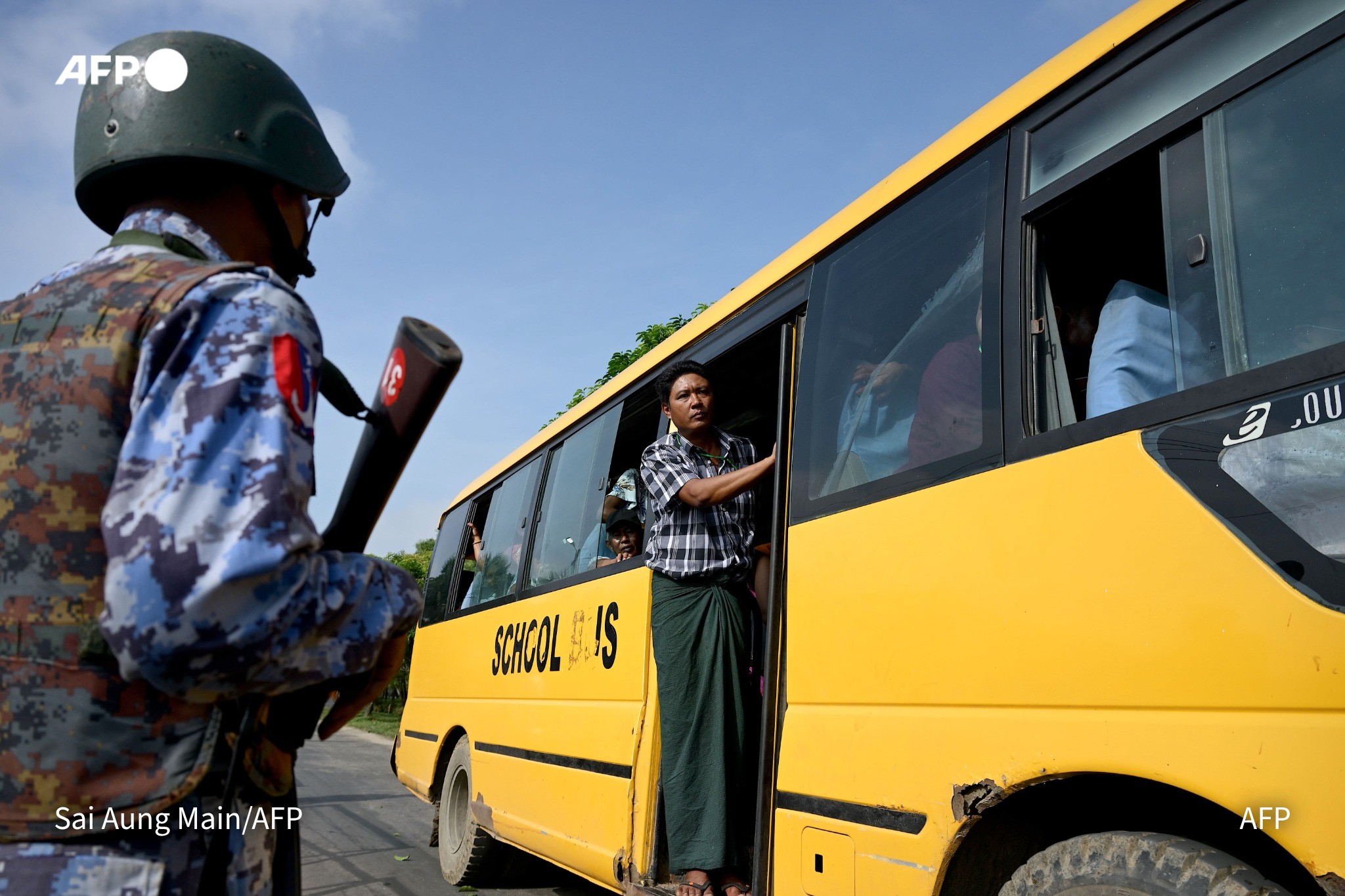
Dozens of migrants were transported on buses to a Buddhist monastery hall for immigration and health checks, AFP journalists saw, after the returnees arrived by Myanmar Navy ships that docked at the nearby base in Thanlyin.
“I haven’t met my family yet,” said Kyaw Swar Thein, 53, who worked in a coffee shop in Malaysia before he was arrested there.
He said he suffered scabies while in detention for a year and eight months — one reason he wanted to come home. Now his future seemed unclear.
“I do not hope for anything,” he said among the rows of men sat cross-legged on the floor, some wearing T-shirts reading “We love Myanmar”.
The United Nations has warned conditions in Myanmar, which has been consumed by civil war since a 2021 military coup, mean safe homecomings cannot be guaranteed as required under international law.
Malaysia insists all returnees agreed to voluntary repatriation from detention centres, but the UN and rights groups have raised concerns that Myanmar migrants had little choice.
Hundreds of families with vehicles gathered at dawn to collect their relatives outside the naval base, some holding up paper signs with photographs or the names of their loved ones.
While some were allowed past the base gates to welcome their family members, a naval official dashed hopes of immediate reunions for most.
“You cannot take them right away,” he shouted into a megaphone, saying returnees would first be brought to different locations in the Yangon region.
One woman said she was looking for her 19-year-old brother who was arrested in Malaysia soon after he arrived there three months ago.
“We saw his name on the list of returnees but we couldn’t go inside to find him,” said the woman, who declined to give her name for security reasons.
Kyaw Myint, 55, said he worried his three grandchildren, who were detained in Malaysia for more than a year, could now be conscripted in Myanmar — “not only by the military but also by ethnic armed groups”.
– Anti-Rohingya sentiment –
Three Myanmar Navy ships carrying migrants docked at the Thanlyin base early Sunday, said a naval official whom AFP has kept anonymous as he was not authorised to speak to media.
The ships left Malaysia on Tuesday carrying 1,476 migrants, according to the Myanmar government — the first of 5,000 that Malaysian Prime Minister Anwar Ibrahim says Myanmar agreed to take back.
The arrivals were due to include mostly men, as well as 27 children and 79 women, Malaysian media said.
“Our main concern is his arrival won’t be safe,” said the sister of one migrant who had told his family he expected to be sent aboard the ships.
There are also concerns members of the persecuted Rohingya are among the returned group after Anwar announced the repatriations in July against a backdrop of rising xenophobia towards refugees, particularly the Rohingya.
Members of the ethnic group fled Myanmar en masse following a military crackdown starting in 2017, which rights experts say amounted to genocide.
Rohingya make up the majority of Myanmar refugees and asylum seekers in Malaysia, but Kuala Lumpur has not responded to an AFP query about the number onboard.
– ‘No time to return’ –
Myanmar says the returnees completed sentences for immigration offences in Malaysia.
Monitor organisations such as Fortify Rights report dire conditions in the detention centres.
The UN refugee agency said this past week its staff were not allowed to meet migrants to confirm whether their decisions to return “were genuinely free and informed”.
Malaysia is already moving ahead with plans to return a second group of more than 3,500 migrants, saying they have caused financial, social and security burdens.
Myanmar’s Min Aung Hlaing, the coup leader who was installed as civilian president in April, is expected to visit Malaysia soon to discuss the repatriation scheme.
Myanmar pledged last month that returns will be “safe and dignified”.
But Yap Lay Sheng, a senior human rights specialist with Fortify Rights, told AFP: “There’s no telling how the regime would treat returnees.”
Myanmar’s civil war has killed more than 100,000 people since the coup, according to monitor ACLED — including 50 in a military airstrike late last month.
“This is no time to return anyone forcibly to a country plagued by egregious human rights violations and abuses,” UN rights chief Volker Turk said Tuesday.
What You Should Know
Nearly 1,500 Myanmar citizens who were previously detained in Malaysia for immigration offenses have been sent back to their home country via naval ships. While the Malaysian government maintains that the repatriation is entirely voluntary and involves individuals who completed their sentences, the United Nations and human rights organizations have strongly criticized the move, warning that returning vulnerable people to a nation locked in a brutal civil war and political crisis puts their lives at immediate risk.
- Potential Risks: Returnees face severe safety hazards, including potential forced conscription by armed factions, ongoing violence from the ongoing civil war, and lack of adequate monitoring by independent humanitarian agencies.
- Regional Implications: The controversial repatriation highlights rising anti-migrant sentiment and xenophobia in host nations like Malaysia, potentially setting a precedent for the forced or premature return of thousands more refugees and asylum seekers.