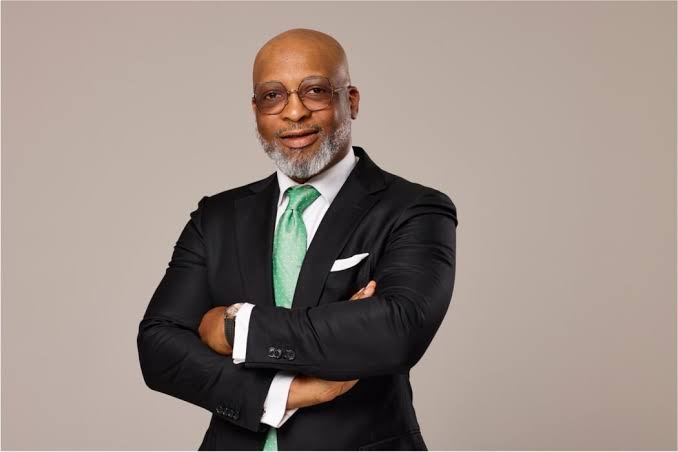
Rotimi Odunaike, the Labour Party governorship candidate in Lagos State, has criticized the state administration for prioritizing its own interests over those of citizens, pledging a completely different governance strategy if he wins the 2027 election.
Odunaike said despite Lagos generating about ₦1.7 trillion in internally generated revenue, residents continue to grapple with poor living conditions, inadequate transportation, housing shortages and unreliable access to water.
Speaking on TVC Breakfast, he argued that the government’s performance should be measured by improvements in the quality of life of residents rather than its revenue generation.
“The current government is working for itself. It’s not working for the people,” Odunaike said.
He cited what he described as a housing deficit of 3.4 million units and the absence of dignified transportation, arguing that the state’s development priorities needed urgent reconsideration.
On transportation, Odunaike proposed an integrated mobility system connecting roads, rail and waterways, alongside the formalisation of first- and last-mile transport services.
He said the plan would involve extending bus corridors, rehabilitating inner roads and introducing a unified ticketing system to connect commuters to major rail and ferry interchanges.
The LP candidate also proposed a Lagos orbital road project linking Oagri to Alimosho, alongside a north-south link road to ease congestion around the Third Mainland Bridge corridor and the construction of the Fourth Mainland Bridge.
He estimated that his administration would require a capital investment envelope of between ₦20 trillion and ₦26 trillion over four years to execute the proposed infrastructure projects.
According to him, the funding would combine public resources with private-sector investment through bonds and public-private partnerships.
He said revenue-generating projects would receive priority, adding that roads constructed under the plan would be tolled.
On water supply, Odunaike said Lagos currently has four major treatment plants and 48 mini treatment plants, but only about two of the smaller facilities are functional.
He claimed that the state has an installed water production capacity of about 250 million gallons daily, against an estimated demand of 540 million gallons, while more than half of the available supply is lost through leakages.
He promised to develop an integrated water distribution network and introduce smart metering to improve supply and revenue collection.
The candidate also outlined plans to modernise 100 markets, create 300,000 retail shop spaces and generate about 500,000 direct and indirect jobs through trade and commerce.
He said his administration would also position Lagos as an artificial intelligence centre of excellence, moving the state from consuming technology to producing it.
On housing, Odunaike argued that the problem could not be addressed in isolation from transportation and community development.
He said improving mobility and bringing essential services closer to residential communities would reduce pressure on high-demand areas such as Lekki.
He also called for better enforcement against the conversion of residential properties into commercial premises, while acknowledging that imposing and enforcing rent caps would not provide a straightforward solution to the housing crisis.
Odunaike further promised greater transparency and accountability, saying his administration would publish a delivery dashboard within its first 100 days to enable residents to monitor the implementation of manifesto commitments.
He said the platform would provide updates on projects, including explanations whenever delivery targets were missed.
Explaining his absence from a recent Lagos governorship debate, the LP candidate said he was not invited by the organisers despite efforts by his team to secure participation.
He maintained that all 17 governorship candidates should have an opportunity to present their programmes to voters.
On the Labour Party’s declining political momentum since the 2023 general election, Odunaike said the party had relied more on public sentiment than its ideological foundation and existing political structure.
He, however, maintained that the 2027 governorship election should be decided by the issues affecting residents rather than political personalities.
What You Should Know
Labour Party governorship hopeful Rotimi Odunaike has rolled out a sweeping plan to overhaul infrastructure in Lagos State if elected in 2027. His proposals cover key areas including transport, housing, water supply, and technology, with an estimated capital investment of up to ₦26 trillion funded through public-private partnerships and toll systems.
- Positive Impact: The comprehensive plans aim to tackle major urban challenges such as a 3.4 million housing deficit, traffic congestion through orbital and link roads, integrated public transport, and job creation via commerce and tech advancement.
- Potential Concerns: The massive capital required—between ₦20 trillion and ₦26 trillion—raises questions about feasibility and heavy reliance on private investments, while the introduction of tolls on newly constructed roads could mean additional financial burdens for daily commuters.