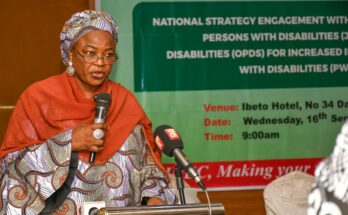

The Chairman of the Kano State Public Complaints and Anti-Corruption Commission (PCACC), Saidu Yahaya, has resigned his appointment.
Daily Trust gathered that Yahaya submitted his resignation letter on Tuesday, following mounting pressure from the Kano State Government over his alleged failure to meet expectations in the discharge of his duties.
Although the resignation had not been officially announced, the state government indicated that a new leadership had been appointed for the commission.
The Special Adviser to Governor Abba Kabir Yusuf on Social Media, Ibrahim Adam, announced on his verified Facebook page that the governor had appointed Barrister Hafsat Ada’u Kutama as the acting chairperson of the PCACC.
“His Excellency, Governor Abba Kabir Yusuf, has appointed Barr. Hafsat Ada’u Kutama as the Acting Chairperson of the Public Complaints and Anti-Corruption Commission (PCACC), Kano State.
“Until her appointment, Barr. Hafsat served as the Secretary of the Commission,” he said.
Kutama is expected to assume office as acting chairman from today, Wednesday.
Yahaya was appointed chairman of the commission in August 2025, following the expiration of the tenure of the former chairman, Muhuyi Magaji Rimin Gado.
His appointment was approved by the Kano State House of Assembly for a five-year tenure.
The development followed recent criticism by Governor Yusuf over the performance of the anti-corruption commission under Yahaya’s leadership.
The governor had publicly challenged the commission’s chairman to intensify the fight against corruption, warning that anyone unwilling to discharge the responsibility should “step aside.”
Yusuf spoke during the flag-off of the distribution of 150 truckloads of subsidised fertiliser to farmers across the state’s 44 local government areas.
According to a statement issued by the Director General, Media and Publicity, Government House, Kano, Sunusi Bature Dawakin Tofa, the governor said he had invited the Economic and Financial Crimes Commission (EFCC) and the Independent Corrupt Practices and Other Related Offences Commission (ICPC) to monitor the distribution of the fertiliser.
The governor said the move was aimed at ensuring transparency and accountability and preventing diversion of the subsidised commodity.
His decision to seek the involvement of the EFCC and ICPC in monitoring the exercise came amid concerns over the effectiveness of the state’s anti-corruption machinery.
Yusuf also expressed hope that the PCACC would regain its relevance, saying he wanted the commission to become more visible in tackling corruption and holding public officials accountable.
The resignation of Yahaya could not be independently confirmed from him as of the time of filing this report.
Credit to our Media Partner DailyTrust .