Citizens across Israel are heading to the polls in a tightly contested election that will decide if Prime Minister Benjamin Netanyahu can hold onto his position or if a coalition of opposition parties will successfully take over.
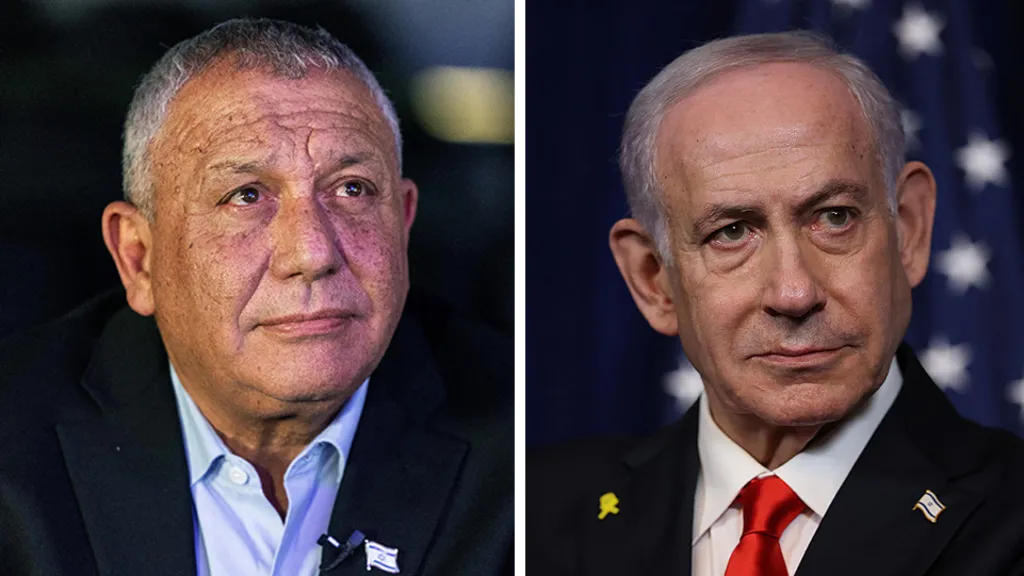
Pre-election polls suggest Netanyahu is running almost neck-and-neck with former military chief Gadi Eisenkot, leader of the newly formed Yashar Party.
However, neither political bloc is projected to secure the 61 seats required for a majority in the 120-member Knesset, raising the prospect of prolonged negotiations over a new government.
The election has been dominated by security, democratic governance and public confidence in Netanyahu’s leadership.
Eisenkot and other opposition figures have criticised the government over the security failures that preceded the Hamas-led attacks on Israel on October 7, 2023, in which about 1,200 people were killed and 251 taken hostage.
They have also called for an independent commission of inquiry into the attacks, a proposal Netanyahu has resisted, arguing that such an investigation would be biased against him.
Netanyahu, who first became prime minister in 1996, has defended his record by highlighting Israel’s military operations across the Middle East and his close relationship with United States President Donald Trump.
He faces additional criticism over his ongoing corruption trial, in which he denies wrongdoing, and his efforts to reform the judiciary, which previously triggered mass protests.
Coalition Negotiations Could Decide The Outcome
Eisenkot’s so-called change bloc includes former Prime Minister Naftali Bennett, Avigdor Lieberman and former general Yair Golan. Despite their ideological differences, the parties share the objective of ending Netanyahu’s rule.
Netanyahu, meanwhile, is seeking to retain power through an alliance with far-right and ultra-Orthodox parties that form his current governing coalition.
The role of Arab political parties could also prove significant. Arab citizens account for roughly one-fifth of Israel’s population, and their parties could influence coalition negotiations if neither major bloc secures a majority.
However, most leading Jewish parties have ruled out working with Arab parties, while Lieberman has rejected the prospect of supporting an Eisenkot-led minority government.
Security and Military Conscription Dominate Debate
Military service has emerged as another major campaign issue, with Netanyahu’s government facing criticism over its failure to enforce a Supreme Court ruling requiring ultra-Orthodox Jewish men studying full-time in religious institutions to serve in the military.
The issue has exposed tensions within Netanyahu’s coalition, which includes ultra-Orthodox parties opposed to compulsory military service for their communities.
On Gaza, Eisenkot has taken a broadly similar position to Netanyahu, pledging to end Hamas rule within 18 months through a United States-led peace plan or military action if necessary.
Israel has continued strikes in Gaza despite a ceasefire agreement, saying it targets Hamas operatives. Gaza’s Hamas-run health ministry has reported more than 74,000 deaths since the war began, figures the United Nations has generally considered reliable.
Eisenkot also broadly supports Israeli settlements in the occupied West Bank, which are considered illegal under international law, while promising action against extremist settlers accused of attacking Palestinians.
The prospect of a two-state solution, involving an independent Palestinian state alongside Israel, has become increasingly marginal in mainstream Israeli politics.
Disputed Voting Claims and Uncertain Results
Several major parties alleged irregularities at polling stations on Tuesday, but Israel’s Central Election Committee said there was no evidence of systematic tampering with ballot papers.
Israeli broadcasters were expected to publish exit polls after voting closed at 22:00 local time, although the results would not necessarily reflect the final outcome.
Votes cast by soldiers and reservists could also affect the eventual balance, as many of those ballots were expected to be counted later.
If neither bloc can assemble a majority, Israel could face another period of political deadlock, potentially leading to fresh elections while Netanyahu remains caretaker prime minister.
The country experienced five elections between 2019 and 2022 amid repeated difficulties in forming stable governing coalitions.
With the race closely contested and potential coalition partners maintaining firm conditions, the final outcome may depend as much on post-election negotiations as on the number of seats won by the leading parties.
What You Should Know
Israel is currently holding a high-stakes parliamentary election where long-serving Prime Minister Benjamin Netanyahu faces a tough challenge from opposition groups led by former military chief Gadi Eisenkot. Because pre-election polls show both political sides running nearly even and falling short of a clear majority in the Knesset, the country could face prolonged coalition talks or even political deadlock.
- Potential Political Shift: A change in government could alter Israel’s domestic policies, military strategies, and international relationships, depending on which parties successfully negotiate a governing alliance.
- Risk of Instability: If neither major political bloc manages to secure a stable majority, Israel risks entering another cycle of political uncertainty and potential future elections.