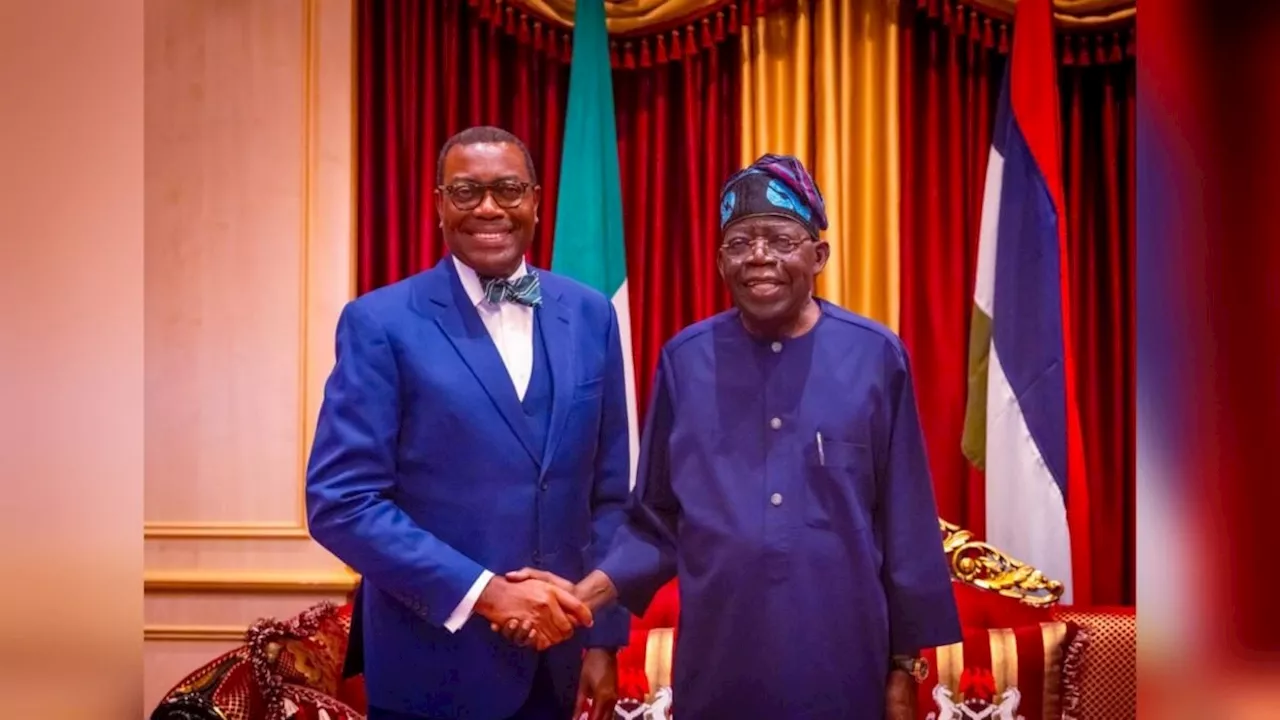
Akinwunmi Adesina, the former leader of the African Development Bank, believes that the economic measures implemented by President Bola Tinubu are starting to yield positive outcomes, pointing to enhanced foreign currency access, a rise in portfolio investments, and a drop in inflation rates.
Adesina stated this on Tuesday after meeting with Tinubu at the State House, Abuja, where he also called for a shift from economic stabilisation to structural transformation, growth and prosperity.
Speaking with State House correspondents, the former AfDB president described the removal of the petrol subsidy and the harmonisation of exchange rate windows as “very important, difficult reforms”.
He said the measures had contributed to improved economic conditions, although the high cost of goods and services remained a concern.
“If you look at it, you have a lot more FX available today. You have a lot of portfolio investors that are coming into the country. You have inflation trending downwards. Prices are still a bit high, but inflation is trending downwards,” he said.
Adesina also pointed to the stable and positive outlooks assigned to Nigeria by some international credit rating agencies, saying they reflected changing perceptions of the country.
However, he stressed that the government must build on the gains from the reforms by prioritising economic expansion and improving the welfare of Nigerians.
“Now that’s just the beginning of the work. I think the most critical thing is the president realised this, and everybody knows that being a dentist is not a very difficult job. But you have to also now move from the issue of the reforms and stabilisation, straight into structural transformation and also growth and prosperity, which is what the president is focusing on,” he said.
The former AfDB chief also expressed his readiness to contribute to Nigeria’s development, saying he was willing to serve in any capacity Tinubu considered appropriate.
Adesina, however, clarified that he was not seeking a political appointment or employment from the government.
“I told the President, I’m back at home, here to help and ready to help. It’s my country. I love my country, and I’m ready to help,” he said.
Asked how he intended to deploy his international experience to support Nigeria, Adesina said his commitment to the country remained unchanged.
“I’m fully able to help Nigeria in any capacity. I’ve always had that. You know, my heart is always at home. And in any capacity that His Excellency feels I can help, I can help in anything. I’m not looking for a job. I’m not looking for anything. I’m just here to help,” he said.
“It’s my country. I have a duty, an obligation, and a responsibility to do so, and I will.”
Adesina also said he briefed Tinubu on his 10-year tenure at the AfDB, which ended after two terms, including the bank’s financial support for Nigeria between 2015 and 2025.
According to him, the bank provided approximately $7 billion in financing to Nigeria during the period, representing about 63 per cent of the $11.1 billion it had committed to the country since commencing operations in 1971.
“So, within 10 years, we were able to do 63 percent, literally, of that,” he said.
What You Should Know
Former African Development Bank President Akinwunmi Adesina recently met with President Bola Tinubu in Abuja to review Nigeria’s current economic trajectory. He acknowledged that tough choices like removing fuel subsidies and unifying exchange rate windows are beginning to ease foreign exchange pressures and slow down inflation, though everyday citizens still face high living costs.
- Positive Impact: Increased foreign exchange availability and improving confidence from international credit agencies can stabilize the naira and attract foreign investments that create jobs.
- Potential Concerns: Despite positive macroeconomic trends, the high cost of goods and services remains a heavy burden for everyday Nigerians, requiring a deliberate push toward structural growth.