

Nigeria’s headline inflation figure recorded a marginal increase of 0.24 percent to record 15.93 percent in the month of May.
According to a report by the National Bureau of Statistics (NBS), the inflation figure was 15.69 percent in April.
It noted that when compared with the figure for May 2025, there was a reduction of 10.13 per cent from the 26.06 per cent recorded.
Daily Trust reports the 15.93 per cent recorded was the highest compared to December when the inflation was on downward trend.
The report further explained that Headline inflation rate on a month-on-month basis was 1.75%, which was 0.39% lower than the rate recorded in April 2026 (2.13%). “This means that in May 2026, the rate of increase in the average price level was lower than the rate of increase in the average price level in April 2026.”
On Food inflation, it said its rate in May 2026 on a month-on-month basis was 2.98%, down by 0.65% points from April 2026 (3.63%).
On a year-on-year basis, it said the figure was 16.96% and stood at 24.55% in the same month of the preceding year (May 2025).
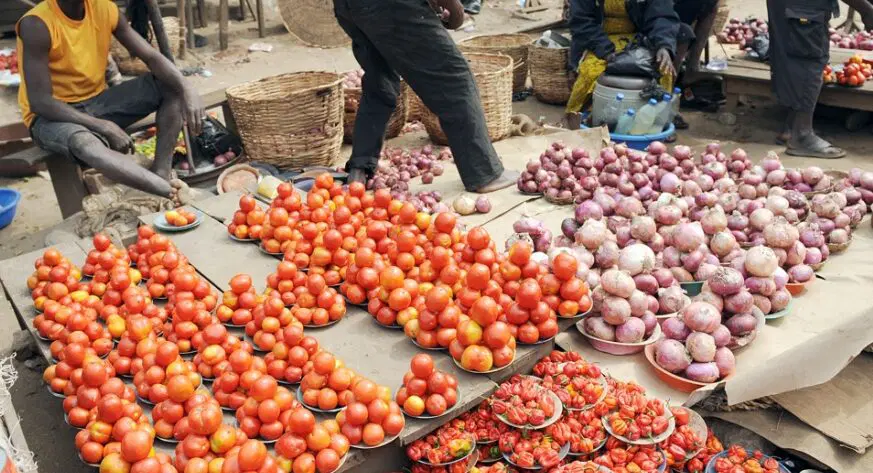
It said this can be attributed to the rate of change in the average prices of onions (fresh), maize (corn) grains, melon (egusi), water yam, cassava flour, crayfish, pepper (fresh), tomatoes (fresh), eheat grain, cassava tuber, yam tuber, sweet potatoes, ginger (Fresh), plantain, cow pea, etc.
“The average annual rate of Food inflation for the twelve months ending May 2026 over the previous twelve-month average was 16.99%, which was 16.22% points lower compared with the average annual rate of change recorded in May 2025 (33.21%).
For states’ analysis, it explained All-Items inflation rate on a Year-on-Year basis was highest in Yobe (24.94%), Anambra (23.29%), and Sokoto (22.60%), while Niger (3.07%), Plateau (7.10%) and Edo (7.73%) recorded the lowest rise in Headline inflation on a Year-on-Year basis.
But on a month-on-month basis, the highest increases in Benue (8.23%), Bayelsa (7.62%) and Borno (7.29%), while Niger (-4.55%), Zamfara (-3.36%), and Taraba (-2.67%) recorded a decline in the Month-on-Month inflation.
It added that state-level analyses of the food index on a year-on-year basis was highest in Adamawa (29.62%), Kwara (28.47%), and Rivers (28.40%), while Borno (-6.53%), Taraba (1.13%) and Bayelsa (5.99%) recorded the slowest rise in Food inflation on a Year-on-Year basis.
“On a month-on-month basis, however, May 2026 Food inflation was highest in Bauchi (7.73%), Ogun (6.86%) and Jigawa (6.69%), while Niger (-3.54%), Katsina (-3.48%), and Gombe (-2.22%) recorded a decline in Food inflation on a Month-on-Month basis.”
…CPPE reacts to inflation report
The Centre for the Promotion of Private Enterprise (CPPE) has attributed the slight increase in Nigeria’s inflation rate in May 2026 to recent geopolitical tensions in the Middle East, which disrupted global energy markets and increased import-related costs.
Reacting to the latest inflation figures, CPPE noted that headline inflation rose marginally from 15.69 per cent in April to 15.93 per cent in May, reflecting the impact of higher crude oil prices, rising marine insurance premiums, supply chain disruptions and increased shipping costs.
Despite the uptick, the economic policy advocacy group said underlying inflation trends remain encouraging. According to CPPE, headline inflation moderated on a month-on-month basis from 2.13 per cent in April to 1.75 per cent in May, while food inflation eased from 3.63 per cent to 2.98 per cent.
In a policy brief by its Chief Executive Officer, Dr. Muda Yusuf, the CPPE also pointed out that the current inflation rate is significantly lower than the 26.06 per cent recorded in May 2025, indicating substantial progress in reducing inflationary pressures over the past year.
CPPE identified food, transportation, housing, energy, healthcare and education as the major contributors to inflation, noting that these essential sectors account for about 87 per cent of headline inflation. Food inflation, which stood at 16.96 per cent in May, continues to exert pressure on household incomes and consumer purchasing power.
The group further stressed that persistent insecurity in key agricultural regions remains a major driver of food inflation. According to CPPE, insecurity has displaced farmers, reduced cultivated land, disrupted supply chains and increased transportation costs, leading to lower agricultural output and higher food prices.
Describing the current inflation challenge as largely cost-push in nature, CPPE argued that addressing structural factors would be more effective than relying solely on monetary tightening. It urged the government to prioritise food security, improve transportation and logistics infrastructure, invest in mass transit and rail systems, strengthen energy security and restore safety in farming communities.
Looking ahead, the organisation expressed cautious optimism about the inflation outlook, citing recent diplomatic progress in the Middle East and the decline in crude oil prices from about $90 per barrel to approximately $83 per barrel.
CPPE said that if geopolitical tensions continue to ease and global supply chain conditions improve, inflationary pressures could begin to moderate further from the third quarter of 2026.
UPDATE NEWS:
Nigerians can now invest ₦2.5 million on premium domains and profit about ₦17-₦25 million . All earnings paid in US Dollars . Rather than wonder, click here to find out how it works .
Join Daily Trust WhatsApp Community For Quick Access To News and Happenings Around You.
This news development was originally reported by our media partner DailyTrust News .