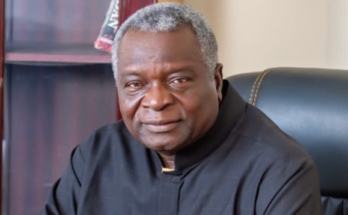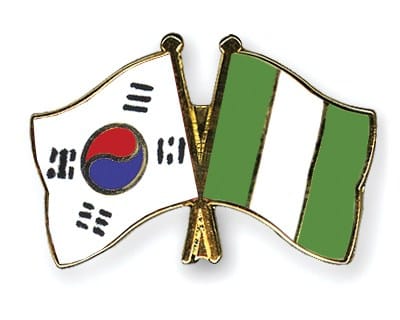
South Korean Ambassador to Nigeria, Jeong Yo-an, has revealed that trade between both countries hit roughly $1.1 billion in 2025. However, the envoy stressed that the partnership must move beyond trading raw materials toward establishing local manufacturing plants and sharing advanced technology to ensure long-term economic growth.
Speaking on Wednesday during a press briefing at his official residence in Abuja, Ambassador Jeong emphasised that while Nigeria remains one of Korea’s largest African trading partners, the current structural imbalance—where Nigeria predominantly exports crude oil and gas while importing vehicles and heavy machinery—is unsustainable.
To catalyse a transition toward local production and “Made in Nigeria” goods, the envoy called for the immediate ratification of the 2006 Nigeria-Korea Double Taxation Agreement, which has remained unratified for two decades.
“Investors need predictability above all—clear rules on foreign exchange, customs, and tax,” Ambassador Jeong stated. “Moving this agreement forward after twenty years would send a powerful signal to international investors.”
The envoy highlighted South Korea’s commitment to equal partnership and capacity building across key sectors, including agriculture, digital skills, green technology, and the expanding “K-beauty” market ahead of the upcoming Beauty West Africa exhibition.
Highlighting developmental initiatives, Jeong referenced the $12 million Abuja Centre for Entrepreneurship—developed in collaboration with KOICA, SMEDAN, and UNDP—and the Smart School project with UBEC as sustainable models aimed at empowering Nigeria’s youth population.
Ambassador Jeong also confirmed that Nigeria has offered to host the upcoming 7th session of the Korea-Nigeria Joint Commission in Abuja, following high-level diplomatic engagements led by Nigeria’s Minister of Foreign Affairs, Bianca Odumegwu-Ojukwu, at the Korea-Africa Foreign Ministers’ Meeting in Seoul.
Beyond commercial ties, the ambassador celebrated expanding cultural exchanges spanning Taekwondo, Nollywood, Afrobeats, and K-pop, reiterating South Korea’s readiness to share its post-war industrialisation experience.
“Korea knows the road of development, but the key word is adapt, not copy,” Jeong remarked. “Nigeria will write its own story, and Korea is ready to stand side by side as an equal partner to ensure our cooperation leaves results that last.”
What You Should Know
This update shows that while Nigeria and South Korea are major trading partners, the current relationship is unbalanced because Nigeria mostly sells crude oil and buys expensive finished goods like cars and machinery. The South Korean government now wants to help Nigeria build its own industries so more products can be ‘Made in Nigeria’.
- Positive Impact: Shifting to local manufacturing could create more jobs for Nigerians and help the country gain access to advanced technology in agriculture and digital skills. New projects like the Abuja Centre for Entrepreneurship are already training youths to start their own businesses.
- Potential Challenges: For this transition to happen, Nigeria must finalize a 2006 tax agreement that has been stuck for 20 years. Investors are also looking for more stable foreign exchange and customs rules before they commit more money to building factories.