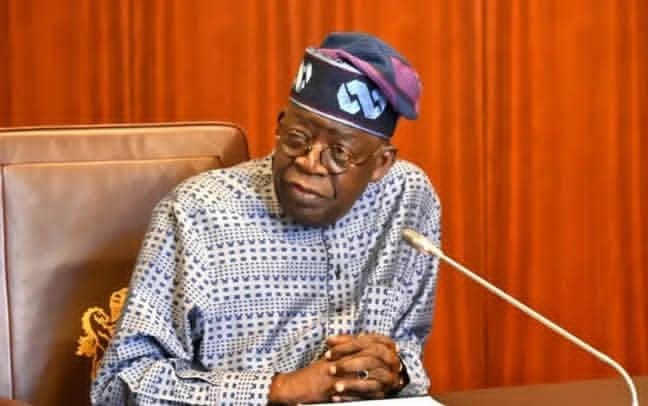
President Bola Ahmed Tinubu has put forward fresh nominations for four national commissioners and two resident electoral commissioners to occupy vacant positions within the Independent National Electoral Commission (INEC).
This was disclosed by Bayo Onanuga, Special Adviser to the President on Information and Strategy in a statement on Friday.
Onanuga said their appointment is subject to Senate confirmation.
Dr Bala Bila, the national commissioner representing North East, was reappointed.
The Presidency gave the names of the new national commissioners as Professor Mustapha Aliu, who will replace Professor Abdullahi Zuru as the North West representative; and Bashir Muhammed Umar, who will replace Professor Muhammad Adamu as the North Central representative.
President Tinubu recommended Mrs Oluwatoyin Babalola, the resident electoral commissioner in Osun, as the new South West national commissioner.
The two new resident electoral commissioners are retired permanent secretary Dr Samuel Akinjide Akinleye, to represent Ekiti State, and Zahradden Basiru Sanusi, from Jigawa, who will replace Professor Saidu Ahmed Babura.
President Tinubu urged the Senate to expedite the nominees’ confirmation in view of the forthcoming General elections next January.
What You Should Know
President Bola Ahmed Tinubu has nominated new officials to fill crucial vacant positions at the Independent National Electoral Commission (INEC), pending confirmation by the Senate. The appointments include reappointing Dr. Bala Bila and bringing in new representatives for the North West and South West regions, alongside two new resident electoral commissioners.
- Positive Impact: Filling these key electoral vacancies ensures that INEC maintains a full complement of leadership ahead of upcoming elections, which can improve administrative efficiency and operational readiness.
- Potential Concerns: Delays in Senate confirmation or disputes over regional representation could spark political friction and cast doubt on the commission’s perceived neutrality.