According to the European Union Support to Democratic Governance in Nigeria (EU-SDGN) Election Observation Hub, vote trading reached alarming heights during the governorship elections in Ekiti and Osun states, with participating voters receiving substantial cash rewards for their ballots.
The Hub, established for election monitoring, is made up of the Kukah Centre (TKC), TAF Africa, Nigerian Women Trust Fund (NWTF), Yiaga Africa, International Press Centre (IPC) and Centre for Media and Society (CEMESO).
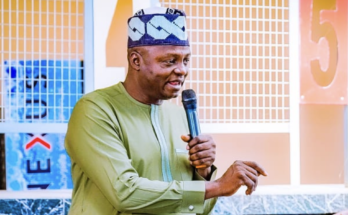
Speaking at the presentation and dissemination of the report on the Ekiti and Osun Off-cycle Elections (which took place in June and August, 2026, respectively) in Abuja on Tuesday, Prof. Bolade Eyinla, who read the findings of the Hub, said voters got up to N50,000 for selling their votes.
“The scourge of vote trading is becoming a pandemic,” he said, adding that, “if we don’t do anything about it, the sanctity of the vote and freedom of choice is beginning to come under severe threat and pressure.”
Prof. Eyinla lamented that vote trading has become extremely well organised and standardised, stressing that offenders remain unpunished.
“Maybe the IG (Inspector-General of Police) will tell us if they are arrested. And the result of that is that everybody has assumed a sense of impunity.
“The data shows us that 77% of the 84 verified incidents were vote trading, and party agents were the main actors in at least 90% of these cases.
“In Osun, it was 69%, and as I said, we still have not heard of any reported arrests, investigations, or prosecutions, given the magnitude of vote trading that went on in both elections.”
Describing how it was carried out, he said the voter marks the ballot paper to show his preference, but he then brings it up to show the people who are making the tally.
“And of course, once the agent confirms ‘he has done what we demanded’, payment follows.
“Originally, I was thinking payment was within the range of 10,000 or thereabouts, but the report from Osun even told me that people got N50,000. If you divide N50,000 by the number of voters in Osun, how much that will amount to in terms of the volume of money involved,” he said.
The Hub also called for the presentation of results from the ward level, noting that most of the irregularities are done at that level.
“I think for the presidential election, it’s 8,809 (wards). We want to see the results of the ward level uploaded. If you can upload polling units, then you should be able to upload ward-level results,” he argued.
However, the Hub commended the Independent Electoral Commission for organising a near-perfect election, noting that the election started early and the results were almost the same as those independently compiled.
It also commended the security agencies for ensuring a peaceful poll in Ekiti and Osun.
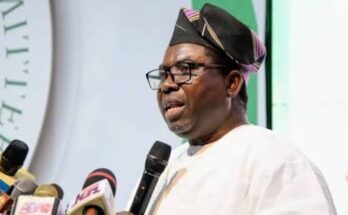
Dr Akin Akingbulu, the Executive Director, Centre for Media and Society (CEMESO), in his remarks, said the Hub deployed 598 observers across all 16 Local Government Areas in Ekiti on 20 June, and 823 observers across all 30 LGAs in Osun on 15 August.
“That is more than 1,400 trained Nigerians who watched, counted, verified and reported, polling unit by polling unit, so that the conversation we have today rests on facts and not on sentiment,” he said.
What You Should Know
Recent findings from election monitors have brought to light how deeply entrenched vote trading has become in Nigeria’s off-cycle gubernatorial elections, specifically in Ekiti and Osun states. The report highlights that political party agents orchestrated a massive percentage of verified infractions, utilizing standardized methods to confirm voter compliance before handing out cash rewards that reached up to N50,000 per voter.
- Positive Impact: Increased awareness and documented oversight by observation groups put pressure on electoral bodies to improve transparency, such as calls for the uploading of ward-level results.
- Potential Concerns: The normalization of vote trading poses a severe threat to democratic integrity, voter freedom of choice, and the overall credibility of election outcomes due to a lack of visible arrests and prosecutions of offenders.