
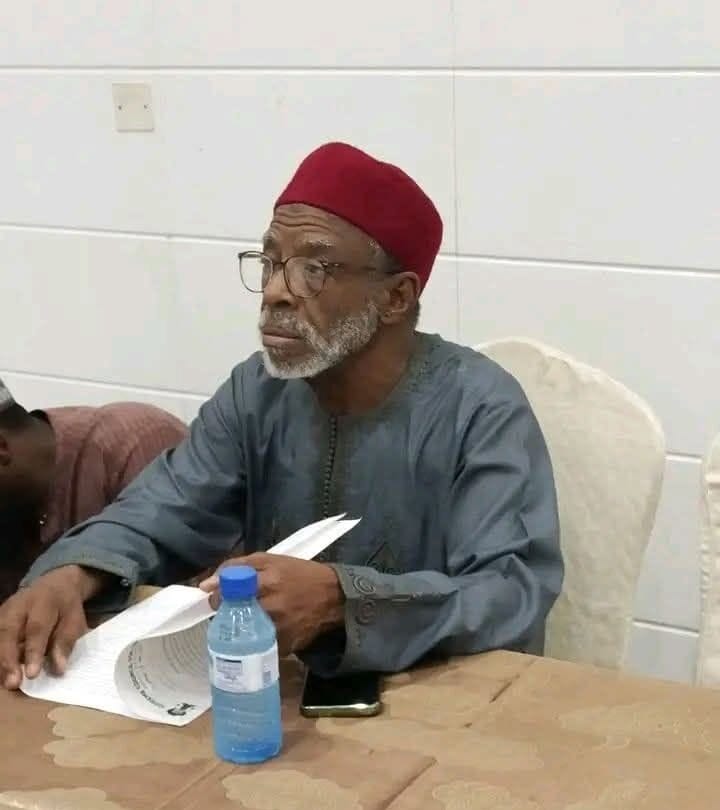
The Secretary-General of the Supreme Council for Sharia in Nigeria (SCSN), Malam Nafiu Baba-Ahmed, has died.
The deceased, who was an Islamic scholar and advocate for justice, was also described by prominent Islamic scholars as a bridge-builder, who dedicated his life to the service of Islam and humanity.
His funeral prayer (Janazah) is scheduled to take place today (Tuesday) at the National Mosque, Abuja, immediately after the Zuhr (noon) prayers.
Confirming his death in a post on his verified Facebook page, renowned Islamic scholar, Dr Ahmad Gumi, said Baba-Ahmed would be remembered for his efforts to promote unity.
“Mal. Nafiyu Baba Ahmad has left us in grief,” Gumi wrote.
He prayed that Allah would accept the deceased’s struggles and forgive his shortcomings.
“Nafiyu will be remembered as a bridge-builder who always saw the bigger picture,” Gumi said, while extending his condolences to the deceased’s family, relatives, the Muslim Ummah and the nation.
Also mourning the deceased, the PDP governorship candidate in Gombe State, Professor Isa Ali Pantami, described Baba-Ahmed’s death as a painful loss, saying he had dedicated the last 26 years of his life to the service of Islam and humanity.
Pantami, in a condolence message posted on his Facebook page, said Baba-Ahmed advocated justice for all during his years of service.
“With heavy hearts but with total submission to the will of Allah, we mourn the passing of Mallam Nafiu Baba-Ahmed, Esq., who served as the Secretary-General of the Supreme Council for Sharia in Nigeria (SCSN),” he wrote.
He prayed to Allah to admit the deceased into Jannatul Firdaus and grant strength to his family and loved ones to bear the loss.
What You Should Know
In simple terms, this report regarding Sharia Council Secretary-General Nafiu Baba-Ahmed dies highlights key developments that may impact citizens and stakeholders. On the positive side, constructive action and policy clarity can bring convenience, accountability, and opportunities for the public. On the other hand, any implementation delays, added costs, or operational disruptions could pose challenges for everyday people and affected sectors.