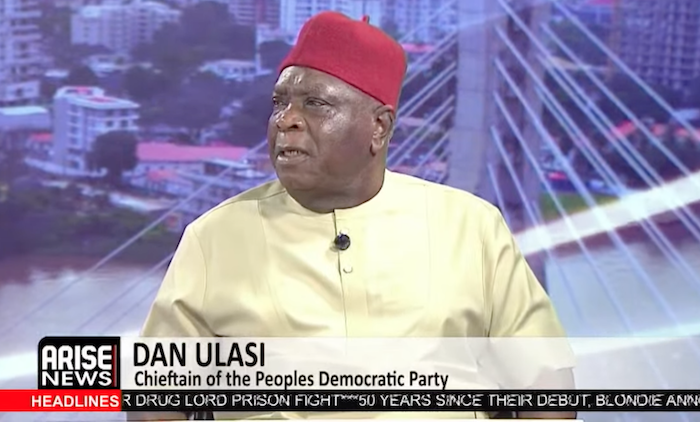
A prominent figure within the Peoples Democratic Party (PDP), Dan Ulasi, has taken opposition groups to task for missing opportunities to leverage the ongoing economic hardship and policy flaws of President Bola Tinubu’s government to build stronger momentum ahead of the upcoming 2027 general elections.
Ulasi said issues such as inflation and rising food prices provided opportunities for opposition parties to challenge the ruling All Progressives Congress (APC), but questioned whether they were doing enough to turn public dissatisfaction into electoral support.
Speaking during an interview on ARISE News on Friday, Ulasi agreed that the APC appeared better organised than the opposition, adding that opposition parties had failed to present strong alternatives to the government’s policies.
Responding to questions about the opposition’s preparedness for the 2027 election, he said, “Yeah, the statement you made is not a fallacy of generalization, It’s factual. There’s only one opposition party that is running this election now. It’s Peter Obi and the NDC.”
Ulasi subsequently acknowledged the economic challenges facing Nigerians but said the opposition had not effectively used them to build a stronger political challenge.
“Whether he has the support of majority of Nigerians, I think he does. Apparently because of the serious shortcomings this government has, you know, inflation, food prices. There are a lot of things to exploit,” he said.
However, he questioned whether opposition parties were taking advantage of those issues.
“Well, I don’t think they are effectively doing it, and I’m honest to myself,” he said.
The PDP chieftain also faulted opposition leaders for failing to communicate their policies and alternatives to Nigerians through public engagements and town hall meetings.
He said opposition figures should be engaging voters across the country and presenting clear alternatives to the government’s policies rather than leaving Nigerians without sufficient information about their plans.
“I don’t see it happening. And Nigerians are waiting for such information. They are not doing it,” he said.
Ulasi’s comments come as political parties prepare for the 2027 general election, with economic conditions and the opposition’s ability to mount a coordinated challenge expected to shape the contest.
He also warned that opposition parties were more divided than they were during the 2023 election, raising further questions about their ability to challenge Tinubu’s re-election bid.
What You Should Know
This news highlights a critical perspective from within the opposition party regarding Nigeria’s political landscape leading up to 2027. According to Dan Ulasi, despite widespread economic hardships like inflation and rising food prices that create natural openings to challenge the ruling All Progressives Congress (APC), opposition parties are failing to organize effectively, communicate clear alternatives, or present a united front.
- Positive Impact: Increased awareness of internal weaknesses may spur opposition groups to restructure, engage voters more transparently, and improve their political strategies.
- Potential Concerns: A weak and fragmented opposition could lead to a lack of robust democratic choices for citizens, reducing accountability for the ruling government.