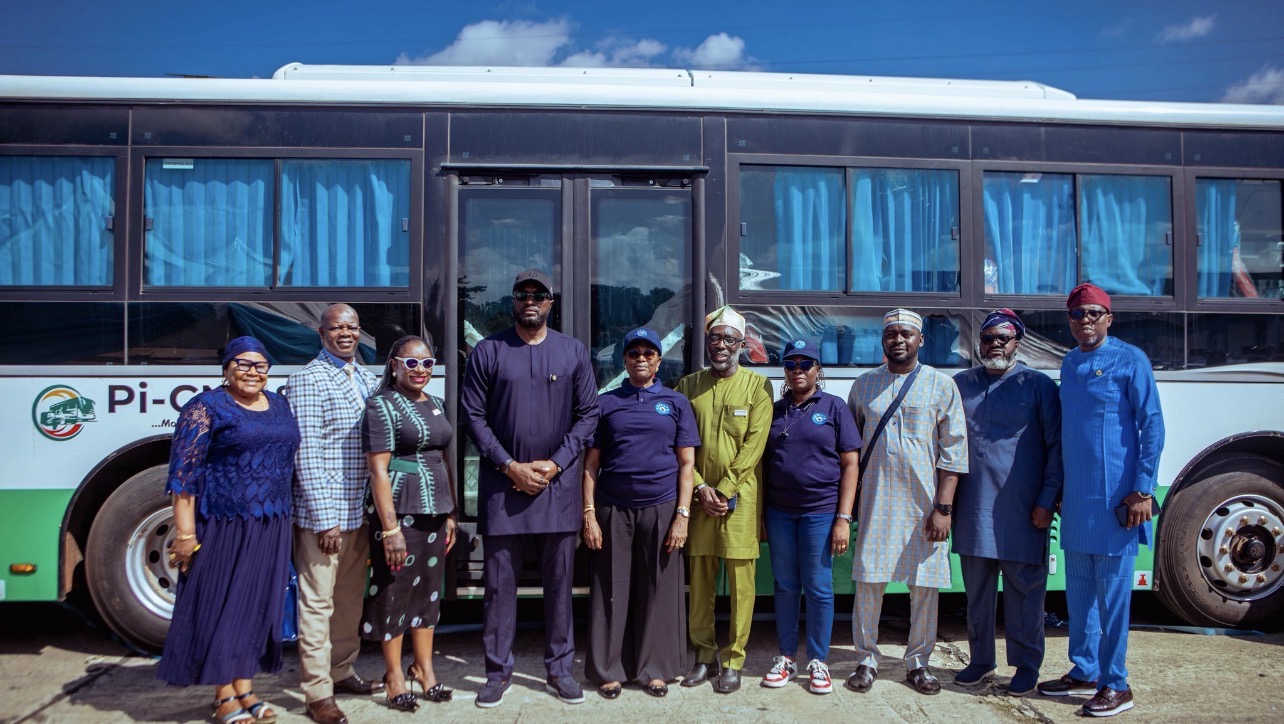
As part of the broader Presidential Initiative on CNG and Electric Vehicle Buses, the Lagos State Government has taken delivery of twenty new high-capacity Compressed Natural Gas buses.
The Lagos Metropolitan Area Transport Authority (LAMATA) disclosed this in a post on X, saying the intervention would boost public transportation capacity and support the state’s transition to cleaner energy.
Speaking at the handover ceremony in Lagos, the Commissioner for Transportation, Oluwaseun Osiyemi, said the buses would improve the daily travel experience of commuters through greater capacity, enhanced comfort and cleaner journeys.
Osiyemi described the intervention as more than the provision of buses, saying it was an opportunity to build a “cleaner, smarter, and more sustainable transportation system.”
He noted that high-capacity buses could move more commuters with fewer vehicles and potentially reduce waiting times on supported routes.
The commissioner appreciated President Bola Ahmed Tinubu for the initiative, saying it aligned with Lagos State’s broader investment in an integrated transportation system comprising BRT, rail, waterways and other mass-transit infrastructure.
He also called for continued Federal Government support through the provision of more CNG buses and infrastructure required for their effective operation and maintenance.
Osiyemi urged private-sector investors to explore opportunities in fleet financing, vehicle leasing, CNG infrastructure, electric vehicle charging, maintenance, technology, ticketing and fleet management.
He said the state remained committed to working with the Federal Government, operators, investors and other stakeholders to transform public transportation into a system that is efficient and environmentally responsible.
“Today, we receive buses. Tomorrow, we build a cleaner future. A cleaner Lagos is a better Lagos,” Osiyemi said.
Also speaking, the Managing Director/CEO of LAMATA, Abimbola Akinajo, said the handover represented another practical step towards providing Lagos residents with more efficient, affordable, reliable and sustainable public transportation.
Akinajo disclosed that Lagos currently has approximately 150 CNG buses, including 36 buses allocated to operators under LAMATA’s regulatory framework.
She said the additional 20 buses would further strengthen bus-service capacity on the corridors where they would be deployed.
According to her, the buses were not merely vehicles but additional capacity to move people, connect communities and support the economic activities of millions of Lagos residents who rely on public transportation.
The LAMATA boss charged the beneficiary operators to deploy the buses efficiently and maintain them properly to ensure commuters derive the full benefits of the intervention.
She also assured Lagos residents and partners that LAMATA would continue to provide the necessary regulatory oversight to ensure the buses contribute to the quality, reliability and sustainability of public transportation across the metropolis.
In his remarks, the Chief Operations Officer of Pi-CNG&EV, Tosin Coker, said Lagos “is critical to the energy transition in the public transport sector,” hence the importance attached to the state under the Presidential initiative.
Coker urged the beneficiary operators to ensure proper maintenance of the buses so they could effectively serve the people for whom they were provided.
What You Should Know
The Lagos State Government has received 20 new high-capacity Compressed Natural Gas (CNG) buses under a federal initiative, bringing the total number of CNG buses in the state to about 150. These vehicles are intended to expand mass transit capacity, ease commuter congestion, and reduce environmental pollution.
- Positive Impact: Commuters can expect increased bus availability, potentially shorter waiting times, and more comfortable daily travel on supported routes. It also supports Nigeria’s shift toward cleaner, more affordable energy sources for transportation.
- Potential Concerns: The success of this initiative heavily relies on consistent vehicle maintenance by operators and the continuous supply of CNG refueling infrastructure across the metropolis to avoid service disruptions.