
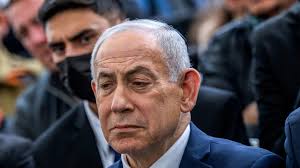
In a significant blow to Prime Minister Benjamin Netanyahu’s efforts to hold onto power following an inconclusive election, Israeli President Isaac Herzog has designated opposition leader Gadi Eisenkot to establish the nation’s upcoming administration.
Herzog announced his decision on Saturday, following consultations with political parties elected to the 120-member Knesset, Israel’s parliament.
Eisenkot, a former military chief and leader of the Yashar party, emerged as the preferred candidate after securing the backing of 67 lawmakers, compared with 46 who recommended Netanyahu.
The appointment gives Eisenkot the first opportunity to negotiate with other political parties and assemble a coalition capable of commanding a parliamentary majority.
However, his selection does not guarantee that he will successfully form a government, as the election left the country’s political blocs deeply divided.
Under Israel’s political system, the president nominates a candidate to negotiate with other parties and secure enough support to govern.
Eisenkot now faces a 28-day period to put together a coalition, with the possibility of a 14-day extension if he needs more time.
His options include forming a minority government with external support from Arab parties, negotiating an alliance with ultra-Orthodox parties or reaching an agreement for a national unity government with Netanyahu.
However, all three options are considered difficult because of longstanding disagreements among the political groups.
The main challenge for Eisenkot is that his four-party, Jewish-led opposition alliance secured 48 seats, while the two Arab-led parties won 19 seats. Together, they have enough lawmakers to command a majority, but Eisenkot has been reluctant to bring the Arab parties into his government.
Netanyahu’s religious-nationalist bloc, meanwhile, secured 53 seats, falling short of the 61 required for a majority in the 120-member parliament.
The Likud party, led by Netanyahu, emerged as the largest single party with 27 seats, while Eisenkot’s Yashar party came second with 21 seats.
Who is Gadi Eisenkot?
Eisenkot, 66, is a former Chief of Staff of the Israel Defence Forces (IDF), a position he held from 2015 to 2019.
He entered politics in 2022 and briefly served in Netanyahu’s wartime cabinet following the October 7, 2023 Hamas attack on Israel.
He later joined the opposition and became increasingly critical of Netanyahu’s leadership, particularly his handling of the military campaign in Gaza.
Eisenkot has pledged not to serve in a government led by Netanyahu and has also criticised violence by Israeli settlers against Palestinians in the occupied West Bank.
A son of Moroccan immigrants, he could become Israel’s first prime minister from the country’s Mizrahi Jewish community if he succeeds in forming a government.
His family has also suffered losses during the Gaza war, with his son and two nephews killed while fighting in the territory.
What happens if Eisenkot fails?
If Eisenkot fails to secure the required parliamentary support within the allotted period, another candidate could be given the opportunity to form a government.
The process could extend for several weeks, and if no candidate succeeds within the constitutional timeframe, Israel may be forced to hold another election.
Herzog’s decision therefore represents a significant political setback for Netanyahu, who has served as Israel’s longest-serving prime minister.
However, the coming coalition negotiations will determine whether Eisenkot can translate the support he received during the presidential consultations into a functioning government.
What You Should Know
Following an inconclusive election that left Israel’s parliament heavily divided, President Isaac Herzog bypassed longtime leader Benjamin Netanyahu to give opposition leader Gadi Eisenkot the first opportunity to build a ruling coalition. Eisenkot faces a strict 28-day deadline to assemble a government that can secure a parliamentary majority, though deep political divisions make his path forward exceptionally difficult.
- Positive Impact: A successful coalition could bring fresh political leadership and open the door to alternative governance styles after years of deadlock under Netanyahu.
- Potential Concerns: Failure to form a government could lead to prolonged political instability or force the country into holding another disruptive and costly election.