To fast-track the production of wheat and essential staple crops, boost livestock expansion, and tackle ongoing food security hurdles nationwide, the Federal Government has established a dedicated technical committee.
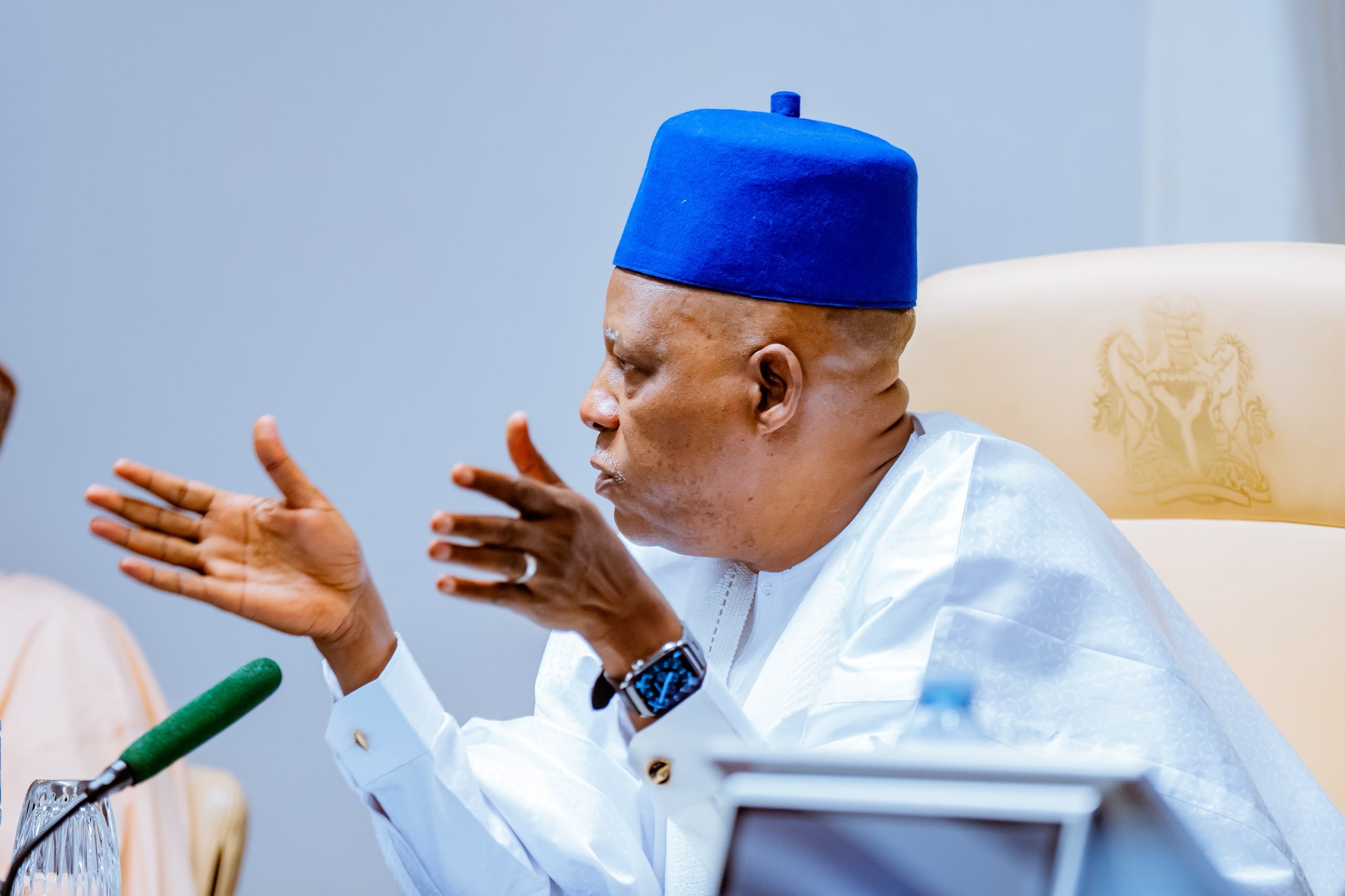
Vice President Kashim Shettima constituted the committee on Tuesday during a high-level meeting on agricultural sector performance and strategic interventions at the Presidential Villa, Abuja.
The committee is expected to develop a blueprint for implementing strategic interventions in the agricultural sector, with a focus on improving production and coordinating efforts across relevant government agencies.
The development was disclosed in a statement on Tuesday by the Senior Special Assistant to the President on Media and Communications, Office of the Vice President, Stanley Nkwocha.
According to the statement, Shettima charged members of the committee to bring their expertise together and produce a clear plan for implementing the proposed interventions.
The statement reads in part: “Senator Shettima charged members of the committee to cross-pollinate ideas and come up with a blueprint on implementing strategic interventions in the agricultural sector.”
The meeting followed a broader engagement with President Bola Tinubu the previous week, which involved stakeholders in agriculture and other sectors.
The Minister of Agriculture and Food Security, Abubakar Kyari, said the meeting also examined critical challenges confronting farmers and measures to expand wheat production and dry-season farming.
Kyari explained that Tinubu had directed the Vice President to identify and address existing challenges in the agricultural sector, particularly those affecting year-round farming.
“Mr. President had always encouraged the all-year-around farming, and we’re looking at coordination between all sectors and also including subnationals, states, and local governments,” the minister said.
On the committee’s responsibilities, Kyari said it would coordinate the contributions of relevant ministries, departments and agencies (MDAs) and develop recommendations for further consideration.
“It is a technical committee with members from the various MDAs to sit and coordinate on behalf of all, and come up with its resolutions in execution,” he said.
He added that the committee’s report would be reviewed by another committee before being submitted to the Vice President and subsequently to the President.
The committee comprises representatives of the Federal Ministries of Agriculture and Food Security, Water Resources and Sanitation, and Livestock Development, alongside other government officials and institutions involved in agricultural financing, research, mechanisation and production.
Its membership also includes the chief executives of the Bank of Industry, Bank of Agriculture, National Agricultural Land Development Authority, National Agricultural Seeds Council, National Agricultural Development Fund, National Centre for Agricultural Mechanization, National Sugar Council of Nigeria, Nigeria Commodities Exchange and National Agency for Science and Engineering Infrastructure.
The committee will be coordinated by the Technical Adviser to the Vice President on Agriculture and Head of the Presidential Food Systems Coordinating Unit, Marion Moon.
Earlier, Moon called for stronger coordination among the federal, state and local governments, describing agricultural development as a shared responsibility.
She identified gaps in coordination between the three tiers of government and stressed the need to align federal interventions with activities at the state level.
“So, as we think about what we’re doing — what we should prioritise — it is very important to ensure that we are in harmony and synergy with what is happening at the state level,” she said.
What You Should Know
The Federal Government is stepping up efforts to tackle the rising cost of food by setting up a high-powered technical committee to coordinate agricultural interventions. Led by the Office of the Vice President and bringing together key ministries and financial institutions, the team aims to bridge coordination gaps between federal, state, and local governments to make all-year-round farming a reality.
- Positive Impact: Better collaboration among government agencies could lead to improved agricultural financing, increased staple crop harvests, and long-term relief on soaring food prices for everyday Nigerians.
- Potential Concerns: Success depends heavily on proper implementation and synergy with state governments, as past agricultural initiatives have often struggled with bureaucratic delays and poor execution at the grassroots level.