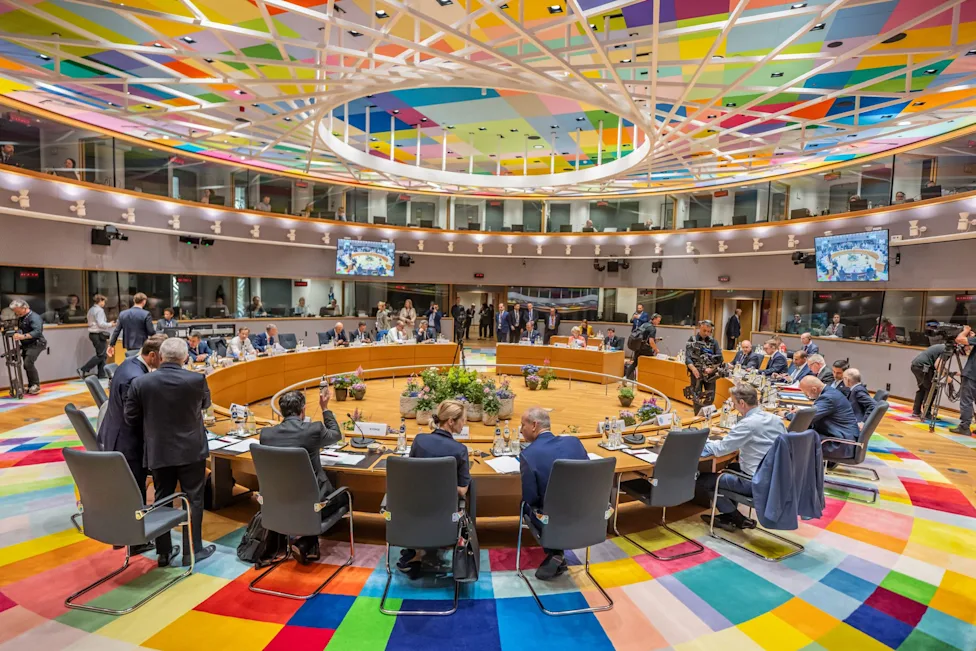
Leaders from across the European Union have converged on Brussels for a two-day summit to deliberate on surging Chinese imports, escalating energy bills, and deep-seated disagreements regarding the bloc’s upcoming long-term budget. This high-level gathering comes as intensifying international tensions and economic strain create fresh hurdles for the 27 member states.
Leaders are expected to consider measures to address the increase in Chinese exports, which industry groups say is contributing to factory closures and putting pressure on European manufacturers.
The discussions follow a preliminary understanding reached between the European Commission and Beijing less than a week ago concerning imports of hybrid vehicles from China. The arrangement represents an initial effort to address the EU’s growing trade imbalance with the Asian country.
The bloc recorded a goods trade deficit of €360 billion in 2025, equivalent to approximately $400.4 billion. Projections suggest the deficit could widen further this year, while another EU-China meeting is scheduled for March.
According to draft summit conclusions, European leaders will urge the European Commission to continue negotiations with Beijing while strengthening existing trade safeguards and considering additional measures to protect European industries.
“These imbalances are not limited to one sector. We don’t have much time because every month that goes by, thousands of jobs are lost,” a senior EU diplomat said.
The discussions are taking place amid growing economic uncertainty across Europe, with far-right political parties capitalising on public dissatisfaction during elections. In June, EU leaders instructed the Commission to achieve tangible progress in trade negotiations with China by October.
Despite the preliminary understanding on hybrid vehicles, concerns remain over Chinese imports affecting other industries, including chemicals, steel and machinery.
China has rejected criticism of its trade relationship with Europe, arguing that claims of economic imbalances are being used to justify protectionist policies and restrict Chinese businesses.
Proposals presented by France and Germany last week are expected to feature prominently in Thursday’s discussions. The two countries, which have the EU’s largest economies, called for urgent action to address imports of chemicals and polyethylene terephthalate (PET), a type of plastic widely used in packaging.
They also proposed measures that would enable the bloc to respond more quickly to countries whose actions threaten European economic interests. An investigation into PET imports is expected to begin soon.
The joint proposal signals a significant shift in Germany’s approach to trade with China. Berlin was among the strongest opponents of EU anti-subsidy tariffs on Chinese electric vehicles just two years ago.
The summit began at 10am local time, with leaders examining the competitiveness of the European economy, including the bloc’s trade relationship with China.
Rising energy prices are also a major item on the agenda, with several member states calling for measures to ease the financial burden on households and businesses. The draft conclusions describe the issue as being of “critical importance”.
Proposals under consideration include a proposed one year delay to methane emissions requirements affecting oil and gas imports. Leaders are also expected to ask the European Commission to develop additional short-term measures to reduce energy costs.
Another major issue is the EU’s next seven years budget, covering the period from 2028 to 2034. The financial framework requires unanimous approval from member states, often creating disagreements between countries that contribute more to the bloc’s finances and those that receive greater financial support.
With differences over the proposed budget still unresolved, a special summit is planned for late November to advance negotiations and work towards an agreement.
Ukraine’s ongoing challenges will also feature in discussions on Friday, when President Volodymyr Zelenskiy is expected to attend. European leaders are likely to consider the country’s financial requirements for 2027 as it continues to deal with the consequences of Russia’s invasion.
According to the draft conclusions, EU leaders are also expected to express disappointment over Washington’s decision to temporarily suspend sanctions on Russian diesel.
Meanwhile, US President Donald Trump said over the weekend that Zelenskiy should be replaced as Ukraine’s leader. The Ukrainian president received renewed support from European leaders during a meeting in London on Wednesday.
What You Should Know
European Union leaders are holding a critical summit in Brussels to address severe economic pressures, focusing heavily on trade imbalances with China, surging energy expenses, and disagreements over the bloc’s multi-year budget.
- Potential Concerns: A massive trade deficit and cheap Chinese imports are putting heavy pressure on European manufacturers, leading to potential factory closures and job losses in sectors like steel, chemicals, and machinery. Rising energy costs also threaten to squeeze household budgets and corporate operations unless new relief measures are introduced.
- Positive Outlook: Collaborative proposals from major economies like France and Germany aim to protect local industries, fast-track safeguards against unfair trade practices, and explore short-term solutions to lower energy prices for everyday citizens and businesses.