To cut carbon emissions by 32 percent by the year 2035 and reach net-zero emissions by 2060, Nigeria faces a funding requirement of approximately $337 billion over the coming decade, placing significant responsibility on the Federal Government to attract investment and turn climate targets into tangible progress.
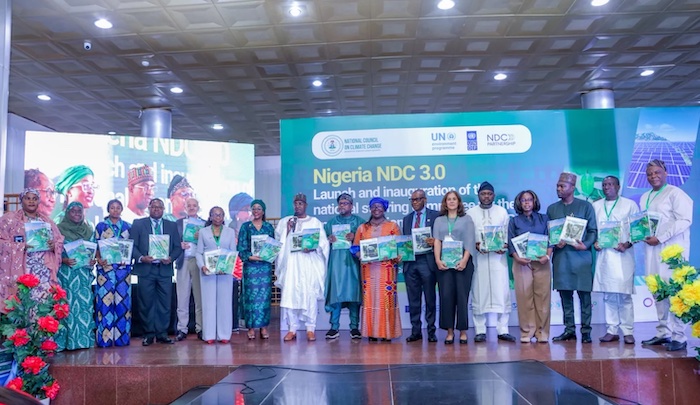
To address the challenge, the government on Thursday inaugurated an interministerial steering committee to coordinate the implementation of the country’s Nationally Determined Contribution 3.0 (NDC 3.0), the Net-Zero Investment Plan and the Long-Term Low-Emissions Development Strategy.
The Director-General of the National Council on Climate Change (NCCC), Mrs. Tenioye Majekodunmi, said the financing requirement for 2026 to 2035 comprised approximately $195 billion for emissions mitigation and $141.5 billion for adaptation.
She said the investments could create jobs and strengthen economic resilience, particularly in energy, agriculture, infrastructure and other key sectors.
Majekodunmi said the immediate priority was to develop credible investment pipelines, deploy public and concessional finance strategically, attract domestic and international private capital, and establish the policy certainty required to encourage investors.
She said the steering committee would provide high-level coordination, integrate climate priorities into national planning and budgeting, and resolve implementation bottlenecks that individual ministries could not address independently.
According to her, the committee’s effectiveness should be measured by the barriers it removes, the investments it unlocks and the results it delivers, rather than the number of meetings it holds.
The committee is expected to bring together relevant ministries and institutions responsible for finance, energy, agriculture, transportation, industry and other sectors critical to achieving Nigeria’s climate objectives.
The NCCC will provide technical secretariat support, including coordination, analysis, implementation tracking and engagement with development partners.
In a keynote address, the Secretary to the Government of the Federation (SGF), Senator George Akume, said climate commitments must translate into measurable benefits for Nigerians, urging ministries, departments and agencies to integrate climate considerations into their policies, budgets and investment decisions.
Akume, who was represented by Prof. Babatunde Bernard, a Nigerian scientist, environmental scholar and Technical Adviser to the SGF, said the country must move beyond policy announcements to tangible results.
“We must therefore judge success by implementation, not announcements; by measurable outcomes, not intentions; and by the benefits delivered to our citizens, not documents produced,” he said.
The SGF said climate change could no longer be treated as the exclusive responsibility of the environmental sector because of its implications for food security, infrastructure, public health, water resources, coastal communities and livelihoods.
He urged state governments and the Federal Capital Territory Administration to incorporate climate priorities into agriculture, transportation, urban development, waste management, infrastructure and community resilience.
He added that Nigeria’s transition to a low-emissions economy must reflect its development needs, including expanding access to affordable and reliable energy, creating jobs, strengthening industrial capacity and protecting vulnerable communities.
Meanwhile, the United Nations Development Programme (UNDP) has identified inadequate project preparation as a major obstacle to attracting private investment into Nigeria’s climate initiatives.
The UNDP Resident Representative in Nigeria, Ms. Elsie Attafuah, said many potentially viable private-sector projects remained unfunded because they lacked adequate feasibility studies, credible business models, clear delivery arrangements or appropriate financing instruments.
She said projects needed to meet these requirements to attract investors, particularly where they offered substantial public benefits but could not generate sufficient commercial returns on their own.
Attafuah noted that reliable clean energy could help businesses improve production, while climate-smart agriculture could protect farmers’ incomes, strengthen food security and improve resilience to extreme weather.
She also emphasised the need for transparent carbon-market systems, credible emissions measurement and reporting, and a reliable national carbon registry to strengthen accountability and investor confidence. Support for developing the registry was cited as part of efforts to track climate-related transactions and verify results.
The UNDP representative further stressed that climate projects must respond to local needs and involve the communities affected by them.
Women, young people, farmers and other affected groups, she said, should participate from the outset, particularly where changes in technology, land use or employment could affect livelihoods and access to economic opportunities.
State governments were also identified as essential to implementation because decisions on land, infrastructure and public services directly influence climate resilience. The NCCC’s engagement with states is intended to connect their development priorities with technical assistance and practical investment programmes.
Nigeria’s NDC 3.0 outlines mitigation measures across energy, industry, agriculture, forestry and land use, waste and other sectors. Its adaptation priorities include food systems, water, health, coastal and urban areas, and disaster-risk management.
The Federal Government has also launched the Net-Zero Investment Plan and the Long-Term Low-Emissions Development Strategy to align immediate climate commitments with the country’s long-term economic transformation.
The launch comes weeks before the global climate community gathers in Antalya, Türkiye, for COP31, offering Nigeria an opportunity to pursue partnerships around its national priorities.
The immediate test, however, will be whether the new committee can translate the country’s climate targets into costed programmes, develop investment-ready projects and secure the resources needed to implement them.
Ultimately, the success of NDC 3.0 will depend on whether climate action reduces emissions while improving energy access, protecting livelihoods, creating jobs and strengthening resilience across the country.
What You Should Know
The Federal Government has launched a special committee to oversee Nigeria’s transition to green energy and environmental sustainability. This initiative aims to align national development with global climate agreements by mobilizing funds for renewable energy, agriculture, and infrastructure.
- Positive Impact: Successful implementation could attract massive international investments, create green jobs across various sectors, and build resilient infrastructure to protect communities from extreme weather.
- Potential Concerns: Securing the massive $337 billion required will be extremely difficult, and without proper planning and transparent management, projects may struggle to secure private sector backing or deliver real benefits to ordinary citizens.