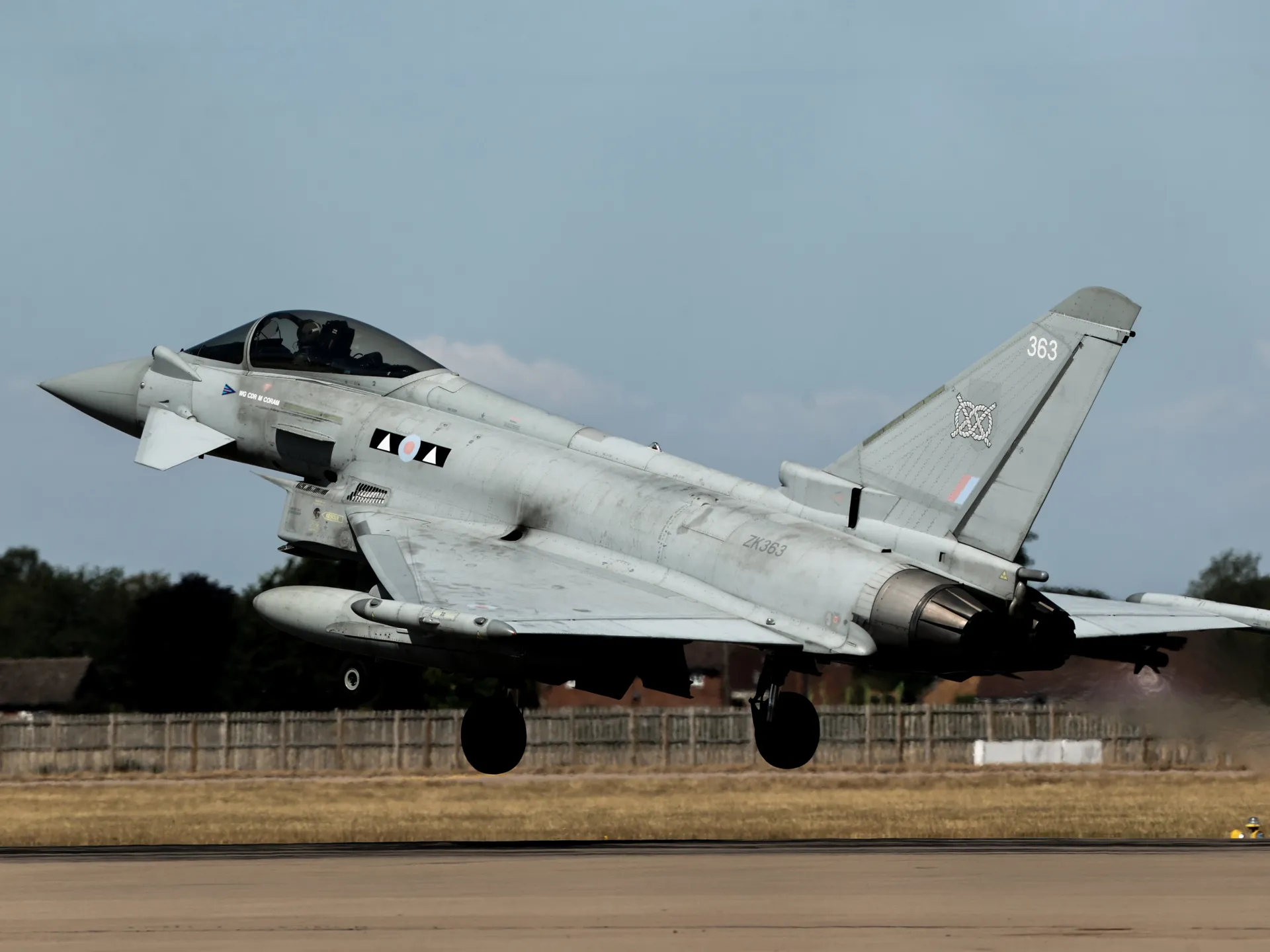
The Royal Air Force is set to deploy Typhoon fighter jets on defensive patrols over Saudi Arabia, as escalating Houthi strikes ignite growing anxieties regarding the protection of urban centers, essential infrastructure, and critical regional trade corridors.
The Ministry of Defence said on Tuesday that the aircraft would help protect Saudi airspace from drones and missiles but would not carry out offensive strikes against the Iran-aligned Houthi movement.
Defence Minister Wes Streeting condemned the attacks and said the targeting of Riyadh’s airport demonstrated an escalation in the regional conflict.
“The continuing attacks from the Houthis on our ally Saudi Arabia are absolutely despicable,” Streeting said.
“That’s why today I have approved further UK military support. RAF Typhoons will fly defensive air missions to help protect Saudi airspace from drones and missiles.”
The deployment follows a request from the Saudi government. Prime Minister Andy Burnham had said earlier this month that Britain was prepared to consider providing additional assistance.
Alongside the fighter jets, the UK will send an Atlas A400M transport aircraft and military advisers. The move expands support announced in September, which included an RAF Voyager air-to-air refuelling aircraft but no fighter jets.
Britain said the Houthi attacks threaten regional stability and could disrupt energy supplies and important trade routes.
The violence has intensified in recent weeks as the conflict in Yemen has escalated, with Houthi attacks targeting Saudi oil facilities and other infrastructure.
Meanwhile, authorities in Yemen said a Houthi strike on Monday against a training camp for Saudi-backed government security forces killed 58 people.
What You Should Know
In response to intensifying regional conflicts and growing threats from Houthi attacks, the UK government has approved a new military deployment to help safeguard Saudi airspace. While these RAF Typhoon jets and transport aircraft will strictly handle defensive missions against incoming drones and missiles without launching offensive strikes, the move highlights deepening international involvement in securing the Middle East.
- Positive Impact: Enhanced defense systems help stabilize regional airspace, protecting critical energy supplies and international trade routes from disruption.
- Potential Concerns: The escalation of military actions and heightened tensions in the region could draw external allies deeper into a protracted conflict, risking broader economic and security repercussions.