
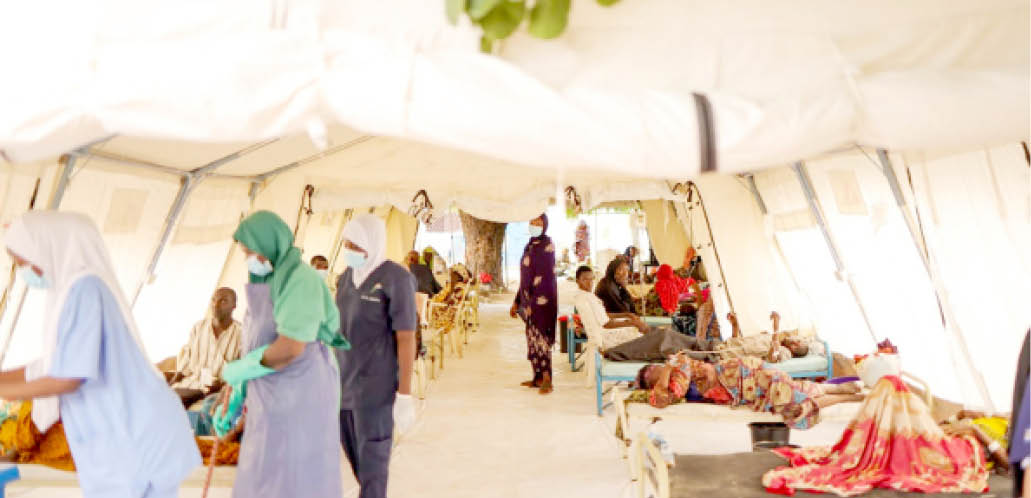

As Nigeria enters the peak of the rainy season, public health authorities are confronting a familiar but deadly threat: cholera.
The water-borne disease has resurfaced in parts of Northern Nigeria, claiming lives and infecting thousands, particularly in Plateau and Borno states, while other states are intensifying surveillance and preparedness measures to prevent outbreaks within their borders.
For health experts, the outbreaks are a reminder of the country’s persistent challenges with access to clean water, poor sanitation, inadequate hygiene practices, population displacement and weak public health infrastructure.
They warn that unless urgent preventive measures are sustained, more states could witness a rise in infections in the coming weeks.
2027 race hit by deregistration judgement Kano guber race: Mustapha Kwankwaso’s nomination exposes third-term agenda, APC alleges
While Plateau State is battling a relatively contained outbreak in Mangu Local Government Area, Borno is facing one of the most severe cholera emergencies in recent years, with thousands of infections recorded within a matter of weeks.
Data released by Médecins Sans Frontières (MSF) showed that the state recorded 35 deaths and 3,646 new cholera infections within a single week.
The latest figures indicate that between early May and June 9, Borno recorded 74 deaths and 7,850 suspected cholera cases across 12 local government areas.
MSF reported that more than 500 suspected cholera patients were admitted to treatment facilities on June 5 alone, representing the highest daily admission figure since response operations began.
Maiduguri metropolis remains the epicentre of the outbreak and accounts for more than half of the reported infections.
Borno IDP camp records 296 cases in 3 days
The cholera outbreak intensified in the Internally Displaced Persons (IDPs) camp in Monguno, Borno State, with 296 suspected cases recorded within three days, raising concerns among health workers and residents.
Health officials and local volunteers told Daily Trust on Monday that the growing number of patients arriving at Cholera Treatment Centres (CTCs) in the town is stretching available resources and complicating efforts to contain the disease.
One health worker, who requested anonymity, said the influx of patients from the IDP camp has created panic within the community.
Data obtained by our correspondent showed that the treatment centre admitted 296 suspected cholera patients, mostly women and children, between June 11 and June 13.
According to the records, 48 cases were recorded on June 11, 68 on June 12, and 180 on June 13 alone.
Another health worker said about 90 per cent of the patients were from IDP camps in the area.
He added that most of those who sought treatment survived, but several deaths occurred at home because some patients delayed seeking medical care.
“Some infected persons refused to come to the treatment centre and died at home. They initially treated the diarrhoea with drugs such as Flagyl and tetracycline before eventually succumbing to the disease,” he said.
The source noted that the outbreak has persisted in the town for over a month, despite ongoing interventions by the state government and development partners.
A resident, Yagana Lawan, said her child developed symptoms suddenly.
“He started vomiting and became very weak. Later, diarrhoea followed. We rushed him to General Hospital Monguno, where he was referred to the cholera treatment centre,” she said.
In Plateau State, Commissioner for Health, Dr Nicholas Baamlong, confirmed that at least five persons have died following a cholera outbreak in Mangu Local Government Area.
Baamlong disclosed that 52 suspected cases had been recorded, with 11 patients receiving treatment in health facilities.
According to the commissioner, the outbreak affected communities including Pushit, Mangu I and Mangu II.
Although the number of confirmed infections remains relatively lower than what is being witnessed in Borno, officials are treating the situation with urgency to prevent further spread.
Why Plateau, Borno are vulnerable
In separate interviews with Daily Trust, public health experts said the outbreaks in Plateau and Borno did not occur by accident.
According to them, a combination of environmental, social and infrastructural factors has made both states particularly vulnerable to cholera.
Public health expert, Dr Aliyu Isah, said cholera outbreaks are almost always linked to failures in water and sanitation systems.
“Cholera is not a mysterious disease. It thrives where people lack access to safe drinking water and adequate sanitation facilities. When communities depend on contaminated streams, wells or poorly maintained water sources, the risk increases significantly,” Isah said.
According to him, the outbreak in Plateau points to underlying sanitation challenges in rural communities.
“In many rural settlements, access to potable water remains poor. Open defecation is still common in several areas and these factors create pathways for contamination during the rainy season,” he added.
Godwin Ekuwke, a medical practitioner at the Kubwa General Hospital in Abuja, said the conditions created by conflict and displacement have significantly heightened Borno’s vulnerability.
“In emergency and humanitarian settings, cholera spreads very quickly because many people live in crowded environments with limited access to clean water and sanitation facilities,” he said.
Ekuwke explained that displaced populations often rely on shared water points, temporary shelters and overstretched sanitation facilities.
“Those conditions create the perfect environment for transmission. Once cholera enters such communities, it can spread rapidly if not detected early,” he said.
Grace Jegede, another expert, believes climate-related factors are increasingly contributing to cholera outbreaks across Northern Nigeria.
“During the rainy season, floodwaters frequently contaminate drinking water sources with human waste. Communities relying on untreated water become highly vulnerable,” she said.
According to her, climate change is making outbreaks more frequent and more difficult to predict.
“Extreme weather events are increasing and this means governments must strengthen preparedness mechanisms before outbreaks occur,” she said, adding that prevention must go beyond emergency response.
Other states strengthen preparedness
As concern grows over the spread of cholera across Northern states, several states are intensifying preventive measures.
Although Benue State has not recorded any unusual increase in cholera cases, State Commissioner for Health and Human Resources, Dr Paul Ogwuche, told our correspondent in Makurdi on Monday that preparations are already underway.
Ogwuche said the state government had activated a range of preventive measures.
Rapid Response Teams have been placed on alert, while essential medical supplies have been pre-positioned for emergency use.
The state has also intensified public awareness campaigns focusing on handwashing, environmental sanitation and safe water consumption.
“In addition, we maintain regular communication with the Nigeria Centre for Disease Control and Prevention and other stakeholders to monitor developments and ensure that Benue remains prepared for any eventuality,” Ogwuche added.
In Taraba State, investigations across the 16 local government areas showed no officially reported cholera outbreak at the time of filing this report.
However, public health authorities remain cautious because the state experienced a cholera outbreak last year at an internally displaced persons camp in Chanchangi, Takum Local Government Area.
Bauchi State says it is reasonably prepared to respond to any cholera outbreak, having put in place critical systems and structures for disease detection, coordination and emergency response.
In an interview with Daily Trust, State Epidemiologist, Dr Ahmad M. Sambo, noted that the state has a functional disease surveillance system, trained Rapid Response Teams (RRTs), a Public Health Emergency Operations Centre (PHEOC), and experienced healthcare personnel who have managed previous cholera outbreaks.
According to him, Cholera Treatment Units (CTUs) have also been designated in hotspot local government areas, while coordination mechanisms involving government agencies, development partners and local communities have been established to ensure a swift response whenever cases are detected.
Sambo, however, said there is still room for improvement in the state’s preparedness efforts.
The Kebbi State Government said despite not recording any case of cholera in any part of the state, it has activated preparedness measures to respond swiftly should an outbreak occur.
A senior official of the state Ministry of Health, Yakubu Ahmed, told Daily Trust that the ministry’s epidemiology department has been placed on high alert and all necessary measures have been put in place to prevent and contain any outbreak.
“We are educating the people on the importance of proper hygiene and environmental sanitation to prevent the disease,” he said.
UPDATE NEWS:
Nigerians can now invest ₦2.5 million on premium domains and profit about ₦17-₦25 million . All earnings paid in US Dollars . Rather than wonder, click here to find out how it works .
Join Daily Trust WhatsApp Community For Quick Access To News and Happenings Around You.
This news development was originally reported by our media partner DailyTrust News .