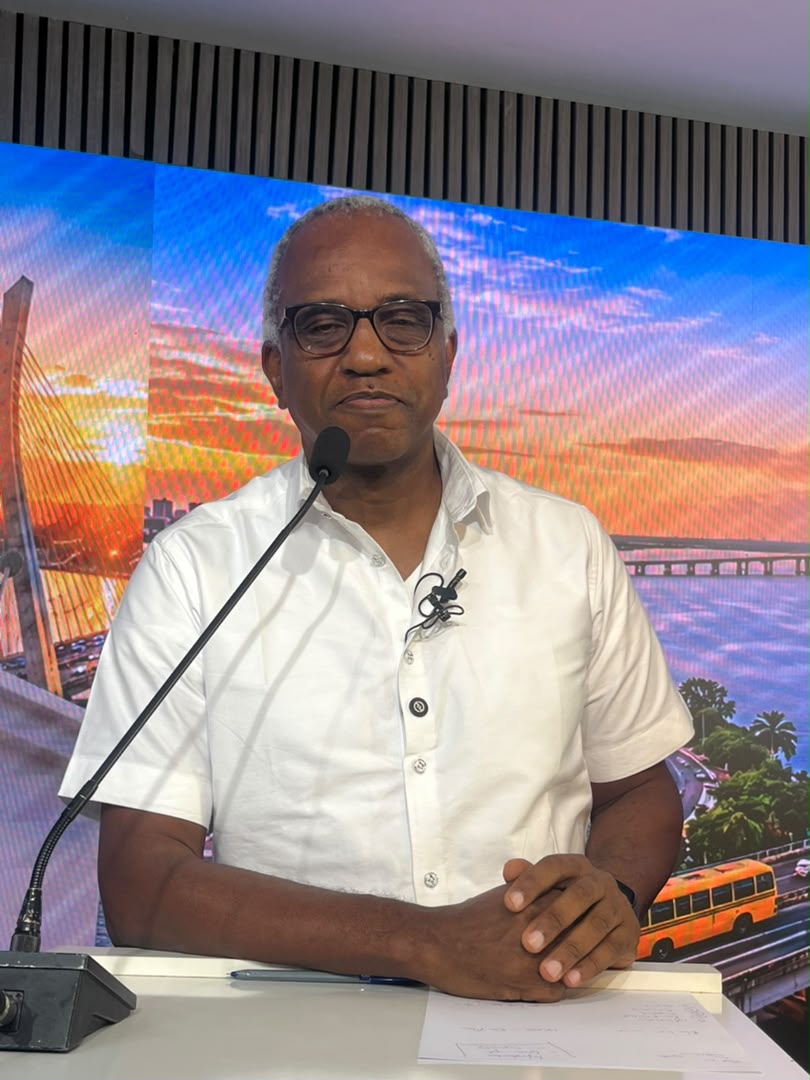
Funsho Doherty, the Lagos State governorship flagbearer for the Nigerian Democratic Congress (NDC), has criticized the state administration for offloading vital social duties—such as affordable housing, public transit, and healthcare—onto the private sector.
Doherty said the government’s failure to take a leading role in providing affordable homes had contributed to the growing housing deficit and the difficulty many low- and middle-income residents face in securing accommodation.
He made the remarks during the Lagos governorship debate on Sunday, while responding to questions on why residents continue to struggle despite the state’s strong revenue base.
The NDC candidate identified excessive agency and legal fees charged to tenants as another challenge, describing the practice as a form of racketeering that particularly affects low-income earners.
He said his manifesto proposed the establishment of an ombudsman’s office to address exploitative practices in the rental market and provide a channel for tenants to seek redress.
However, Doherty said the broader solution lay in increasing the supply of affordable housing, particularly for low- and middle-income households.
“The problem that exists today was not created in one year. It is because housing supply has not kept up with growth in demand,” he said.
He argued that private developers alone could not provide the number of social housing units required, insisting that government must take the lead in that segment of the market.
“Social housing is an area anywhere in the world where government has to be the primary driver. Private sector alone will not drive the number of units that are required,” he said.
Doherty recalled the administration of former Lagos Governor Lateef Jakande as an example of a period when government made a major effort to provide housing.
He criticised the current administration for what he described as its reluctance to intervene directly in areas where government has a social responsibility.
According to him, the same approach is evident in public transportation and healthcare for poorer residents, where government has increasingly relied on private-sector provision.
Doherty said the imbalance had contributed to a situation in which Lagos could generate substantial revenue while many of its residents remained poor.
“It’s because government takes a back seat and wants to allow the private sector to do and provide all these things,” he said.
What You Should Know
Funsho Doherty is calling attention to the severe housing deficit and high cost of living in Lagos, pointing out that the state government relies too much on private developers instead of driving social housing initiatives directly like past administrations did.
- Positive Impact: Highlighting these issues could pressure the government and political contenders to prioritize affordable housing and introduce tenant-friendly policies to curb exploitative rental fees.
- Potential Concerns: Continued government reliance on the private sector may leave low- and middle-income residents struggling with high accommodation costs and inadequate social infrastructure.