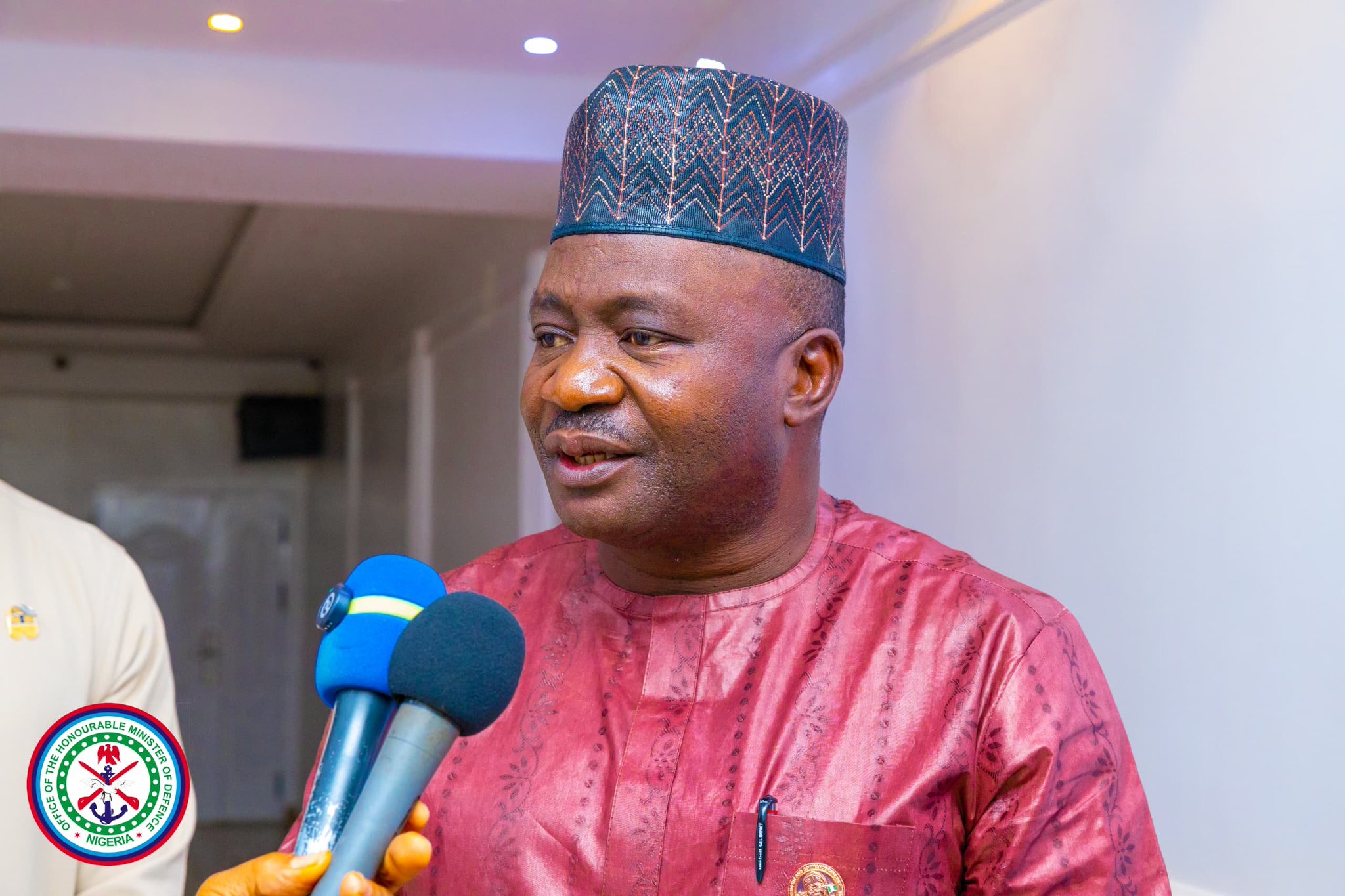
The Minister of Defence, General Christopher Musa (rtd), has advocated for the reinstatement of advanced, technology-driven tollgates on major national highways to bolster security operations and monitor the transit of criminal suspects.
Musa said automated tolling systems could serve as security checkpoints by capturing vehicle registration numbers and monitoring movements along interstate routes, making it easier for security agencies to trace suspects.
The minister made the call while speaking at the Abuja Round Table, themed “Promise to Proof: The Renewed Hope Conversation”, during a session on “Safe to Farm, Travel and Trade: Protecting Lives and Livelihoods in Every Community.”
He described the removal and destruction of tollgates across the country as a strategic mistake, arguing that modern technology had made it possible to operate them without the abuses associated with the old system.
“With modern Information and Communications Technology (ICT) and automation, toll collection no longer requires cash transactions,” he said.
“Automated systems can instantly capture vehicle registration numbers, track vehicular movements across interstate corridors, and seamlessly trace or apprehend suspects.”
Musa also called for a more reliable national identification system, saying the integration of unique identification numbers, facial recognition and biometric data would help close security gaps and improve intelligence gathering.
He said a centralised digital identification architecture would make it easier for authorities to verify identities and detect criminal activities.
On military operations, the defence minister explained that the Armed Forces were constitutionally responsible for defending Nigeria’s territorial integrity but could support internal security when threats exceeded the capacity of the police.
He, however, expressed concern about the prolonged deployment of military personnel for internal security operations, which he said had left many troops fatigued and separated from their families for extended periods.
“Our troops have spent years deployed across regions such as the Northwest, away from their families and loved ones,” he said.
Musa said the Federal Government was working to strengthen police recruitment, training and operational capacity to enable the police to take greater responsibility for internal security.
He said the objective was to gradually withdraw troops from prolonged internal deployments, return them to their barracks and allow the military to focus more on its primary responsibilities.
The minister also stressed that national unity remained central to addressing Nigeria’s security challenges, arguing that the country’s difficulties were rooted more in internal divisions than in a shortage of resources or military firepower.
He urged Nigerians to move beyond ethnic, regional and religious differences and see one another as fellow citizens.
“We must begin to view one another simply as human beings and fellow citizens, rather than dividing ourselves along ethnic, regional, or religious lines,” he said.
Musa reaffirmed the Federal Government’s commitment to creating an environment where Nigerians could safely farm, travel and conduct business across the country.
What You Should Know
The Minister of Defence is proposing the return of highway tollgates, but with a modern twist using technology instead of cash collection. This system would use automated cameras and digital tracking to monitor vehicle movements across state lines, while the government also plans to reduce the heavy reliance on military personnel for everyday internal policing.
- Positive Impact: Enhanced highway security and faster tracking of criminal vehicles using automated digital technology.
- Potential Concerns: Commuters may worry about potential traffic delays or privacy implications surrounding automated surveillance and tracking systems.